
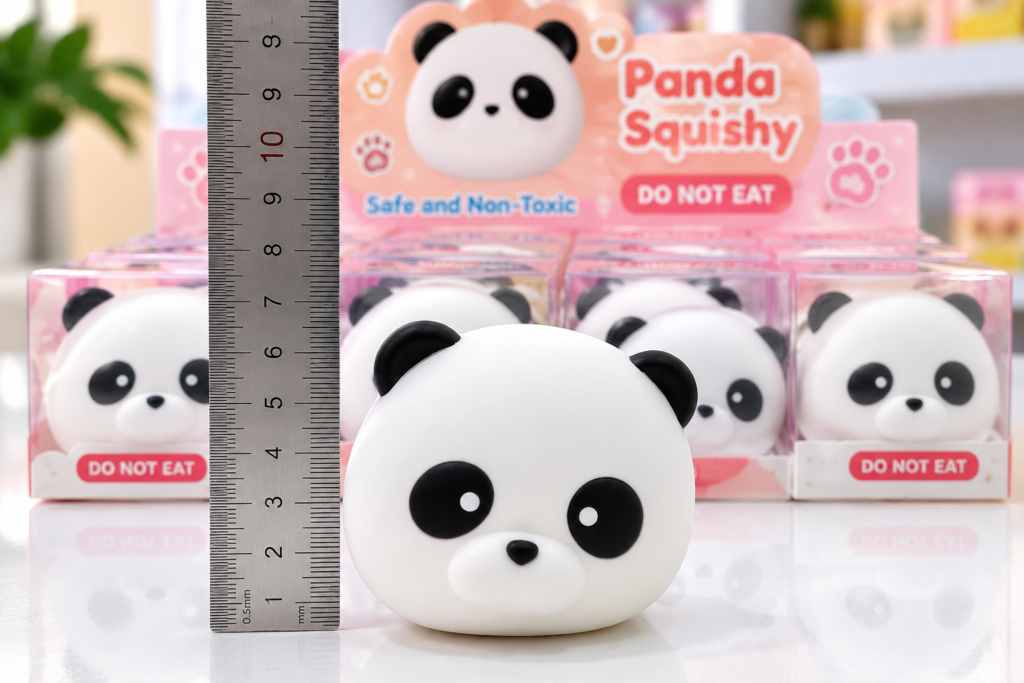
A buyer sends a supplier a photo of a squishy toy and asks for a price on 5,000 pieces. The supplier responds with a quote, but several questions remain unanswered. Is the product made from slow-rising foam or a flexible TPR shell? Does the price include individual packaging? Which size was quoted?
Those details can change the product, the manufacturing process and the final cost.
A squishy toy specification sheet gives buyers and suppliers a common reference before pricing begins. It does not need to be complicated, but it should describe the product clearly enough that different suppliers are quoting the same requirements.
Table of Contents
Identify the Product and Its Variations
Start with the product name, reference image and supplier item number, if available. For an existing design, include the exact model or sample reference rather than relying on a general description such as “animal squishy.”
Record each size and color variation separately. A standard-size toy and a jumbo version may have different weights, packaging dimensions and production costs.
For custom designs, identify which features are new. Is the buyer requesting an existing shape in a different color, a new printed face or an entirely new mold?
These are different manufacturing requirements. Treating them as interchangeable can produce misleading quotations.
A useful squishy toy specification sheet should also state whether the buyer wants one design or an assortment of multiple SKUs.
Describe Materials, Filling and Dimensions
Squishy toys can have very different constructions even when they look similar in photographs.
Some use slow-rising PU foam. Others have a flexible TPR exterior with a filling that may affect softness, weight and squeezing behavior. The precise formulation and filling should be confirmed for the selected product.
Specify the material and filling separately when possible. If either is unknown, mark it for supplier confirmation rather than guessing.
Include dimensions in centimeters or millimeters, approximate unit weight and any important functional characteristics. Buyers may also want to identify whether the product is slow-rising, stretchy or designed to hold its shape.

For a custom item, include drawings or measurements of features that affect the mold. A photograph alone may not communicate wall thickness, openings or small molded details.
If a sample has already been approved, reference it in the squishy toy specification sheet. The approved physical sample may help resolve questions that cannot be captured in a short written description.
Define Packaging Before Requesting Prices
Packaging is often one of the biggest sources of quotation differences.
A supplier may quote an unpackaged toy while another includes an individual retail box. Both prices could be correct, but they are not directly comparable.

State whether each toy needs a polybag, printed color box, blister pack or another packaging format. Include display-box quantities, master-carton requirements and any special retailer instructions when known.
Private-label orders may require custom artwork, barcodes, warning labels or branded inserts. These should be identified early, even if the final files are not yet available.
Our guide to squishy toy packaging artwork explains the files and approvals buyers should prepare for printed packaging.
A complete squishy toy specification sheet should make it clear which packaging components belong in the quoted unit price and which require separate charges.
Clarify Quantity, Compliance and Delivery Terms
The requested quantity needs more detail than a single number.
Indicate the total order volume and the breakdown by size, color or design. Ask suppliers to confirm the minimum order quantity for each configuration, particularly when the order includes custom tooling or printing.
For custom manufacturing, tooling charges and sample costs may need to be quoted separately.
Buyers sourcing for the United States should also identify the intended age group and applicable compliance requirements. The U.S. Consumer Product Safety Commission provides guidance on toy safety requirements, including applicable testing and certification obligations.
If testing documentation is required, request reports that correspond to the actual product and applicable requirements. A certificate for a different material or design should not automatically be treated as evidence for the proposed item.
Finally, specify the destination and requested shipping terms. The International Chamber of Commerce explains Incoterms rules used to allocate delivery responsibilities between buyers and sellers.
A quotation based on EXW terms should not be compared directly with a delivered price without accounting for freight and other relevant costs.
Use One RFQ Sheet to Compare Suppliers
Once the product details are organized, send the same requirements to each potential supplier.
A practical squishy toy specification sheet can include columns for the requested specification, supplier confirmation and any proposed alternatives.
Ask suppliers to identify deviations rather than silently substituting materials, sizes or packaging. If one factory proposes a different filling or carton configuration, that difference should be visible before the buyer compares prices.
Keep quotation assumptions alongside the quoted price: quantity, currency, tooling, packaging, lead time, shipping terms and quotation validity.
The process becomes easier when buyers first confirm the product through squishy toy sampling and later use an agreed inspection checklist to verify the finished order.
A well-prepared squishy toy specification sheet cannot eliminate every manufacturing question. It can, however, make the unanswered questions visible early, when changes are easier and less expensive to resolve.
Read More