
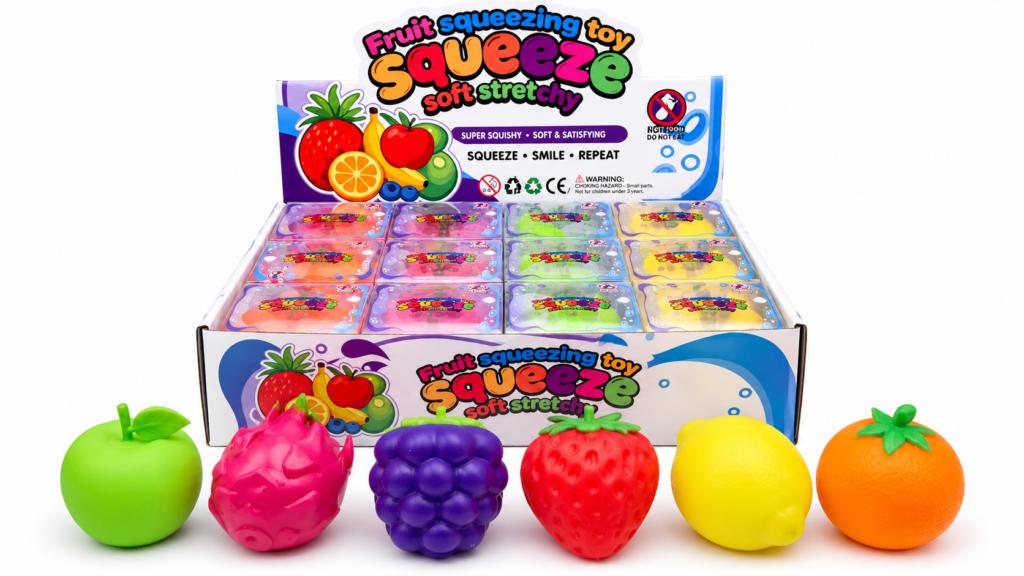
A retailer ordering several squishy toy designs may want everything shipped together. That sounds simple until the purchasing team has to reconcile different quantities, packaging formats and carton configurations.
One design may be available from stock, while another requires production. Some products fit neatly into standard cartons; others leave partial cases. By the time the shipment reaches the warehouse, small misunderstandings can turn into hours of sorting.
For buyers handling mixed SKU squishy toy wholesale orders, the best approach is to settle these details before confirming the purchase order.
Table of Contents
Start With Product Availability and MOQ
The first question is whether the requested products can actually be combined.
Existing designs may be available for mixed-SKU purchasing, depending on inventory, individual minimum quantities and the supplier’s packing arrangements. Ordering several products together does not automatically remove those conditions.
Custom manufacturing works differently. A new mold, specific material formulation or custom packaging may carry its own production minimum.
At Vilora Toys, custom designs generally have a 5,000-piece minimum order quantity, subject to project requirements. Buyers should confirm whether that minimum applies per design or configuration rather than assuming several custom SKUs can be combined to meet it.
The distinction matters. A supplier may agree to ship several products together without treating them as one production run.
Give Every Variation a Clear Identity
A mixed order needs more detail than a list of product names.
Two dumpling squishies may look identical apart from color, yet the buyer may sell, replenish and track them separately. The same applies to different sizes or retail packaging options.
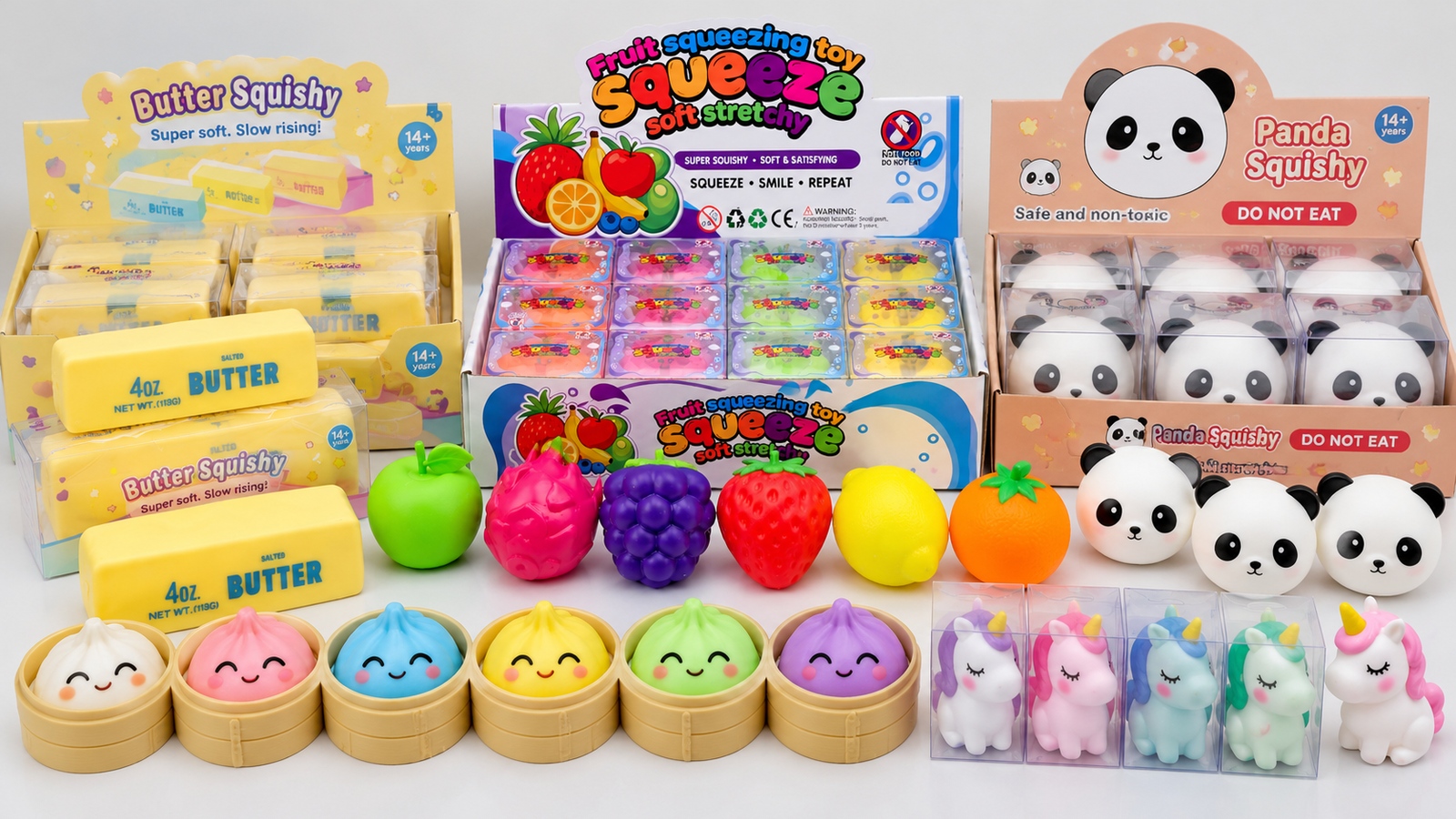
For each variation, record the supplier’s product code, buyer’s SKU if applicable, color, size, packaging and approved quantity.
Also confirm which products are ready to ship and which depend on manufacturing. That information affects whether the order can leave as one shipment.
When planning mixed SKU squishy toy wholesale purchases, ask for a quotation that identifies every variation separately. It makes shortages, substitutions and later reorders easier to discuss.
A buyer comparing bulk squishy toy options should request the same level of detail from each supplier.
Plan Cartons Around Receiving Needs
Products combined on one purchase order do not necessarily belong in the same shipping carton.
Single-SKU cartons are often easier for warehouses that assign separate storage locations to each item. Mixed cartons may suit buyers preparing predetermined assortments for stores or events.
Neither approach is automatically better.
A mixed carton needs an agreed breakdown showing exactly how many pieces of each SKU it contains. Buyers should also confirm whether different product sizes or packaging formats can be packed together without damage.
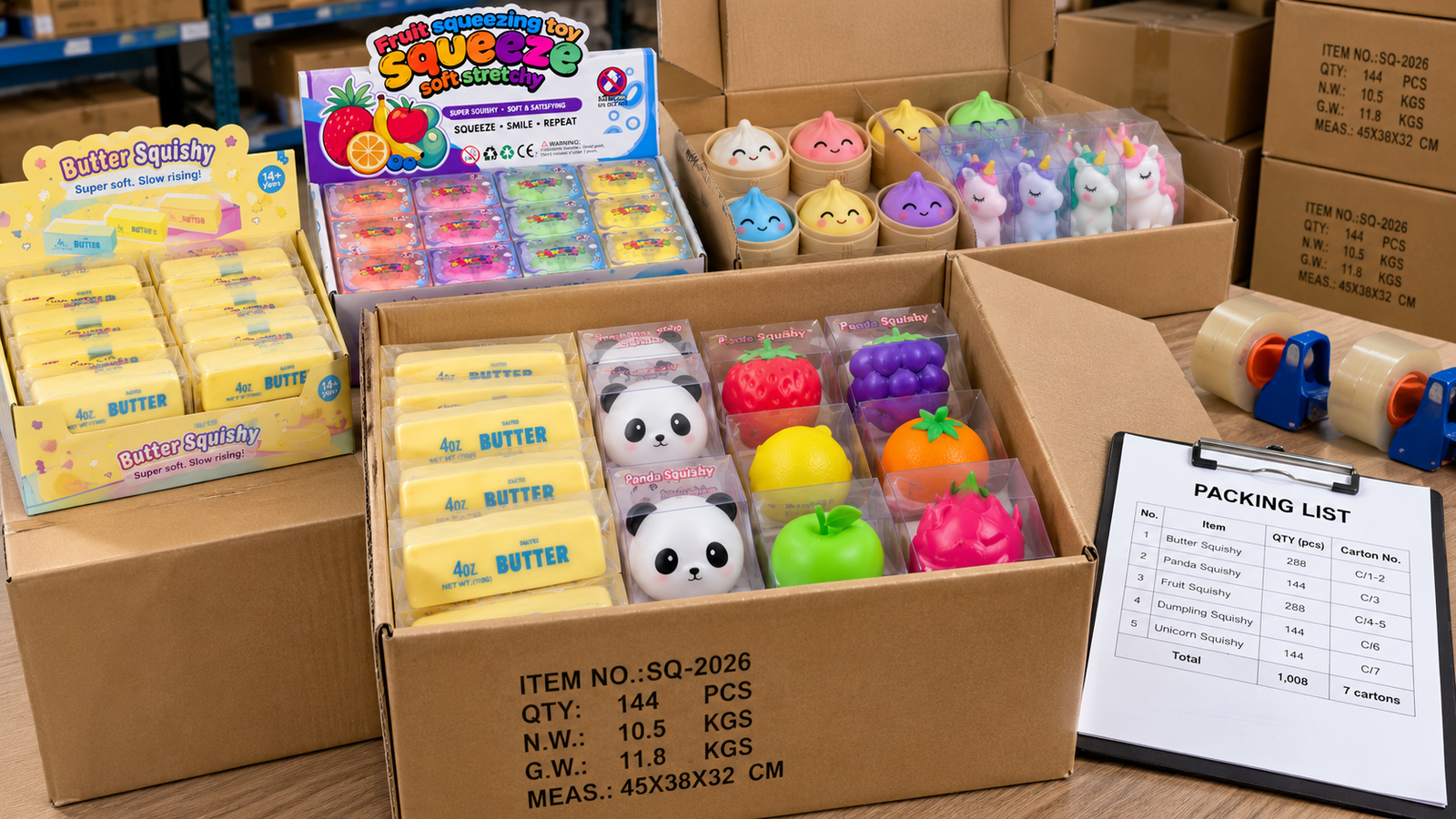
Carton capacity is another consideration. If an approved packing configuration holds 144 pieces per carton, an order of 1,000 pieces leaves 136 pieces after six full cartons. The supplier and buyer must agree how that remainder will be packed.
The 144-piece figure is an illustration, not a universal squishy toy carton standard.
For mixed SKU squishy toy wholesale shipments, buyers should confirm carton quantities before approving the final packing plan.
Individual retail boxes can change carton dimensions and freight volume. Packaging decisions should therefore be settled early. Our custom squishy toy packaging guide covers related considerations.
Make the Packing List Useful to the Warehouse
A packing list should allow the receiving team to check what arrived against what was ordered.
For each SKU, it should identify the shipped quantity and corresponding cartons. Where cartons contain several SKUs, their individual contents should be recorded rather than described simply as “assorted toys.”
Carton numbers or another agreed identification system can help connect physical boxes with the packing list.
Some larger retail and distribution networks require standardized logistics identification. The GS1 Logistic Label Guideline explains how logistics units can be identified and linked to shipment information.
GS1 distinguishes a GTIN, which identifies a trade item, from an SSCC, which identifies a logistics unit. Its SSCC reference explains how a case, pallet or parcel can receive a unique logistics identifier.
An SSCC alone does not provide a complete breakdown of every SKU inside a mixed carton. For mixed logistics units, detailed contents may need to be communicated through linked electronic shipment records.
Requirements vary by receiving partner. An independent gift shop may need clearly labeled cartons and an accurate packing list, while a distribution center may specify additional barcode or electronic data requirements.
For mixed SKU squishy toy wholesale shipments, buyers should confirm receiving instructions before labels are printed.
Reconcile the Shipment Before Dispatch
The final check is whether the shipment still matches the approved order.
Compare the purchase order with the final packing list. Look for quantity differences, missing colors, altered packaging and unexpected substitutions.
If one product is unavailable, the supplier should obtain approval before replacing it or changing the assortment. Buyers should also decide in advance whether partial shipments are acceptable.
Where pre-shipment inspection is arranged, the scope can include assortment quantities, packaging and carton identification alongside product workmanship. These checks complement the considerations discussed in our squishy toy inspection guide.
Successful mixed SKU squishy toy wholesale purchasing depends on more than combining several designs in one shipment. It requires agreement on product availability, quantities, packing arrangements and receiving documentation.
When those details are clear before dispatch, retailers and distributors can spend less time resolving shipment discrepancies and more time getting products ready for sale.
Read More