
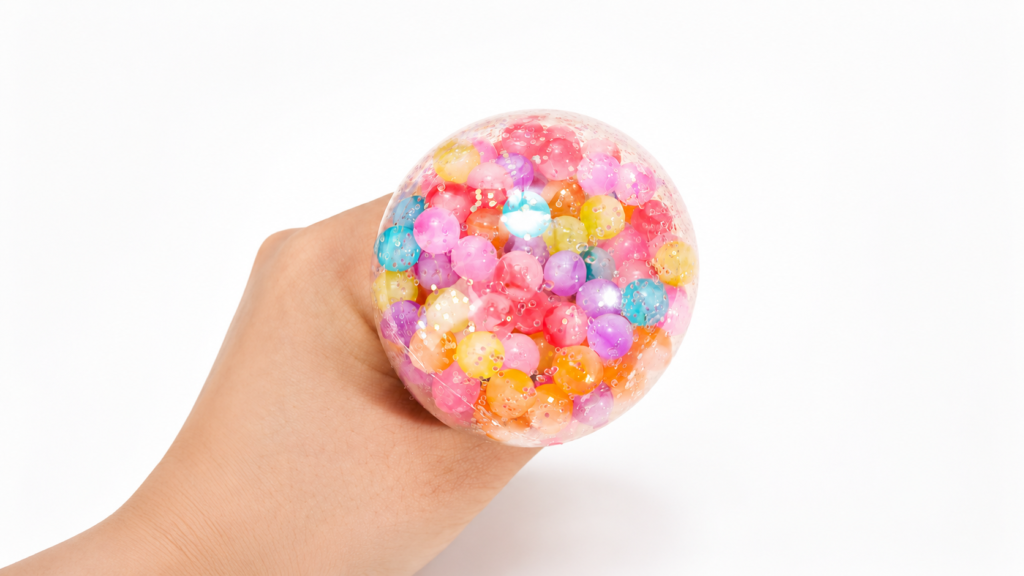
Pick up two squeeze toys that look almost identical, and they may feel nothing alike.
One might compress easily and slowly return to shape. Another may feel springier, with noticeably more resistance when squeezed. Even small differences in construction can change the way a toy feels in the hand.
That is why squeeze toy softness isn’t determined by material alone. Material formulation, internal structure, size, shape, and surface finish all play a role.
For buyers developing custom squeeze toys, here are six factors worth considering before approving a prototype.
Table of Contents
Custom Squeeze Toys: Material Is Only the Starting Point
TPR and PU are commonly used for different types of squeeze toys, but choosing between them isn’t as simple as deciding which one is “softer.”
PU foam has a cellular structure and is commonly associated with lightweight, compressible, slow-rising products.
TPR offers flexibility and elasticity and can be used for products with a different type of squeeze and recovery.
But the material name alone doesn’t tell you exactly how the finished toy will feel. The formulation, product design, and manufacturing process matter too.
When discussing squeeze toy materials with a manufacturer, it is often more useful to describe the result you want than to specify a material immediately.
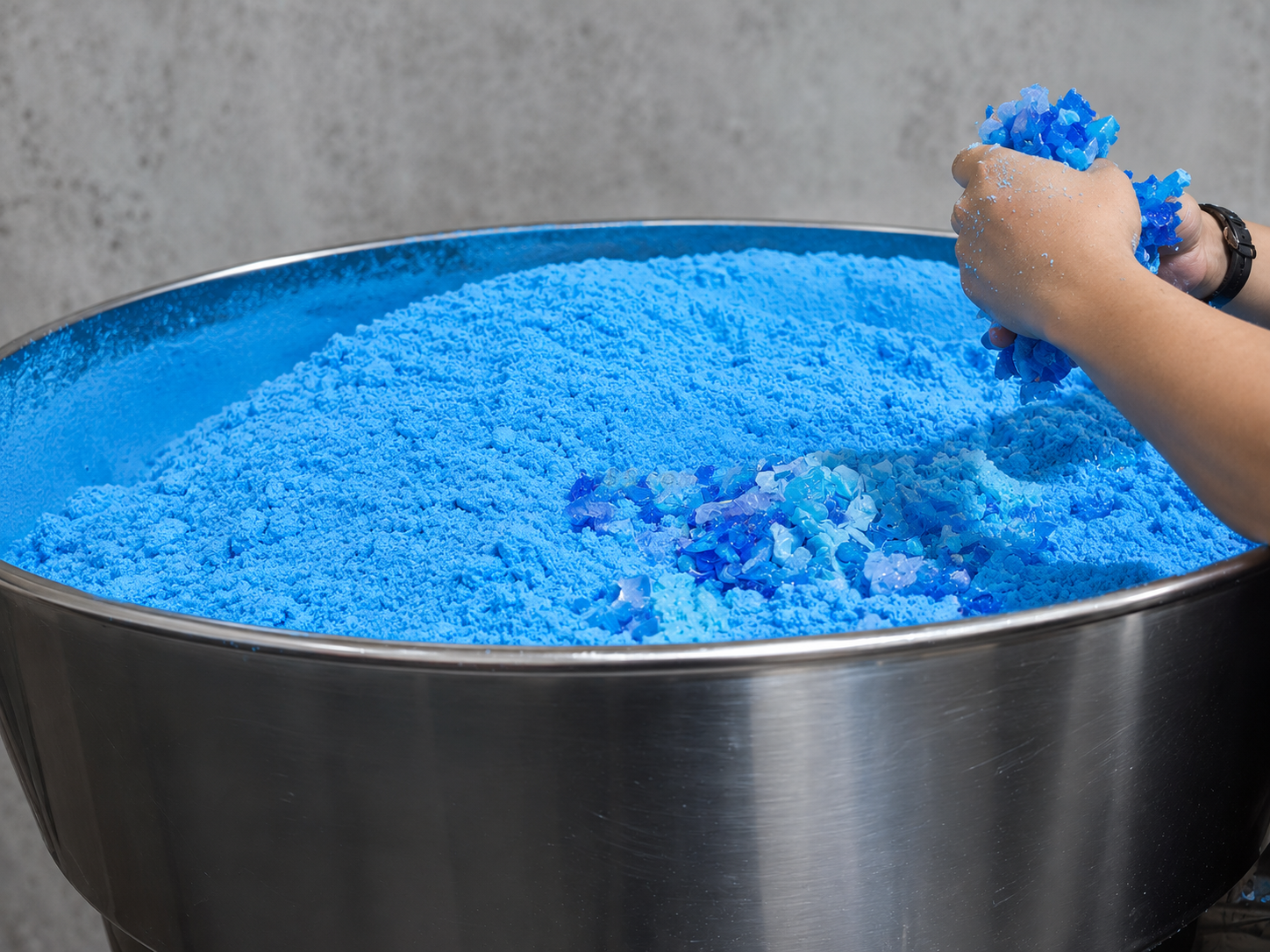
Softness and Squeeze Resistance Are Not the Same Thing
A toy can feel soft without collapsing under the slightest pressure.
Some squeeze toys compress very easily. Others are still soft to the touch but push back more as you squeeze them.
For product development, we usually need to think about several characteristics together:
Softness
Elasticity
Squeeze resistance
Recovery speed
This is an important distinction when evaluating squeeze toy softness. Simply asking for a toy to be “softer” may not fully describe the experience you’re trying to create.
A buyer may actually want less resistance, slower recovery, or a lighter overall feel—and those aren’t necessarily the same thing.
Rebound Speed Changes the Experience
Watch what happens after you release the toy.
Does it return to shape almost immediately? Or does it stay compressed for a moment and slowly rise back?
That difference has a major effect on how the product feels.
PU foam is commonly used for slow-rising designs, and its formulation and density can influence recovery characteristics. TPR products generally have a more elastic response, although actual performance depends on the formulation and construction of the product.
Instead of saying only:
“I want it softer.”
It is more useful to define the target:
How easily should it compress?
How much resistance should you feel?
How quickly should it recover?
Those details give the manufacturer a much clearer idea of the squeeze toy softness and rebound you’re looking for.
What’s Inside Matters Too
The outside doesn’t tell the whole story.
Two toys with a similar shape may use very different internal constructions. Depending on the design, a squeeze toy may be solid, hollow, air-filled, bead-filled, liquid-filled, or use another internal system.
Each behaves differently when squeezed.
A hollow product, for example, won’t compress in the same way as a solid one. A product containing beads or liquid can create movement inside the toy, changing both the feel and the way pressure is distributed.
This is why material and internal structure should be considered together when developing custom squeeze toys.
Size and Shape Can Change the Feel
Suppose you like an existing squeeze toy and decide to make the same concept twice as large.
Will it feel exactly the same?
Not necessarily.
Changing the size can affect wall thickness, weight, deformation, and how much pressure is needed to squeeze the product. A small, thick toy can behave very differently from a larger, thinner version, even when similar materials are used.
Shape matters as well.
A round toy distributes pressure differently from a long rectangular design or a flat novelty shape. Where the product bends, how it sits in the hand, and where pressure is concentrated can all influence the squeezing experience.
So when evaluating squeeze toy softness, remember:
Same material doesn’t automatically mean the same feel.
Don’t Forget the Surface
Before anyone squeezes the toy, they touch its surface.
A smooth finish, matte finish, textured surface, glossy coating, or other surface treatment can change that first impression.
This doesn’t necessarily change what’s happening inside the toy, but it does affect the overall experience.
A useful way to think about the finished product is:
Surface feel + squeeze feedback + rebound
All three contribute to how the toy feels in the consumer’s hand.
Why a Physical Prototype Matters
You can review shape, dimensions, colors, and logo placement on a screen.
Squeeze toy softness is different—you need to feel it.
During sampling, don’t evaluate the prototype only by how closely it matches the design. Pick it up and squeeze it several times.If you’re new to the development process, our OEM squeeze toy guide explains what to prepare before sampling and production.
Check:
How easily it compresses
How much resistance you feel
How quickly it recovers
How it feels in the hand
Whether the recovery remains consistent after repeated squeezing
If you already have a product with the exact feel you want, sending a physical reference sample can be extremely helpful.
“Make it a little softer” is subjective. A sample gives the manufacturer something much more specific to work toward.
Start With the Feel, Then Choose the Material
Buyers don’t necessarily need to begin a project by deciding, “This must be TPR” or “This must be PU.”
Start with the experience you’re trying to create.
Do you want something extremely soft? More elastic? Slow-rising? Easy to compress? Firmer with more resistance?
From there, the manufacturer can evaluate the design, dimensions, internal structure, target market, cost requirements, and suitable production method.
For custom squeeze toys, appearance gets the customer’s attention—but the way the product feels when squeezed can be what makes them pick it up again.
You can also explore our OEM & ODM services to learn more about custom product development and production.