“We need 240 sensory kits for 12 elementary schools. Five or six items in each one.”
The math was easy. The order wasn’t.
The district had classrooms asking for shared kits, counselors who wanted open bins and a small lending program that occasionally sent items home. Everyone used the phrase “sensory kit,” but they were picturing three different things.
The first product list said assorted colors, six pieces and zippered pouch. There was no grade range, cleaning plan or answer for what happened when a piece went missing.
Bulk sensory kits for schools are often quoted as a collection of toys. At the receiving end, they behave more like classroom supplies. Someone has to store them, count them and order parts later.
So the district put the catalog aside for a week.
Table of Contents
The Sample Was Full, but It Wasn’t Useful
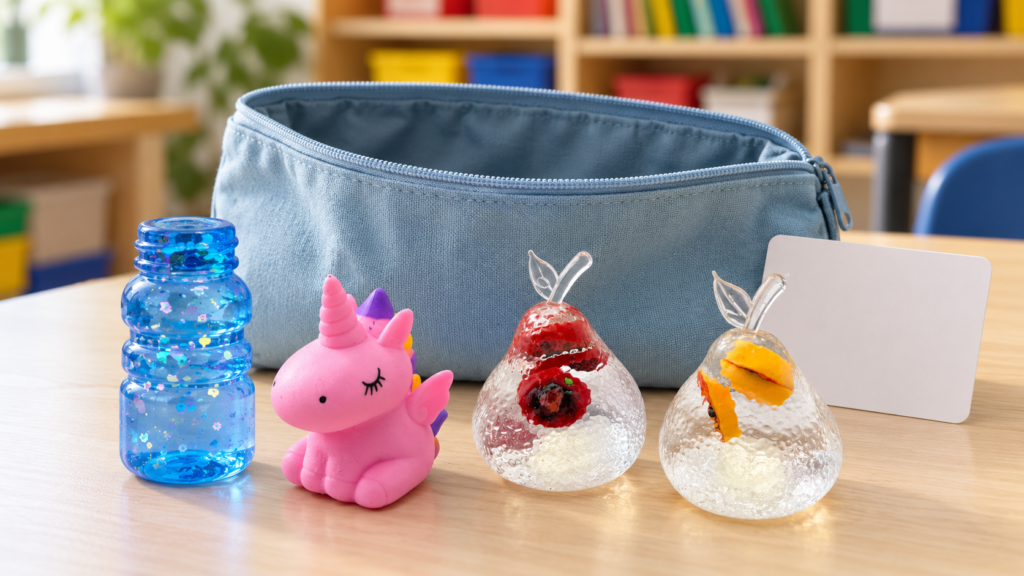
The first pouch photographed well. Inside were seven pieces: putty, a squeeze toy, a textured ball, a stretchy noodle, a popper and two small fidgets.
Then a counselor opened it.
The putty was the first thing out. “I can already see this in the carpet,” she said. The clicking fidget sounded harmless at the conference table; from across a quiet classroom, it didn’t. The two smallest pieces got a shrug. Fine toys, perhaps, but likely to be gone by Friday.
Four pieces went back into the pouch. The teachers chose the soft squeeze toy, the quiet fidget, the textured piece and the larger push toy. Marketing thought the bag looked a little empty. The teachers were relieved.
More pieces would have made a stronger product shot. Four made a better school kit.
Where Does the Kit Spend the Night?
That question did more to define the order than any discussion about colors.
Classroom kits belonged to the room, not to individual students. Each pouch stayed with the teacher and carried a number that matched a content card. Nothing went home.
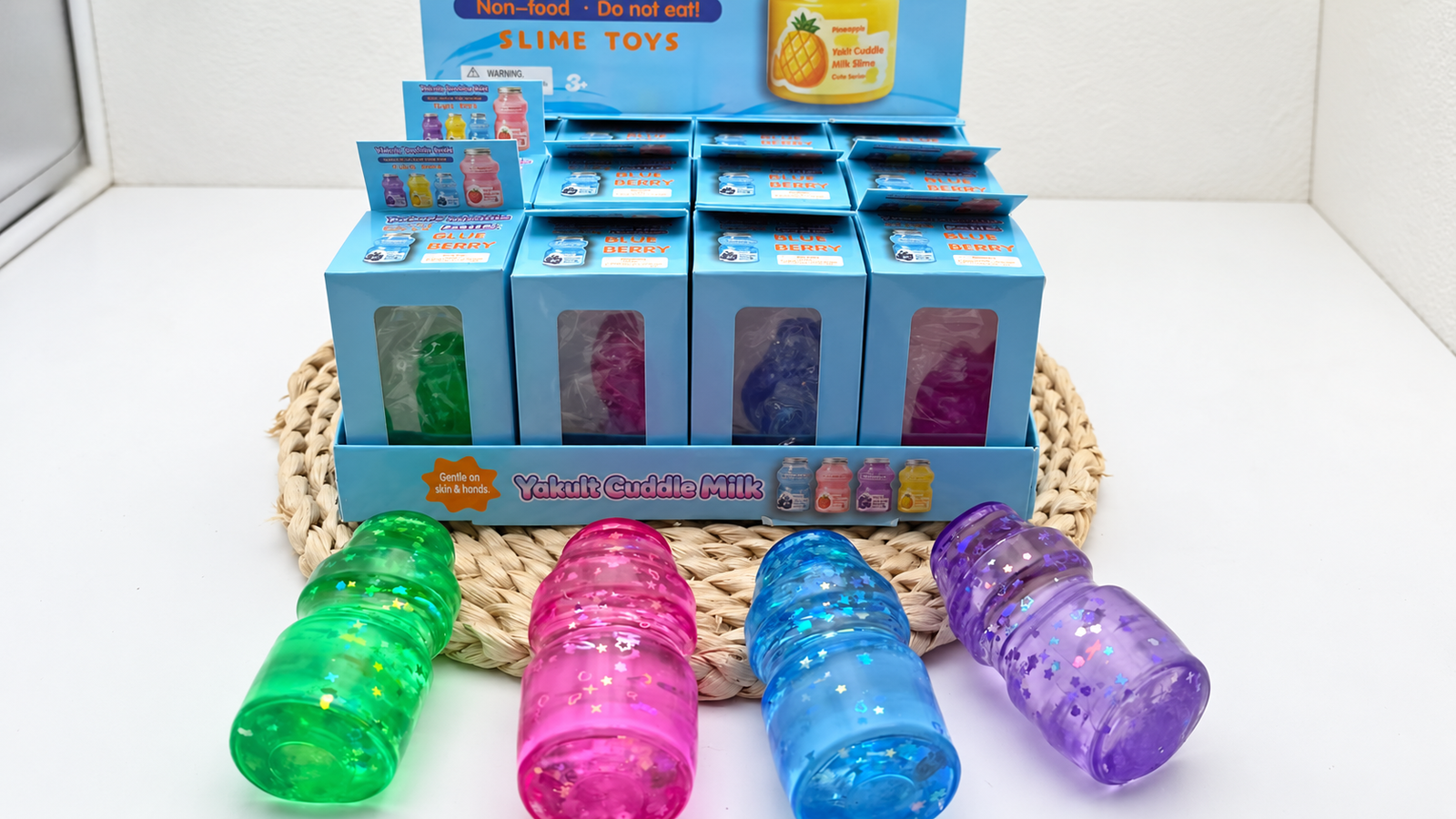
The counseling staff did not need 20 matching pouches lined up in a cabinet. They wanted the same products loose in labeled bins, where staff could reach for one item without unpacking a set.
For bulk sensory kits for schools, “one kit per classroom” and “one kit per student” cannot be treated as interchangeable instructions. One is shared inventory. The other leaves the building with a child.
K–5 Was Too Broad for One Product List
The buyer had used “elementary students” as the age description. That lasted until the samples arrived.
A small fidget was fine for the older group but was removed from the K–2 kit. Another item required more hand strength than anyone had expected from the supplier’s video. The teachers noticed within a few minutes.
The district approved two four-item versions: K–2 and grades 3–5. Different label colors separated them.
CPSC age-determination guidance considers the actual item and how children are expected to use it. Putting four products into a pouch marked “K–5” does not give all four the same age grade.
The purchasing coordinator added one more line to the order: no silent substitutions. If a named item ran out, the supplier had to show the proposed replacement before packing it.
The Nurse Turned the Samples Over
Nobody asked about cleaning during the first product call. The school nurse asked when the samples were already on the table.
One toy had grooves that held dust. A fabric-covered item felt good in the hand but did not fit the school’s normal process for shared materials.
In the end, the grooved and fabric-covered toys stayed out. The bulk sensory kits for schools used smooth pieces with no batteries. Teachers also got a second pouch marked “used” for anything that was not ready to return to the kit.
CDC guidance includes toys and other frequently handled objects in routine school cleaning. It does not say that every toy can take the same cleaner. That part depends on the school’s procedure and the product’s material and construction.
“Easy to clean” disappeared from the purchasing notes. It had sounded reassuring and told the nurse almost nothing.
Bulk Sensory Kits for Schools Need a Usable Pouch
The original pouch was clear and inexpensive. Filled with four toys, it was also too tight. The zipper bowed, and the only place for a grade label covered part of the contents.
The next sample was bigger by just enough. The zipper closed flat, the kit number had its own spot and a plain slip inside named the four pieces.
The card was not designed as a student activity. It was there so a teacher could look into the pouch on Friday afternoon and see what had failed to come back.
No one needed four little retail boxes stuffed inside a classroom pouch. Simple protective bags did the job.
Assembly appeared as its own line on the quote. Fair enough: someone still had to sort 960 pieces, check the counts, add the cards and zip 240 pouches.
They Bought Replacements Before Anything Was Lost
The district did not order extra finished kits. It bought a small reserve of each approved item and stored those pieces at the district office.
The names on the reserve cartons matched the names on the content cards. Six months later, a coordinator would not have to email a blurry photo to ask for “the blue bumpy thing.”
Color could change on a future reorder. Product style and specification could not.
This is one reason bulk sensory kits for schools work better with identifiable contents than with a changing assortment. A surprise mix is fine for prizes. It is a poor inventory system.
The Pouch Had One Number; the Toys Still Had Four Files
Purchasing assigned one district item number to the completed kit. Compliance review did not stop there.
Each children’s product needed to be identified and supported by the documentation applicable to that product. For toys intended primarily for children 12 and younger, that may include applicable ASTM F963 provisions, CPSIA requirements, third-party testing and a Children’s Product Certificate. A broad “non-toxic materials” statement did not cover the four finished items.
The buyer also had district paperwork—vendor forms, insurance requirements and campus labels. Those instructions came from the district, not from the factory.
The final request for bulk sensory kits for schools no longer said “240 assorted kits.” It listed two grade groups, four approved products for each version, pouch dimensions, content cards, reserve pieces, carton labels and the date staff needed the kits in hand.
Now the supplier knew what to pack. The district knew what it would receive. That was the order.
A school buyer does not need to choose every SKU before asking for options. What the supplier needs is a workable brief for the bulk sensory kits for schools: who will use them, where they will stay, how many versions are needed and when they must arrive. Contents that are still undecided can stay open on the brief. They should not turn into surprise substitutions on the packing line.
Read More
• Squishy Toy Samples: What Buyers Should Approve Before Production
• Novelty Toy Packaging: What Buyers Should Decide Before Production
• Squishy Toy Inspection: What Buyers Should Check Before Shipment