

Chinese stress balls are usually known as Baoding balls: firm spheres used in pairs and rotated in one palm. They are different from the soft foam or filled balls that change shape when squeezed.
A photograph may show two polished metal spheres in a fitted case, or a decorated pair with colorful patterns. What it rarely communicates clearly is their weight, internal construction, or sound.
Understanding the pair is the starting point. The name alone does not tell you whether the balls are solid, contain chimes, or come with the accessories pictured beside them.
Table of Contents
The Pair Is Part of the Product
With Chinese stress balls, the fingers guide two balls around each other within the palm. The movement comes from changing their positions rather than compressing their surfaces.
That distinction separates them from a single roller, a squeeze ball, or a mechanical toy with a rotating component. Our guide to different fidget play mechanisms discusses those broader formats; Baoding balls introduce a specific interaction between two separate objects.
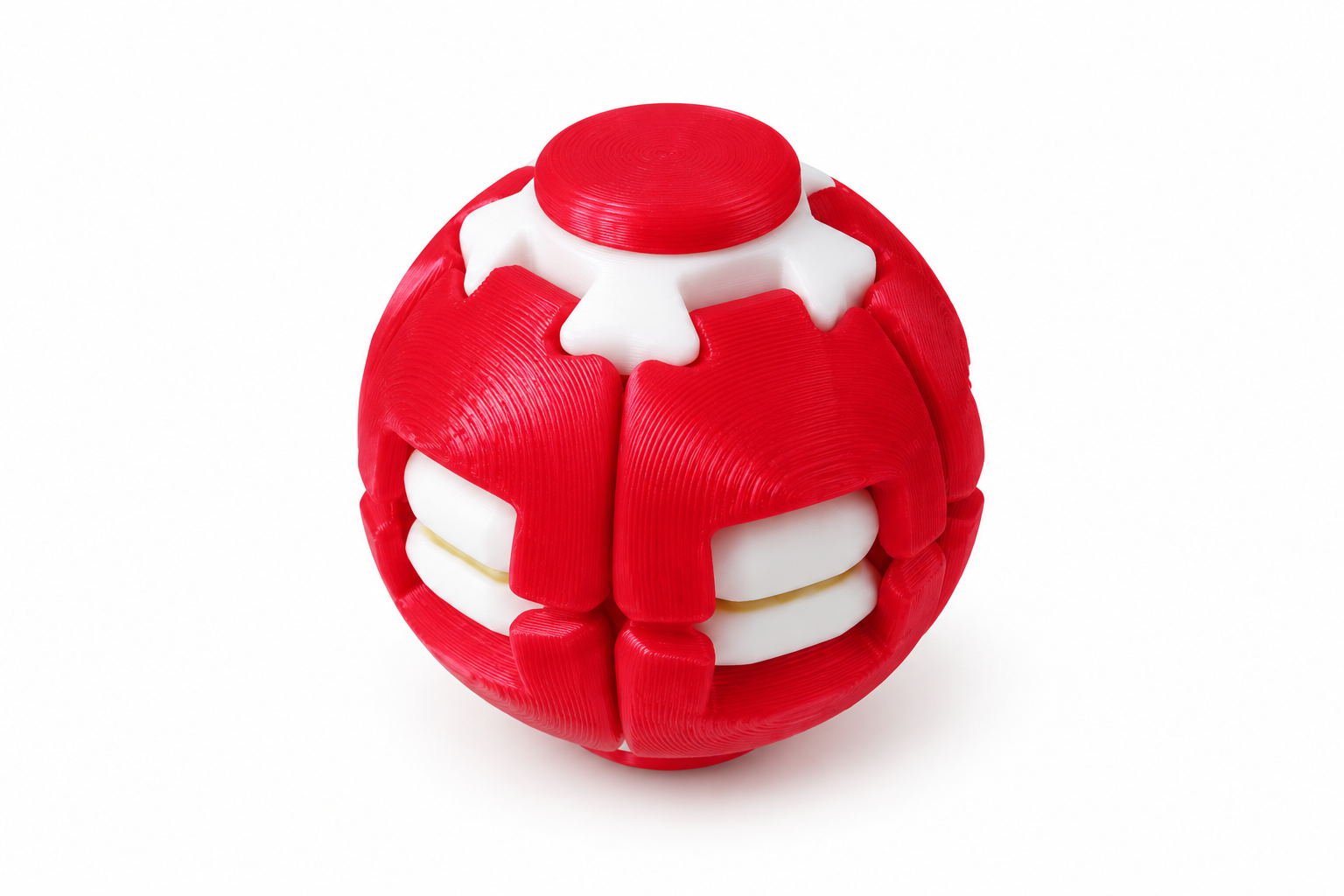
Shopping for Chinese stress balls therefore starts with confirming what the listing includes. Does the quantity represent one ball, one pair, or a box containing several pairs? A photograph showing two balls does not necessarily settle how the seller counts the item.
Cases can also contribute to the presentation. The Museum of Witchcraft and Magic’s collection record documents a decorated Baoding pair in a silk-covered box. It provides a concrete example of the paired format and fitted presentation, rather than evidence of health benefits.
For a gift purchase, check the included contents separately from the styling photograph. A stand or decorative box may be included, offered as an option, or used only to display the product.
A Metal Exterior Does Not Reveal the Inside
Chinese stress balls with similar silver finishes can have different internal structures.
BaodingBalls.com lists a solid stainless-steel pair without a chime. Its separate chrome chiming model is described as hollow steel containing an internal chime.
These are specifications for those particular products. They do not establish how another seller’s visually similar pair is made.
Comparing Chinese stress balls becomes easier when the description separates three details:
| Detail | What to establish |
|---|---|
| Body construction | Whether each ball is solid or hollow |
| Exterior | Base material, plating, coating, or decoration |
| Sound mechanism | Whether an internal chime is present |
“Metal” answers only part of the question. “Chrome” may describe a finish, while “chiming” describes an internal feature. None of those words supplies the complete specification.
Sound needs the same careful reading. A non-chiming ball has no internal chime, but two hard surfaces can still make noise when they touch. Conversely, a product described as chiming may produce a sound that a photograph cannot communicate.
Request a short demonstration of the exact version if sound matters. Listen for the internal tone and the contact between the balls separately. A recording can help identify those sounds, although microphone settings and playback volume affect how loud they seem.
Read Each Measurement in Context
For Chinese stress balls, diameter normally describes one sphere. It does not describe the space occupied by both balls together in the hand.
Weight needs an equally clear reference. A figure may identify one ball, the complete pair, or the packaged set.
For example, if a listing states “eight ounces,” ask what was weighed. An eight-ounce pair and two eight-ounce balls are substantially different purchases. Neither figure can be compared fairly with a shipping weight that includes a case and outer packaging.
When ordering Chinese stress balls, keep the measurements together:
- Diameter of each ball.
- Weight per ball or per pair, clearly labeled.
- Dimensions of the included case.
- Number of balls supplied.
- Available size options for the selected design.
Use a ruler to understand the diameter rather than estimating it from a hand photograph. Where a sample is available, check whether both balls can be supported comfortably and guided through the intended movement.
Retailers should preserve these distinctions in their own descriptions. A named size such as “medium” is less useful than an actual measurement, and a supplier’s “set weight” should not become “ball weight” when copied into a listing.
The same principle applies when describing soft products: our stress-ball manufacturing guide explains constructions that should not be confused with firm Baoding pairs.
Chinese stress balls become a much clearer purchase when the listing identifies the pair, its internal structure, its sound, and its measurements. Those details explain the physical product more reliably than a decorative finish or a general promise of relaxation.
Read More