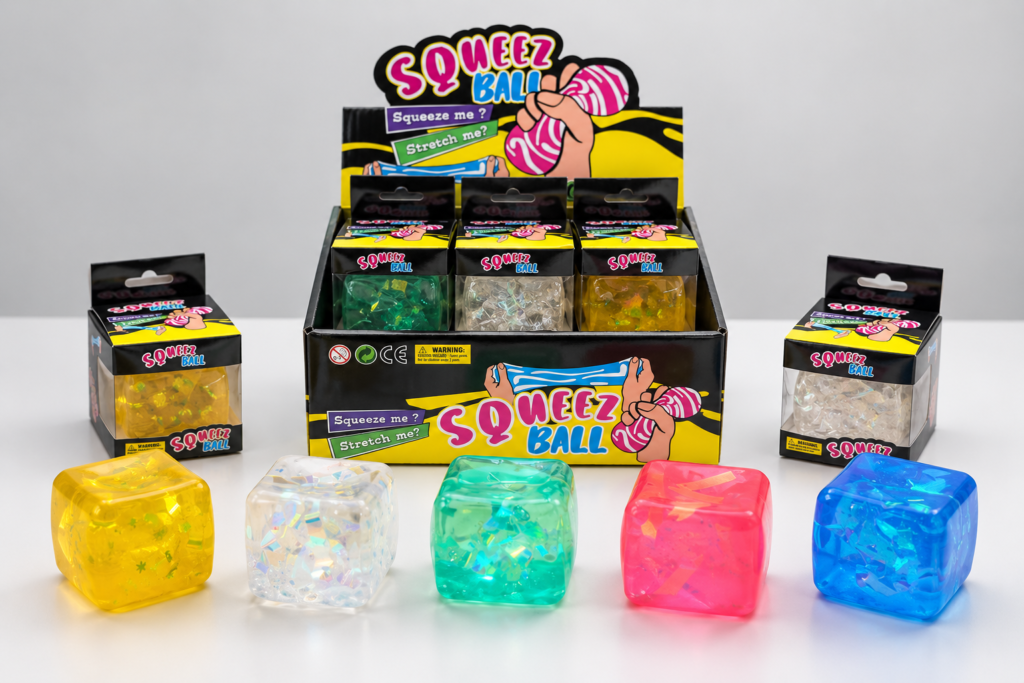
Three cube squishies were sitting on a buyer’s desk.
“These are the same thing in different colors, right?” she asked.
They looked that way. Then everyone picked one up.
The first caved in under her thumb. The second pushed back, then snapped into shape. The third barely moved until she leaned into it.
Same shape. Three different products.
For most of last year, squishies sold on looks—dumplings, butter sticks, animals and clear cubes. Feel came second. That is changing. Shoppers now notice whether a toy is firm, pillowy or slow to recover. Squishy toy texture is becoming part of the SKU itself.
Table of Contents
A Cube Is Not Just a Cube Anymore
Schylling’s NeeDoh line makes the point. Nice Cube looks simple, yet the squeeze sells it. Press slowly and it feels soft. Grab quickly and it fights back. Nice Ice Baby offers a similar feel in a smaller size. Mello Mallo is softer, closer to a marshmallow.
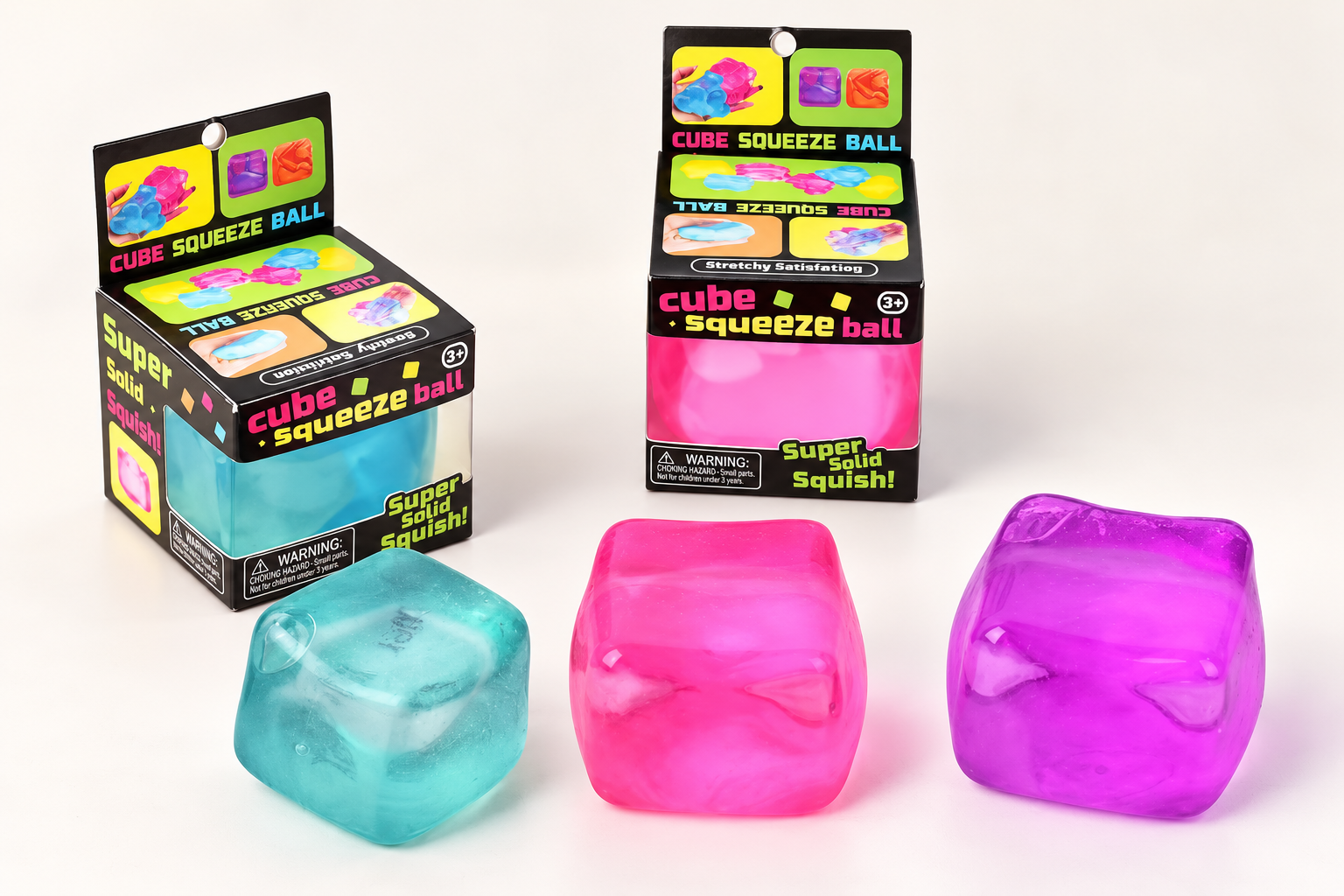
That is easy to miss in photos. A retailer may choose four appealing shapes and later discover that all four compress and recover in almost the same way. The shelf looks varied. The actual choice is not.
Sometimes a tighter assortment does more work: one product that flattens easily, one that pushes back and one that rises slowly enough to watch.
Squishy Toy Texture: “Soft” Tells the Factory Almost Nothing
Buyers ask for a “soft squishy” all the time, and factories routinely say yes. That sounds settled. It is not.
To one buyer, “soft” describes the surface. Another expects the toy to fold with almost no effort. A third pictures slow recovery. Three different products are hiding behind one word.
A material name will not settle it either. PU, TPR, TPE and silicone offer clues about construction, not what happens in the hand. Change the skin, filling or size, and the squishy toy texture may change too.
Handle the sample. Press it with a thumb, then crush it in the whole hand. Put it down and count the recovery. Repeat ten times. Does it become tacky or misshapen? Test temperature too if cartons may sit in a hot truck or cold warehouse.
Not every observation needs a laboratory number. The order still needs an agreed sample.
Six Shapes Can Still Be One Product Idea
A retailer ordering 1,800 pieces might choose six shapes, 300 of each. The spreadsheet says variety, and the display looks colorful.
Then someone squeezes them. If each gives and recovers the same way, the buyer has one product experience dressed up six ways.
Start instead with three feels—soft, firm and slow-rise—and choose one or two shapes for each. Store staff can show the difference, online sellers can film it and the package has something real to say.
Good Housekeeping recently pointed to the Nice Cube’s firmer, more resistant squeeze as the feature separating it from softer alternatives. The shape is easy to copy. The feel is what people remember.
An assortment should not call itself varied until the buyer has handled it.
Put the Samples on the Same Table
Tactile memory is unreliable. By the time Friday’s sample arrives, nobody quite remembers how much resistance Monday’s had.
Let the samples sit in the same room, then press each with a thumb and the whole hand. Watch the return. Squeeze repeatedly and check for lint, tackiness, color transfer or shape changes. Give them to a few people without naming the products and listen to the words they use.
This does not replace compliance testing. It is a better way to approve a physical experience.
Keep the chosen sample and label it with the SKU, material, filling, color, weight and package version. A photograph records the face and color. It cannot preserve squishy toy texture. When a reorder feels softer, the original sample is more useful than “Please make it like last time.”
Packaging Can Describe the Feel—If the Product Earned It
“Stress Relief Toy” tells the shopper almost nothing about the item inside.
“Firm Squeeze,” “Soft Slow Rise” and “Marshmallow Feel” set an expectation before the box is opened. Those words have to come after sample approval, not from a marketing brainstorm.
If a package says “slow-rise,” the production run should recover reasonably close to the approved piece. If it promises firm resistance, changing the filling cannot turn it into a soft toy halfway through the next order.
The box explains the product quickly. The production record gives the supplier something repeatable. Test the actual package with the approved sample: a tight insert may keep a soft toy compressed for weeks and change how it feels when opened.
An Interesting Feel Does Not Excuse an Unknown Filling
If texture is selling the product, there may be a temptation to make the inside stranger. That is not a sound sourcing rule.
In September and October 2026, the U.S. Consumer Product Safety Commission announced several recalls involving squishy buns and mystery dumplings that contained water beads capable of expanding beyond permitted limits. The bun shape was not the issue. The construction was.
For any firm, jelly-like, crunchy or dense product, the buyer should know the skin, filling and what comes out if it tears. Age grading, test reports and the Children’s Product Certificate must cover the actual SKU—not a similar product.
Vilora Toys does not use water beads or expandable water-bead fillings. There are plenty of ways to create a distinctive squishy toy texture without choosing a structure the buyer cannot properly identify or document.
Write the RFQ Around the Experience
“Please quote six cute squishy designs” will produce a folder full of shapes. It may not produce a useful assortment.
The buyer could put it this way:
We need three products that do not feel alike: one easy to flatten, one that pushes back and one that recovers slowly enough to watch. Existing shapes are fine. Please provide the material, filling, finished size, packaging, age grading and SKU-specific compliance documents for each option.
The shape can come later. The supplier now understands why the three SKUs belong together.
Shape, color and packaging still matter. But shoppers have seen plenty of cute squishies. A different face is not always a different product.
Once the cubes went around the table, nobody cared that their shapes matched. The question was simpler: would each squishy toy texture give shoppers a reason to choose it over what was already on the shelf?
Vilora Toys develops squishy, fidget and novelty toy lines for retailers, distributors and private-label brands. Planning a texture-led assortment? Tell us what should feel different from one SKU to the next, along with the quantity, age group, packaging, destination market and in-hand date.
Read More
• Custom Squeeze Toy Guide: From Design to Packaging
• Squishy Toy Samples: What Buyers Should Approve
• How to Choose the Right Squishy Toys for Your Product Line