
Not all squeeze toys deliver the same physical presence in a shopper’s hand. While lightweight polyurethane foam squishies compress effortlessly and spring back quickly, some retail assortments benefit from a heavier tactile option alongside lighter foam designs.
Sourcing clay-filled squishy toys wholesale enables retail buyers to offer a heavier, slower-moving squeeze experience. However, evaluating clay-filled squishy toys wholesale requires examining shell durability, unit weight distribution, and protective individual box packaging before committing to volume production.
Table of Contents
Understand How Clay Fillings Change Tactile Value
The interior filling dictates both the sensory feedback during play and the perceived quality at retail checkout.
When comparing clay-filled squishy toys wholesale against standard hollow or foam-filled lines, category managers evaluate distinct physical differences:
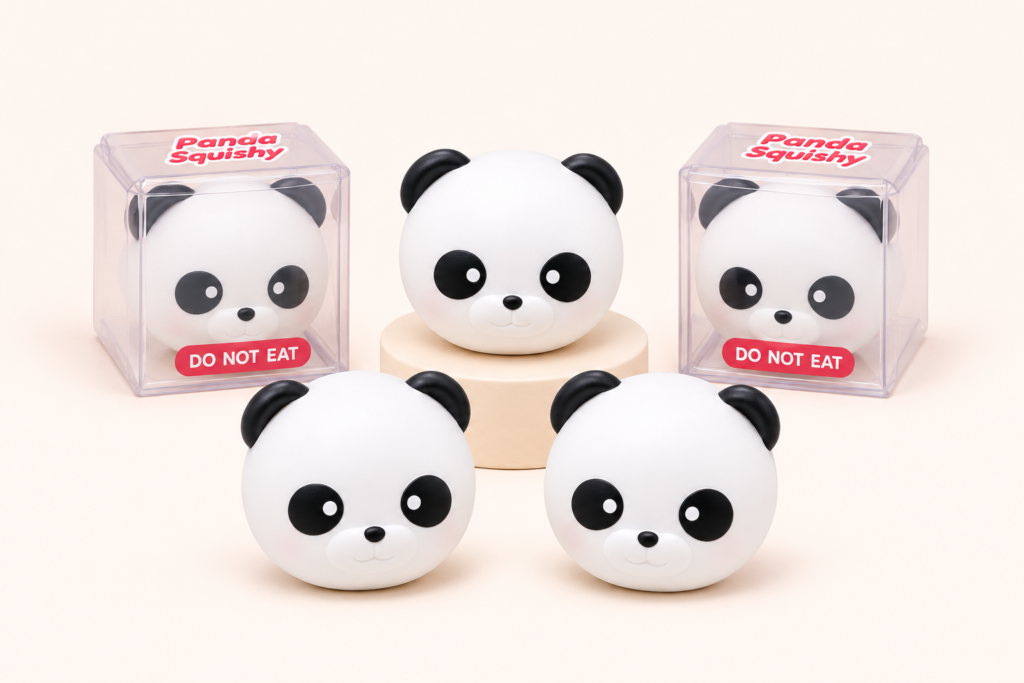
Substantial Unit Weight: Clay-based compounds are significantly denser than cellular foams. For example, Vilora Toys’ Panda Squishy Toy measures approximately 6.5 cm yet weighs around 200 g (7.05 oz), giving the product an immediate, substantial presence when picked up by a shopper.
Dense, Yielding Squeeze Resistance: Rather than feeling airy, clay-filled cores push back firmly against palm pressure, allowing users to knead and compress the body with a grounding, tactile resistance suited for stress relief and sensory play.
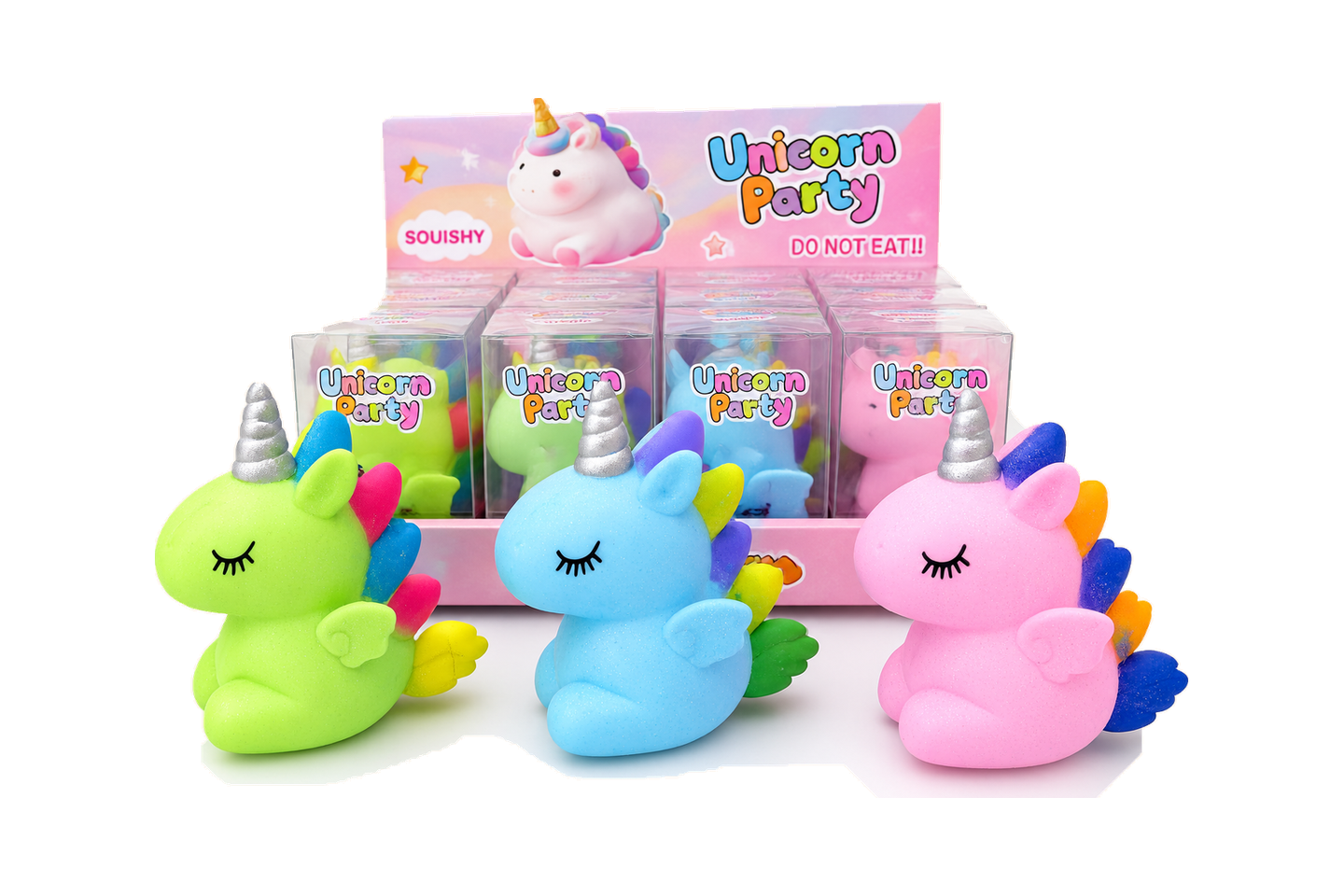
Character Versatility: Compare how the panda and unicorn samples stand and recover in their actual retail boxes. Their different silhouettes do not by themselves prove identical internal support or recovery behavior.
Understanding these material mechanics helps buyers position clay-filled squishy toys wholesale in differentiated gift and sensory assortments; margins must be calculated from actual costs and selling prices.
Inspect TPR Shell Elasticity and Closure Integrity
Because filled constructions can place localized strain on the shell and closure, the outer thermoplastic rubber (TPR) shell must provide reliable containment.
When reviewing samples for clay-filled squishy toys wholesale, procurement teams should perform targeted physical inspections:
Surface Stretch and Seam Smoothness: Squeeze and knead the sample across multiple angles to verify that the outer TPR membrane stretches evenly without thinning excessively around sculpted ears, horns, or limbs.
Fill-Port Closure Verification: Inspect the base or back of the toy where the filling is introduced, if the design has a separate filling port. Confirm with the supplier how the opening is sealed and check that the closure sits flush without sharp edges or separation under firm hand pressure.
Surface Tack and Paint Adhesion: Check whether painted facial features—such as panda eyes or unicorn details—flex smoothly with the TPR skin without cracking or flaking during manipulation.
Documenting these physical checks on an approved pre-production sample creates a clear reference standard for production quality control.
Plan Individual Box Packaging and Shelf Footprint
Unlike lightweight foam toys that can be tossed loosely into bulk dump bins, heavy clay-filled characters require structured retail packaging to protect their finish and support shelf presentation.
Sourcing directors ordering clay-filled squishy toys wholesale should verify packaging specifications carefully:
Individual Clear Retail Boxes: Packing each unit inside an individual clear retail box (such as the 6.5 × 6.5 × 8.5 cm box used for the panda SKU) keeps soft TPR surfaces free from store dust while allowing customers to view the character from multiple angles.
Coordinated Countertop Displays: Grouping 12 individually boxed units inside a matching countertop display box simplifies retail merchandising and protects stacked boxes from shifting during transit.
Master Carton Weight Management: Confirm the current net weight of each selected SKU and the packed carton gross weight; do not apply the panda’s approximate 200 g weight to every clay-filled design. Buyers should confirm exact carton dimensions, gross weights, and corrugated board strength to prevent lower-tier carton crushing during ocean freight.
Aligning packaging structure with unit weight protects retail presentation from factory dispatch to store shelf.
Verify Material Declarations and Market Safety Compliance
Commercial importers must ensure that both the outer elastomer and the interior clay compound satisfy destination market regulations.
Before releasing production orders for this clay-filled assortment, compliance teams should coordinate documentation:
Component-Specific Testing: Under federal rules outlined by the Consumer Product Safety Commission (CPSC), children’s toys must be tested by an accredited third-party laboratory against ASTM F963 mechanical and chemical requirements. Ensure testing covers both the outer TPR shell and the internal clay filling for total lead and soluble heavy elements.
Traceable Material Declarations: Request accurate material descriptions for the specific SKU so your Children’s Product Certificate (CPC) and tracking labels align with laboratory records.
Private-Label and Custom Options: Buyers looking to develop exclusive character molds, custom colorways, or branded retail boxes can explore our wholesale squishy toys collection or discuss custom tooling feasibility.
For a related product or sourcing reference, see Unicorn Squishy Toy.
To request wholesale pricing, carton specifications, or physical evaluation samples for this clay-filled assortment, contact Vilora Toys with your target SKUs, estimated quantities, and destination market requirements.
For the distinction between hardness methods and finished-toy feel, see ASTM D2240 durometer test method. The applicability of any external guidance to a particular finished SKU must be checked separately.
Read More