A lower unit price can look like the easiest way to choose a custom toy manufacturer.
But two quotes showing the same price per piece may still describe different projects.
One supplier may be pricing an existing mold with a color change and standard packaging. Another may be allowing for a new shape, custom printing or additional sample work. Tooling, testing, inspection and freight may sit inside the quote, outside it or remain undecided.
Before comparing the numbers at the bottom of two quotations, make sure the manufacturers are pricing the same product and the same scope of work.
Table of Contents
Make Sure Each Custom Toy Manufacturer Is Quoting the Same Product
A reference image does not always produce an identical quotation.
Imagine sending the same character sketch to two factories. One finds an existing mold with a similar shape and proposes changing the color and face print. The other treats the character as an original design that requires new tooling.
The first is largely a customization project. The second includes product development. A lower price from either supplier tells you little until that difference is clear.
Ask each custom toy manufacturer to identify the configuration behind its quote: size, material, construction, included modifications and whether the design uses an existing or new mold.
This matters when a project begins with photos, sketches or an existing retail item rather than a finished specification. Those references can communicate the idea without defining every manufacturing detail.
If you are still deciding how much of an existing product should change, Vilora’s guide to private label toys explains lighter customization versus deeper product development.
Separate Unit Cost From Development Cost
The unit price is only one part of a custom project.
New tooling, artwork setup, prototype work or printing setup can make one quotation look more expensive before production begins. Separate those one-time charges from costs that repeat with every order.
Suppose one factory quotes $1.70 per unit plus tooling, while another quotes $1.95 using an existing mold. The first is not automatically more expensive, and the second is not automatically safer. The answer changes with order volume, how original the product needs to be and whether future orders will use the same setup.
The useful comparison is what you pay to create once, what you pay again and what product each route produces.
Keep tooling visible rather than letting it disappear into a general “customization” fee. At this stage, you do not need to solve every tooling question; you need to know whether both quotes assume the same development route.
Samples Should Clarify What Happens Next
A sample fee can cover very different work.
For an existing toy, a sample might confirm a new color, logo or print. An original product may require a more involved development sample before the shape or construction can be approved.
Before selecting a custom toy manufacturer, ask what the quoted sample stage includes and what happens if the first version is close but not ready.
Can artwork be repositioned? Can a color be adjusted? Does another physical sample create an additional charge? Would a structural change move the project into a different development stage?
The point is not unlimited revisions. It is knowing what the sample fee is buying.
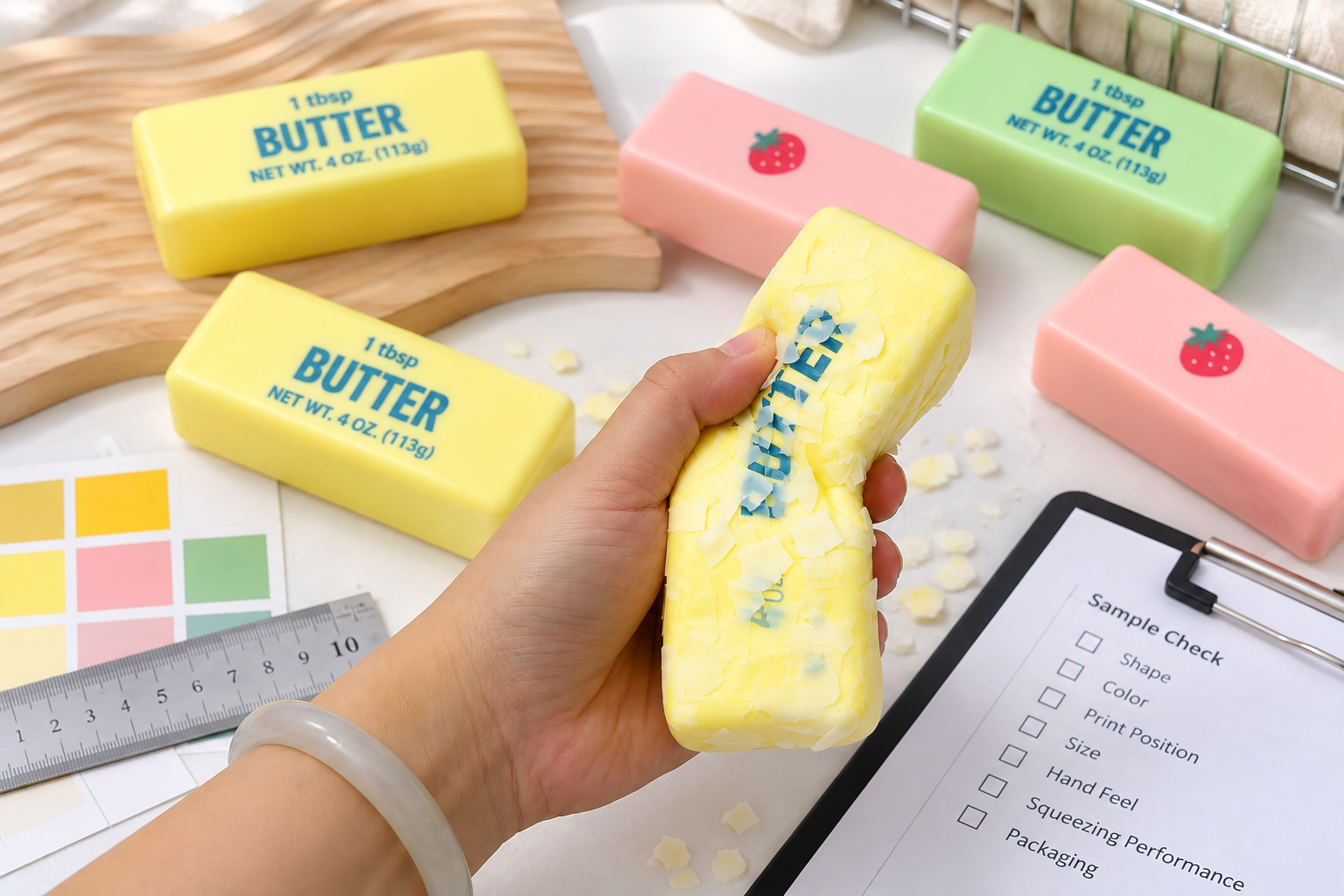
Once a sample is approved, the reference should also be identifiable. Color, print position, dimensions, hand feel, movement and packaging details should point back to an agreed version or specification—not simply “the sample we liked.”
Packaging, Testing and QC Can Change the Real Quote
Packaging is one of the easiest ways for two similar quotations to drift apart.
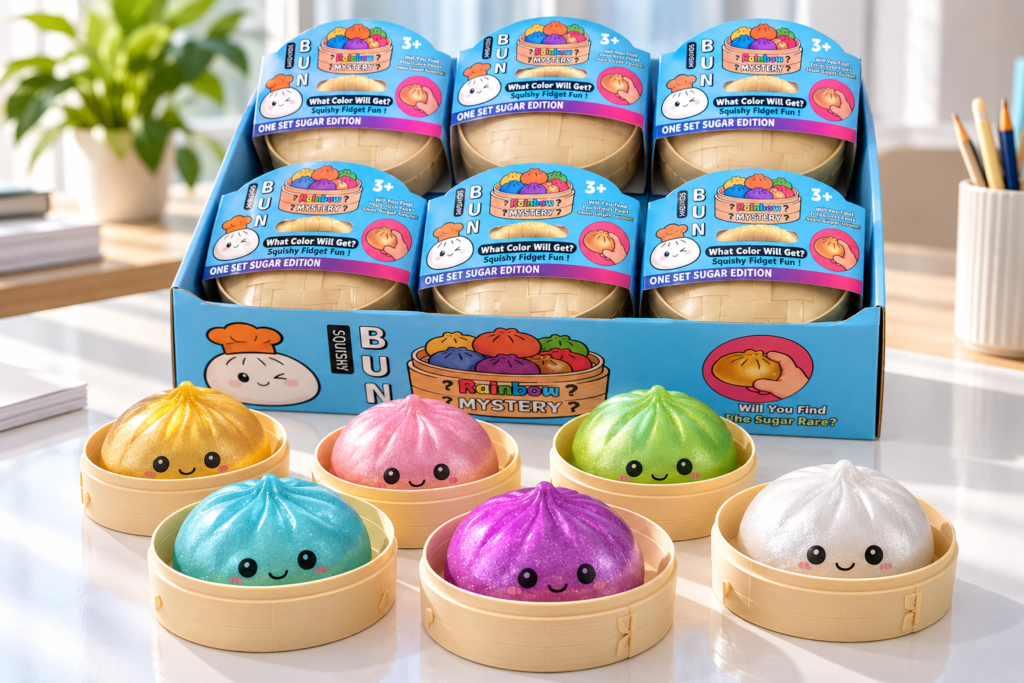
A loose toy, an individually boxed toy and twelve toys packed into a printed countertop display are different commercial products even when the toy itself is unchanged. If one quote includes retail packaging and another lists it as “TBD,” the prices are not directly comparable.
Testing and quality control need the same attention. “Testing included” should identify what is being considered, while “QC included” should have a reference point such as an approved sample, artwork, specification or packing requirement.
Independent inspection can also happen at different production stages. SGS lists initial production checks, during-production checks, final random inspection and loading or unloading supervision among its consumer-product inspection services. That is useful context because “inspection” is not one universal activity.
Ask what each custom toy manufacturer is actually including rather than comparing labels such as “QC” or “testing” on a spreadsheet.
For an original novelty concept, Vilora’s custom novelty toys guide can also help define which visual or functional details the manufacturer needs to preserve.
Compare the Total Project, Not Just the Unit Price
Once the scope is aligned, the quotation becomes easier to read.
Put product cost, one-time development charges, samples, packaging, testing or inspection arrangements and shipping basis on the same comparison sheet. Mark anything still provisional instead of treating it as fixed.
Trade terms matter too. An EXW factory price and a delivered cost to a U.S. warehouse answer different questions. Even two FOB quotes may produce different shipment costs if the packaging specifications and carton volumes differ.
Supplier A might have the lower unit price but separate tooling and packaging costs. Supplier B may have a higher piece price but use an existing mold and include the agreed retail package. Neither is automatically the better choice.
The important thing is that you can explain the difference.
Choose a Custom Toy Manufacturer by Scope, Not One Number
A useful quotation becomes clearer as you examine it.
You should be able to identify what product is being made, what customization is included, which costs happen once, what the sample stage covers, how the product will be packed and which items still need confirmation.
Not every detail will be fixed at the beginning. Custom development naturally changes as samples are reviewed and specifications become more precise. But uncertainty should be visible.
When comparing a custom toy manufacturer, compare assumptions as carefully as prices. First make sure suppliers are quoting the same project. Then decide which manufacturing route makes sense for the product you actually want to sell.
Read More