A toy can be ready for production while its packaging system is still unresolved.
The retail box may already have a logo and finished artwork, but buyers still need to know what counts as one sellable unit, how variations are identified, how many units belong in a display or case, and how those units move through distribution.
That is why custom toy packaging should be planned from the product outward. The individual package is only one layer. For many programs, the complete structure runs from the toy to the retail unit, then to an inner pack or display, and finally to the master carton.
Getting those relationships clear before production can prevent surprisingly practical problems later.
Table of Contents
Define the Sellable Unit First
Imagine a squeeze toy available in six colors.
A retailer could sell each color as a separately identified item. The six colors could also share one assortment strategy, with stores receiving a predetermined mix. Another program might place twelve mixed pieces in a countertop display and replenish the entire display at once.
The physical toys may be nearly identical, but the inventory structure is not.
Before designing custom toy packaging, buyers should know what the customer actually purchases and what the retailer actually reorders. Is one packaged toy the sellable unit? Is a multipack sold together? Are colors ordered separately or only as an assortment?
This becomes especially important for character collections and seasonal ranges. A packing instruction that says only “24 pcs/carton” leaves important information unanswered if the buyer expects four designs in specific quantities.
A specification such as 4 designs × 6 pcs = 24 pcs makes the assortment much clearer before packing begins.
Turn the Package Into a Production File
Once the sellable unit is defined, custom toy packaging has to move from a visual concept to something that can actually be manufactured.
A dieline maps the physical structure of the package: panels, folds, cut areas, flaps and other production boundaries. Artwork has to fit that structure rather than simply look good on a flat rectangular mockup.
That can change seemingly small design decisions. A logo may sit too close to a fold. Important information can fall onto a flap. A window can reduce usable artwork space. Two panels that appear next to each other on a flat file may face different directions after the box is assembled.
Variation identification belongs in this stage too.
If pink, blue and yellow toys use nearly identical boxes, the factory and warehouse still need a reliable way to distinguish them when necessary. If the colors are intentionally sold as one mixed assortment, the packaging specification should reflect that instead.
The goal is not simply to approve attractive artwork. It is to approve artwork attached to the correct physical structure and product configuration.
Build Custom Toy Packaging as a Hierarchy
Packaging becomes easier to understand when buyers follow one toy outward:
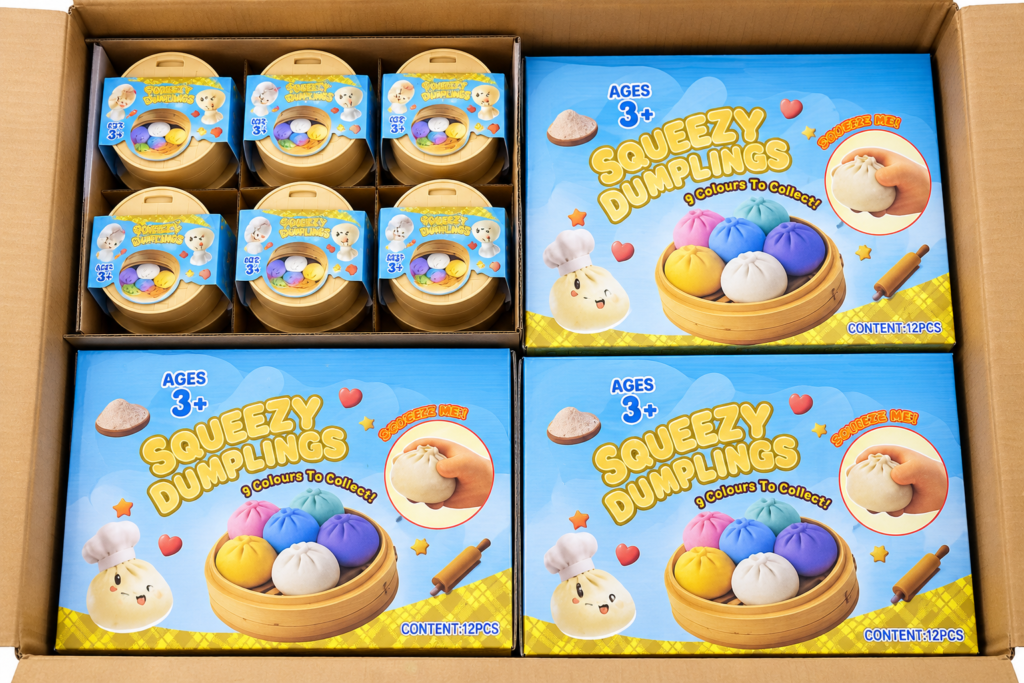
Toy → retail unit → inner pack or display → master carton
Not every project needs every layer. A small individually packaged fidget toy may go directly into a shipping case. Another product might place twelve retail units inside a countertop display, then pack four displays into one master carton.
These packaging levels serve different purposes.
GS1 US, for example, distinguishes an individual “Each” from packaging levels such as Inner Pack, Case, Mixed Case and Display Shipper. A standard Case contains units sharing the same GTIN, while a Mixed Case contains more than one type of “Each” and therefore more than one GTIN.
That distinction matters for toy assortments. A carton containing 24 identical packaged toys is not necessarily structured the same way as a carton containing six different sellable designs.
GS1 US also notes that certain higher packaging levels containing a single product GTIN can receive a GTIN-14 for shipping and receiving. Mixed cases are handled differently because they contain multiple GTINs.
For buyers, there is no need to turn every packaging project into a barcode lesson. The useful point is simpler: decide what exists at each packaging level before assuming one identification system covers everything.
Case Pack Is Also an Inventory Decision
Factories naturally need a case pack because products have to be packed and shipped. Retailers experience that same number differently: as inventory.
Suppose a small specialty store sells about six units of a novelty toy each week. Receiving 12 units at a time creates a different replenishment commitment from receiving 48.
Mixed assortments introduce another question. If every display contains equal quantities of four colors but one color consistently sells faster, stores may run out of the strongest variation while slower ones remain.
That does not mean every color needs its own case. It means assortment ratios deserve the same attention as total piece count.
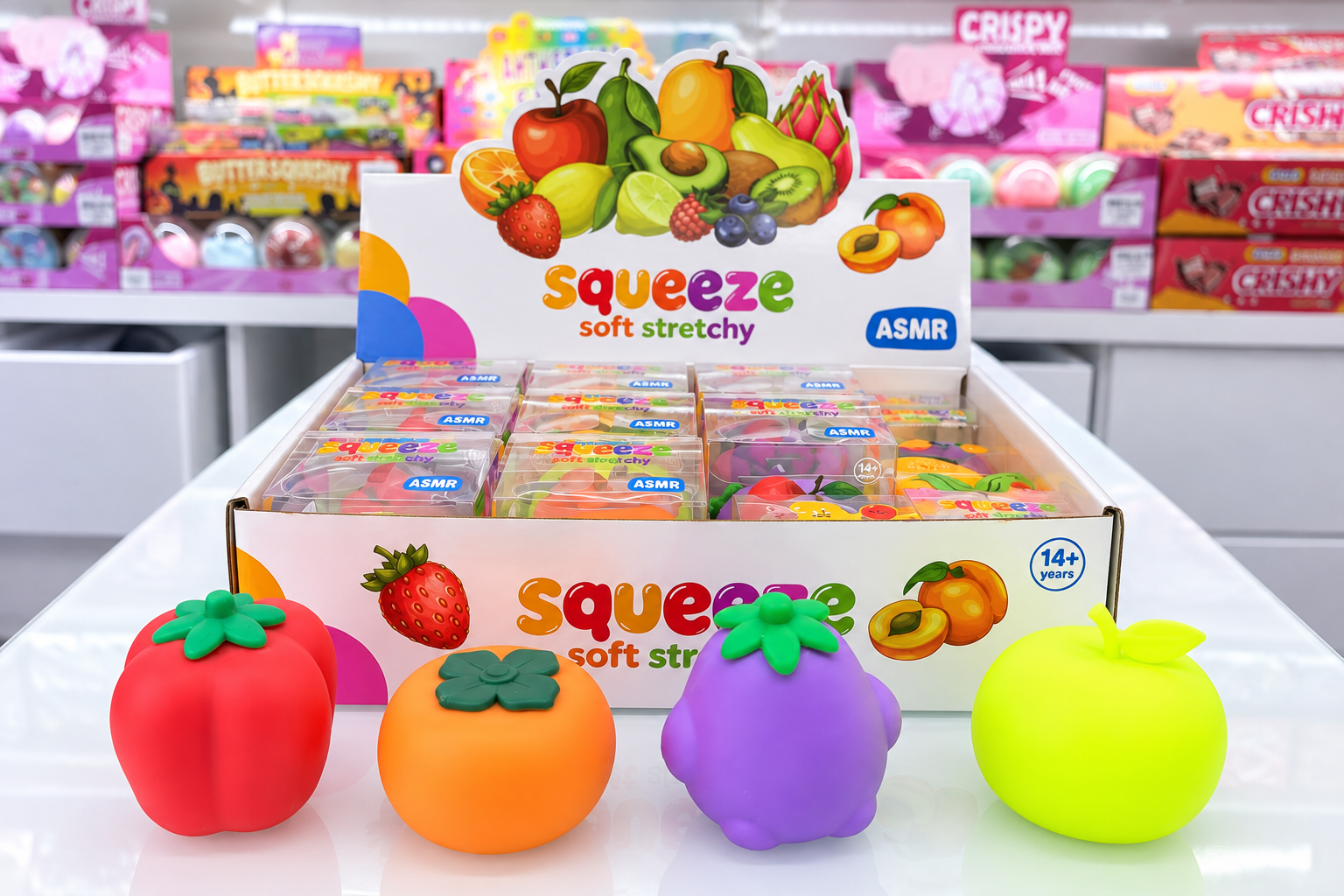
Seasonal products make this especially visible. A large case pack may be easy to manage for an evergreen item that can remain on the shelf for months. The same quantity can become inconvenient when a Christmas or Halloween SKU has a short selling window.
For this reason, custom toy packaging should connect case quantity with the way the assortment is expected to be replenished—not simply with the maximum number of pieces that fit into a carton.
Packaging Dimensions Multiply Through the Shipment
A few extra millimeters around one toy may seem insignificant.
But retail packages do not travel one at a time.
Place several units into a display, several displays into a master carton, and the dimensions of the original retail package begin affecting the size of every layer around it.
This does not mean the smallest package is always best. Extra room may be needed for an insert, product visibility, a particular structure or appropriate protection. The question is whether that space is doing useful work.
For custom toy packaging, buyers should therefore review the dimensions of the finished packaged product, not only the toy itself.
The master-carton specification should also explain its contents clearly. Compare:
48 pcs/master carton
with:
4 countertop displays × 12 retail units = 48 pcs/master carton
The second version shows how the shipment is actually constructed. Add carton dimensions, gross and net weight, and assortment breakdown where relevant, and the information becomes more useful for freight planning, receiving and warehouse handling.
Design for the Route the Product Will Travel
The journey does not end when the master carton is sealed.
A retail unit moving inside a case from a distribution center to a store follows a different route from the same product shipped individually through an e-commerce parcel network.
That difference matters because the distribution route influences what the package may encounter before it reaches the customer. The International Safe Transit Association (ISTA) distinguishes between distribution environments such as parcel delivery, retailer fulfillment systems and distribution-center-to-retail movement when evaluating packaged products.
This matters particularly when one SKU serves several channels. A retail package designed mainly for shelf presentation may travel inside a protective master carton to stores. If the same retail unit will later be shipped directly to an online customer, the buyer needs to decide whether it can travel that way or whether another shipping layer is required.
Distribution therefore belongs in the custom toy packaging conversation before the structure is finalized.
The finished packaging system should answer a connected set of questions: What does the customer buy? How are variations identified? How many units belong in a display or case? What sits inside the master carton? How large and heavy is that carton? And what happens to the product after it leaves the factory?
A good package still needs to present the toy well. But production-ready packaging also needs to work as a sellable unit, an identifiable SKU, an inventory configuration and a repeatable shipping structure.
That is the difference between designing a box and designing a packaging system.
Read More