
A butter-shaped squishy in a food-style wrapper can attract attention on a counter display, but the same presentation can make its identity less obvious when the individual pack is separated. Food-shaped squishy labeling needs to account for that complete encounter. A U.S. importer or retail buyer should review the toy, wrapper and display together, then consider what information stays with the recipient. A realistic design does not remove the need for an appropriate product and safety assessment of the finished presentation.
Table of Contents
Review food-shaped squishy labeling beyond the small print
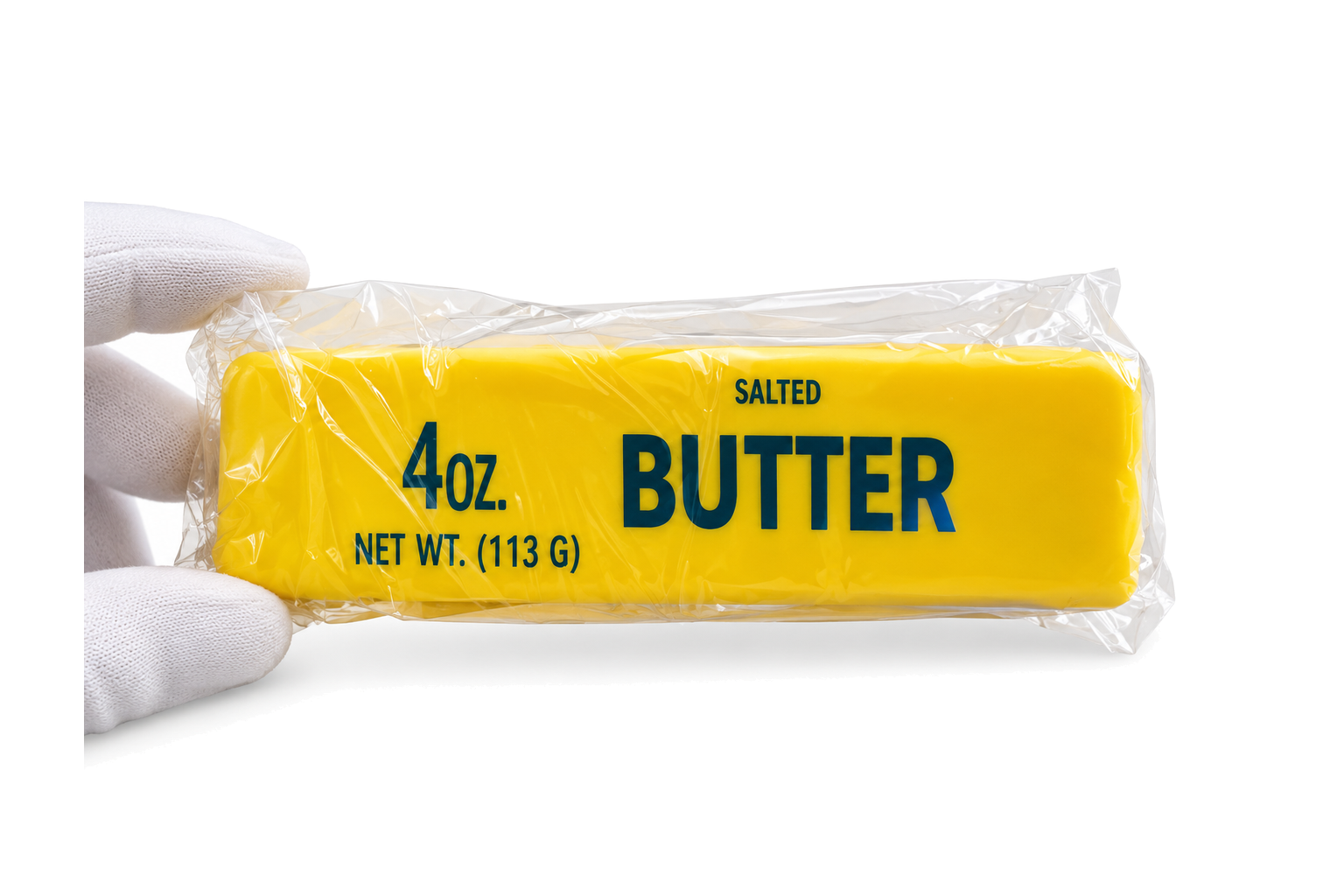
Review food-shaped squishy labeling with the finished sample beside its proposed individual and display packaging. Look at the main product name, food imagery, wrapper style and any weight-like or nutrition-style graphics. Record which elements are decorative and which are actual product information. A printed number in food-inspired artwork should not be copied into a purchase specification as the toy’s measured weight.
Vilora’s realistic butter-stick squishy is currently described as TPR, with a yellow butter-like form. It is a toy, not food, and the appearance does not establish edible ingredients or food-contact suitability. Keep the confirmed product description separate from the visual theme. Ask the supplier to resolve any wording that could confuse the buyer about the actual construction.
Follow the individual unit after the display separates
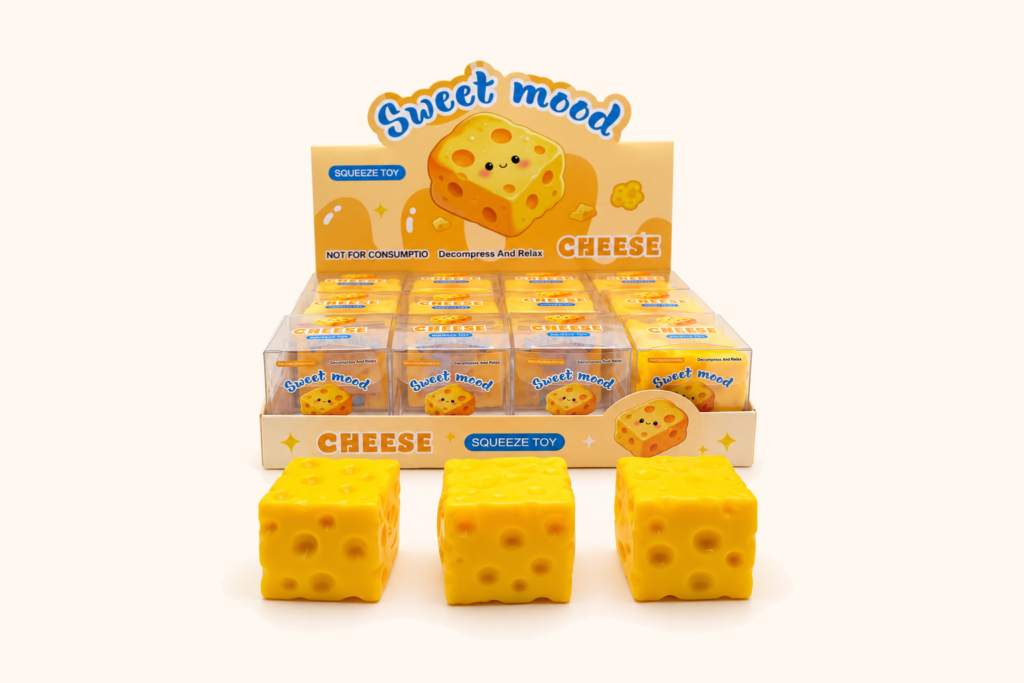
In food-shaped squishy labeling, a display header may communicate toy identity clearly while a detached wrapper carries mostly food-style graphics. Review the point at which the retail unit leaves the display and the information that accompanies it. If items may be sold loose, that changes the review. Do not assume that the shopper will retain or even see the outer carton.
The squishy packaging guide helps frame unit and display formats. For food-shaped products, the practical question is whether the chosen presentation keeps the product’s identity and required information accessible throughout the intended sale. A designer should work from the actual pack dimensions and folds, not only a large flat artwork view where every statement looks legible.
Treat warnings as part of a broader assessment
For food-shaped squishy labeling, ask the responsible product and compliance parties to assess the intended age, design, foreseeable handling and applicable requirements. A toy statement or a do-not-eat warning is not, by itself, proof that a realistic food presentation is appropriate. Do not invent universal U.S. warning wording from a competitor’s package. The correct labeling and product decisions depend on the actual configuration and relevant requirements.
The CPSC testing and certification overview describes broader responsibilities for applicable children’s products. It does not certify this butter shape or approve a particular wrapper. Other information, including origin and applicable tracking details, needs its own review. Keep those tasks visible so a stronger toy-identity statement does not accidentally replace another required element.
Approve the printed sample, not just the concept
Check food-shaped squishy labeling on the final individual pack and display at actual size. Confirm that closures, seams and handling do not hide the approved statements. For an assortment of cheese, butter or other food-inspired shapes, review the relevant variants rather than assuming one wrapper covers them all. The wholesale squishy category is a source of product options, not a universal labeling template.
Keep the approved artwork revision linked to the physical sample and the review decisions. If the pack style, product shape or sales format changes, revisit the affected questions. An image showing a wrapped toy held above bulk stock is useful context, but it cannot establish legal compliance, recipient age or the adequacy of information on every side of the package.
Food-shaped squishy labeling should leave the buying team with a defensible presentation decision: what the item is, what the individual recipient sees and which product-specific requirements have been resolved. If the design still creates uncertainty, revise the presentation before treating a warning as the entire solution. That keeps the food-inspired concept connected to an unmistakable toy identity and an appropriately reviewed finished product.
Read More