

A strawberry, a lemon and a peach can make an attractive retail display. But once shoppers pick them up, the differences become more interesting. One catches the eye through color, another stands out for its shape, and a third wins attention because of how it feels when squeezed.
For buyers exploring fruit squishy toys wholesale, the question isn’t simply how many fruit designs a supplier offers. It’s whether those designs work together on the shelf, offer a satisfying tactile experience and arrive in packaging that suits the store.
Table of Contents
Familiar Shapes Make a Difference
Fruit designs have an advantage over many novelty toys: shoppers recognize them immediately. A strawberry, orange or watermelon doesn’t need much explanation, especially in gift shops where customers may only glance at a display before moving on.
Still, some shapes translate better into squishy toys than others.
A strawberry has a distinctive outline and textured surface. A lemon remains recognizable even with simplified details. An orange can look like an ordinary squeeze ball unless its surface and finish communicate the fruit clearly.

Buyers should inspect physical samples rather than relying on catalog photographs. Raised details, decorative leaves and printed features need to hold up during normal handling. A design that looks excellent in its box may be less convincing after repeated squeezing.
Color Variety Without a Crowded Display
Color is one of the strongest selling features of fruit-themed products. Red strawberries, yellow lemons and green apples create natural contrast without complicated merchandising.
When planning a fruit squishy toys wholesale assortment, buyers should balance recognizable colors with enough variety to make each SKU stand out.
A collection dominated by similar shades may look repetitive. A smaller selection of recognizable fruit shapes can create a more balanced display, particularly when shelf space is limited.
There is also room for novelty. Pastel strawberries or unexpected fruit colors may appeal to shoppers looking for playful collectibles rather than realistic food designs.
For fruit squishy toys wholesale programs involving custom colors, physical color approval matters. Material formulations, surface finishes and printed details can affect the final appearance. Buyers should compare approved samples under normal retail lighting before confirming production.
Texture Can Separate Similar Products
Two fruit squishies may look almost identical but feel very different.
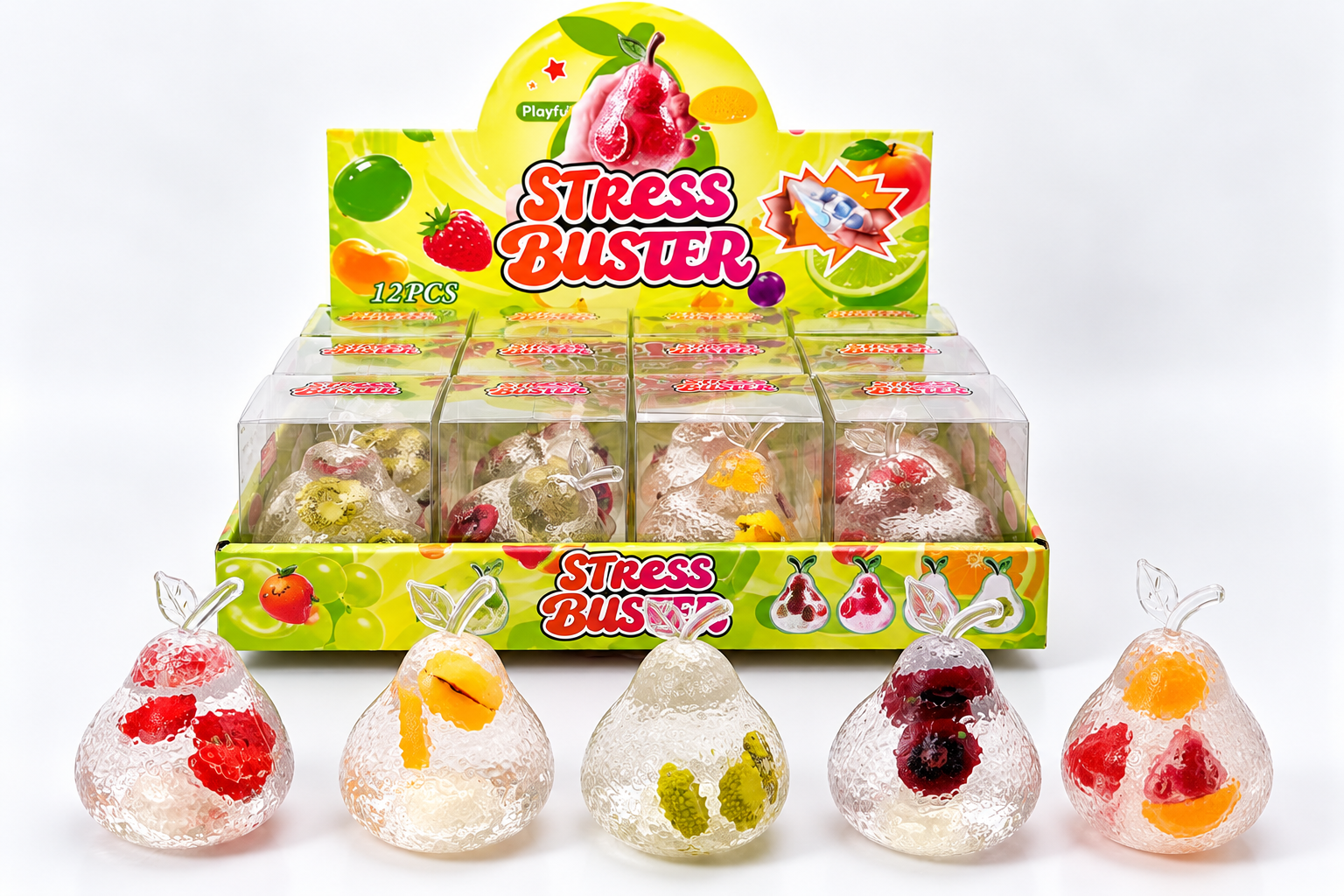
PU foam designs can provide a slow-rising squeeze, while TPR-based products may offer different resistance and recovery depending on their construction. Neither material name alone guarantees a particular tactile result.
Retail buyers should compare how easily each sample compresses, how quickly it returns to shape and whether the surface feels tacky after handling.
These differences help determine whether a fruit collection offers genuine variety or simply several shapes with the same experience.
Our article on squishy toy softness and rebound explains why tactile performance needs to be evaluated on finished samples.
Retail Packaging Is Part of the Buying Decision
For fruit squishy toys wholesale, packaging affects shelf presentation, inventory handling and replenishment.
Clear individual boxes allow shoppers to see the fruit design immediately. Display trays can group multiple styles in one retail footprint. Individually bagged products may suit certain bulk distribution programs, although they provide a different shopping experience.
Before confirming an order, buyers should establish retail unit dimensions, units per inner pack, master carton quantities and whether mixed-SKU case packs are available.
A gift shop may prefer individually boxed designs, while an independent toy retailer might want a compact display assortment. Online sellers may place greater importance on consistent package sizes and protection during fulfillment.
For products marketed as children’s toys in the United States, packaging, age grading and applicable testing also need review. The U.S. Consumer Product Safety Commission provides guidance on toy safety requirements.
Realistic fruit designs deserve particular attention because their appearance may resemble food. Buyers should evaluate intended age groups, small components and relevant product requirements rather than assuming a material description establishes compliance.
Plan the Second Order Before the First Arrives
An attractive fruit assortment is useful, but retailers also need products they can replenish.
For an initial fruit squishy toys wholesale order, buyers may test several recognizable designs and adjust later purchases according to actual sales. That works best when individual SKUs, packaging configurations and reorder conditions are clear from the beginning.
Ask whether popular fruit designs can be reordered separately, whether the same packaging will remain available and how color or texture consistency will be maintained between production runs.
The GS1 US guidance on GTINs also provides useful background on product identification when planning retail variations.
A practical RFQ should identify preferred fruit shapes, approximate dimensions, desired squeeze feel, packaging format, quantities by SKU and destination market.
Vilora Toys supports wholesale sourcing and OEM/ODM development for squishy and novelty toys. Buyers planning a fruit-themed collection can explore our Squishy Toys range and discuss available designs, packaging options and project requirements.
Read More