“We have 310 children across five centers. We would like one sensory toy for each child.”
The number looked straightforward—until the directors explained how the toys would actually be used.
Two centers planned to keep the toys at quiet tables. A third wanted several transition baskets stocked, and another needed 126 pieces packed separately for family night. The fifth center had not decided whether its toys would stay in the classrooms or leave with the children.
At that point, this was no longer one 310-piece order. It was three small programs sharing a purchase order. Before anyone chose a shape or color, the buyer needed to know where the products were going and what would happen to them after use. That is often the real starting point for preschool sensory toys.
Table of Contents
A Headcount Did Not Tell Them What to Buy
The two quiet tables could seat six children each. Each center ran two preschool rooms, but the products would rotate with the activity cart rather than stay in both rooms all day.
They needed 12 usable pieces per center, not one for every enrolled child. The buyer added four replacements at each location and arrived at 32 shared pieces for those two centers.
The transition baskets required a different count. There were three baskets in use at one time, with four items in each. Another small replacement pack stayed in the director’s office. That portion of the order came to 16 pieces.
Only the family-night products followed attendance. Those left with children, so every registered family needed one, plus a modest overage for late additions and damaged packages.
The revised order for preschool sensory toys no longer followed one headcount. Every quantity now had a reason behind it.
Teachers Tested What Purchasing Could Not See
The first sample was round, bright and satisfying to squeeze. It also rolled under a shelf within two minutes.
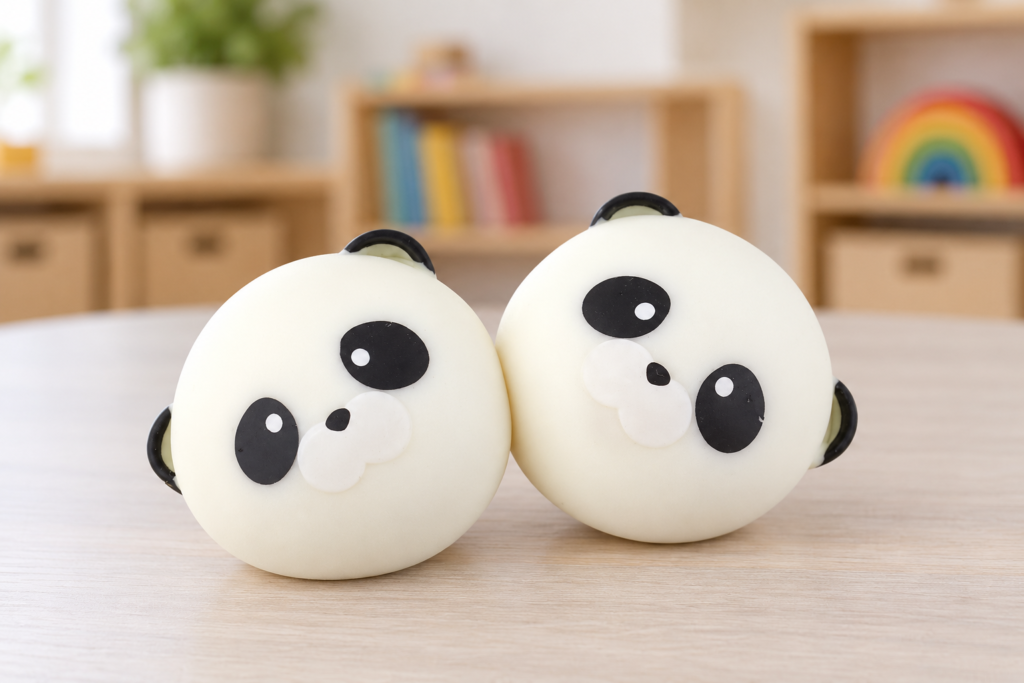
The second had a flat base and stayed put. Teachers could find it quickly during cleanup, and it dropped neatly into the divided tray already on the quiet table. Another sample collected lint almost immediately. A fourth had a textured surface that became difficult to inspect after several uses.
A catalog would not have settled any of that. The teachers simply used the samples during the day and reported which ones became a nuisance.
They were not asked whether a toy could improve attention or help with a diagnosis. Their job was narrower: try it in the room and decide whether it belonged there. One product rolled away, one was hard to keep clean and one worked without attracting much notice. That was enough information to move the order forward.
Preschool Sensory Toys Need an Exact Age Range
The operator served children from 30 months through five years old. “Preschool” was not specific enough for product approval.
The youngest classroom received a separate review. Product size, seams, removable decorations and internal components all mattered. A toy accepted for older preschoolers was not automatically placed in the younger room simply because both groups attended the same center.
For children’s toys distributed in the United States, applicable ASTM F963 sections, CPSIA requirements, third-party testing and the Children’s Product Certificate must correspond to the actual finished SKU, age grading, materials and construction. A report for a similar-looking product does not cover a replacement item.
CPSC toy safety guidance makes an important point for buyers: the sections of ASTM F963 that apply can vary with the toy’s design and intended use.
The supplier later offered a different shape at the same price. The center did not treat it as an automatic substitute. Staff reviewed the new sample and its documents before deciding whether it could join the order.
Shared Toys Created a Practical Cleaning Question
The child care operator already had cleaning and sanitizing procedures. The supplier’s job was to identify the product material and construction accurately, not invent a cleaning method for the center.
Staff tried their usual process on each sample. Smooth surfaces were easy enough. Deep seams and recessed details took more work, especially when residue settled into the molded design. One character looked better in the product photos than the simpler options, but no one wanted to scrub around its face and clothing every afternoon. It came off the list.
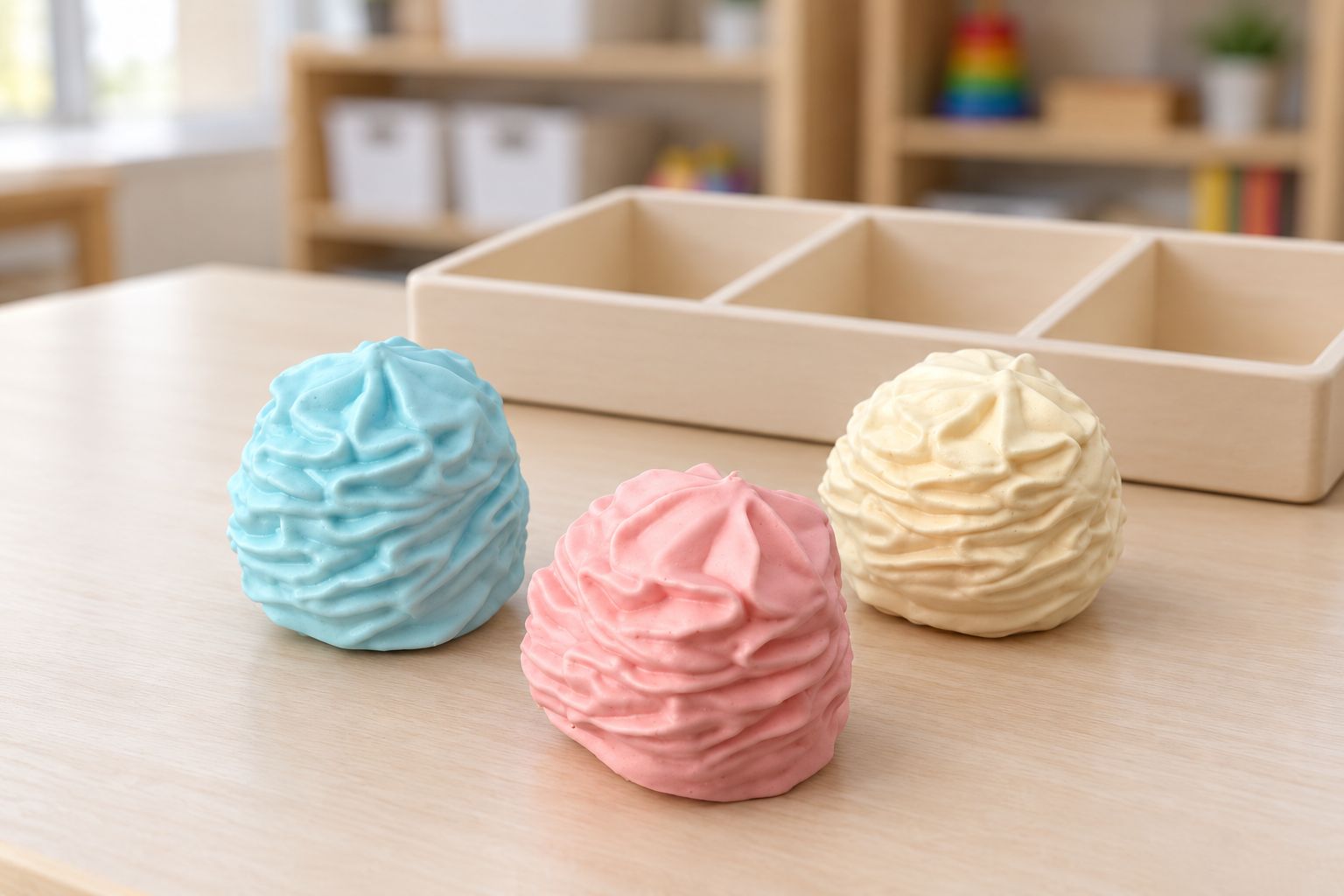
The take-home pieces followed a different path. They still needed to remain protected until family night, but they would not enter the classroom’s shared-use routine. Marking the two portions of the order as “shared” and “take-home” prevented them from being packed the same way.
Preschool sensory toys that pass through several pairs of hands have to fit the center’s existing routine. A shape that is easy to wipe down may be a better classroom choice than a more detailed design, even when the detailed one looks better in a sales photo.
The Classroom Did Not Need Retail Packaging
The original quote included one clear retail box per product. That made sense for the family-night giveaway, where each child received a new item to take home.
It made less sense for the shared classroom portion. Teachers would have opened every box on the first day and discarded the packaging. The center instead requested simple inner packs divided by destination and use.
Each shared-use carton carried the center name, age group and product count. Family-night products remained individually packed, so the order arrived without creating a sorting project.
This is where custom packaging can be very simple. A center may need accurate carton labels and useful inner quantities more than a printed display box. Packaging earns its place when it helps the next person handle the order.
Color Variety Had to Stay Manageable
The factory offered six colors. The buyer initially requested all six in equal quantities.
Exact equality would have added counting work without improving the activity. The final instruction allowed three approved colors in an approximate mix. No classroom carton could contain only one color, but staff were not expected to match every tray piece for piece.
The approved product style stayed fixed. Color was the only flexible part of the order. If blue ran short, the factory could use more green; it could not replace a quiet squeeze toy with a clicking fidget simply because the price was similar. That rule went directly onto the purchase order.
For preschool sensory toys, “assorted” leaves too much open to interpretation. The buyer spelled out what could change—the color—and what could not—the product that teachers had already tested.
The Final Order Followed the Classroom Plan
The finished request listed:
• 32 shared quiet-table items divided between two centers
• 16 products for three transition baskets and replacements
• Individually packed family-night pieces based on registration
• Separate age ranges for every receiving classroom
• Three approved colors in an approximate assortment
• No product-style substitutions without written approval
• SKU-specific product information and applicable compliance documents
• Center names, destination ZIP codes and required arrival dates
The supplier could now quote the right products and packing work. Center directors could see where the inventory belonged before the cartons arrived.
Vilora Toys works with organizational buyers on squishy toys, fidget toys and novelty products for defined classroom and program uses. To request a quote for preschool sensory toys, send the children’s age range, how the products will be used and the number needed at one time. Also note which pieces will be shared or taken home, how they should be packed, where the cartons are going and when staff need them on site.
Read More
• Bulk Sensory Kits for Schools: Specify the Kit Before You Source the Pieces
• Squishy Toy Inspection: What Buyers Should Check Before Shipment
• Small Toys in Bulk: Buy for the Space, Not Just the Piece Count