

Novelty and sensory toy trends evolve rapidly across social discovery platforms and brick-and-mortar gift shops. While committing immediately to full-container quantities of an untested viral shape risks dead inventory if demand cools, waiting too long to test new tactile formats means missing peak retail margins.
Structuring disciplined quarterly toy trend testing orders allows wholesale distributors and retail chains to measure real store-level sell-through before scaling up inventory commitments. Approaching quarterly toy trend testing orders with clear test metrics separates passing fads from dependable year-round reorders.
Table of Contents
Separate Core Evergreen Stock From Quarterly Trend Allocations
A balanced wholesale purchasing budget protects working capital by dividing inventory into predictable staples and controlled trend experiments.
When planning quarterly toy trend testing orders, category buyers establish clear portfolio boundaries:
- Core Replenishment Foundation: Dedicate the majority of purchasing capital to proven, steady-turning staples—such as classic animal characters, standard stress balls, and established sensory items—that deliver predictable baseline cash flow.
- Dedicated Trend Testing Budget: Allocate a fixed quarterly percentage (a buyer-defined portion of open-to-buy funds) specifically to quarterly toy trend testing orders featuring emerging textures, novel launching mechanics, or new seasonal silhouettes.
- Clear Exit Thresholds: Define upfront what constitutes a successful test—such as reaching an agreed weekly unit velocity or sell-through threshold within a defined test window—before placing a second, larger production order.
Maintaining disciplined budget allocation keeps quarterly toy trend testing orders focused on measurable commercial validation.
Select Ready-Made Display Assortments for Clean Store Trials
To evaluate a new novelty item accurately across multiple retail locations, store presentation must be consistent and easy to track.
Sourcing teams organizing quarterly toy trend testing orders prioritize turnkey merchandising formats:
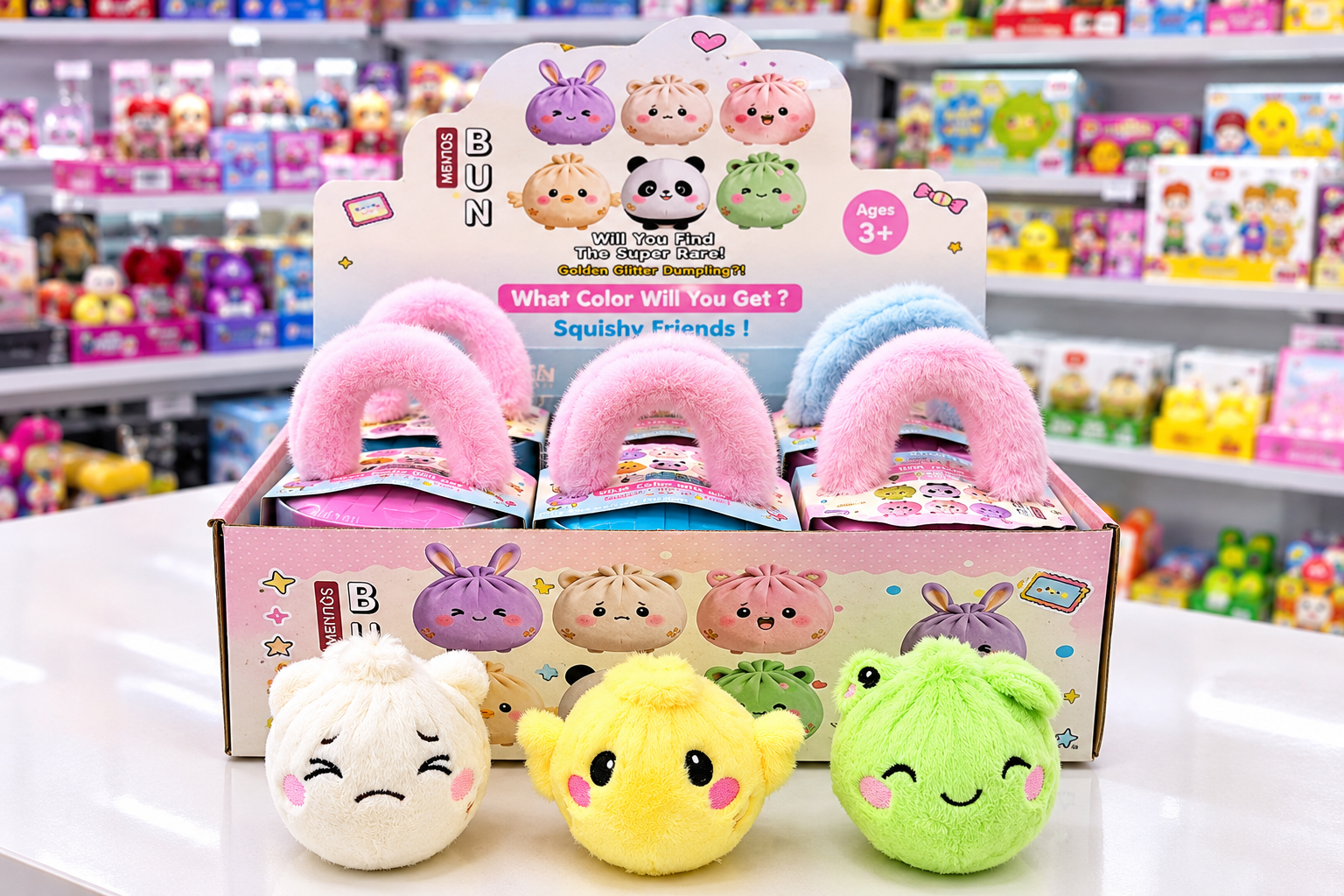
- Pre-Packed Countertop Displays: Ordering items packed in 12-piece or 30-piece countertop display boxes—such as Vilora Toys’ Stretchy Chicken Finger Flingers—may help buyers trial consistent displays across a selected group of stores without custom fixture costs.
- Balanced Multi-Color Assortments: Testing assorted colorways within a single display box reveals which colors shoppers pick first, guiding color-ratio adjustments on subsequent volume orders.
- Distinct SKU Tracking: Assign unique internal item codes to test lots so point-of-sale data tracks exact unit velocity rather than lumping new items under generic novelty codes.
Consistent merchandising improves comparisons. Calculate sell-through as units sold divided by units received for the defined test period, and report both the percentage and elapsed selling days. Record stockouts and returns separately so a fast-selling small shipment is not mistaken for sustained demand.
Verify Reorder Lead Times and Production Capacity Before Testing
A successful retail test loses momentum if the supplier cannot replenish winning SKUs quickly once test displays sell out.
Before placing quarterly toy trend testing orders, procurement managers confirm scaling logistics with their vendor:
- Stock Availability vs. Made-to-Order Lead Times: Ask whether the supplier holds ready-to-ship inventory for immediate replenishment or manufactures strictly to order, and confirm standard production lead times for larger follow-up quantities.
- Consistent Specification Retention: Keep signed golden samples from the initial test shipment so volume reorders match original softness, color brightness, and packaging quality.
- Compliance File Readiness: Check that the supplier can provide product-specific safety documentation appropriate to the intended market. Confirm retailer identification requirements using GS1 US guidance, and ask whether testing follows applicable CPSC third-party testing requirements for the exact SKU and age grade.
Confirming scaling capacity upfront ensures winning items from quarterly toy trend testing orders transition smoothly into core catalog lines.
Convert Proven Test Winners Into Private-Label Programs
Once quarterly sales data confirms strong consumer repeat demand, distributors can deepen margins through customization.
After validating an item through quarterly toy trend testing orders, buyers can explore exclusive colorways, custom retail boxes, or co-branded display headers with our OEM and ODM customization team, subject to volume and feasibility. To discuss upcoming quarterly test assortments, minimum order quantities, or sample evaluation kits, reach out to our wholesale team with your target store count and category goals.
Read More