

Two suppliers report the same Shore hardness, but their squeeze toy samples feel noticeably different. One tested a flat material specimen. The other pressed a durometer against the curved surface of a filled toy. Those readings may not tell the same story.
When reviewing shore hardness for squeeze toys, buyers need to know what was measured, how the test was performed, and whether the results can be compared. A number is useful only when the measurement behind it is clear.
Table of Contents
Record the Shore Scale Alongside the Number
A supplier lists a hardness value of 25. Is that Shore 00, Shore A, or Shore D? Without the scale, the number tells a purchasing team very little.
These scales use different durometer configurations and are intended for different material hardness ranges. They are not interchangeable, and a reading on one scale should not be treated as an equivalent reading on another.
Avient’s explanation of Shore hardness provides useful background on the scales used for elastomeric materials. The appropriate scale depends on the material and the applicable test method, not simply on what another toy supplier uses.
When documenting shore hardness for squeeze toys, specify the material version, Shore scale, proposed acceptance range, and measurement method. A supplier’s previous product specification may be a starting point, but it should not automatically become the requirement for a new design.
Avoid setting an unusually tight tolerance before reviewing the material, measurement capability, and intended application. A narrow numerical range is not necessarily a better specification.
Identify What the Durometer Actually Measured
The next question is straightforward: what did the instrument touch?
A hardness reading might come from a prepared material plaque, a solid molded specimen, or the finished toy itself. Those are different measurement situations.
For shore hardness for squeeze toys, request the specimen type, dimensions, thickness, surface condition, and support used during testing. Where necessary, keep a photograph or drawing with the measurement record.
Curved surfaces, thin walls, and flexible constructions can make direct readings difficult to interpret. A filled toy also introduces factors that may not be represented by a separate material specimen.
Consider a filled squishy cube. Its outer material, filling, and overall geometry all contribute to how it responds when squeezed. A hardness reading from the shell material does not, by itself, describe the resistance of the assembled product.
If the supplier tests a separate material specimen, confirm how that specimen relates to the formulation and processing conditions used for production.
The goal is not to reject material testing. It is to understand exactly what the reported result represents.
Compare Readings Taken Under the Same Conditions
Even when two reports use the same Shore scale, their readings may not be directly comparable.
The test method, specimen preparation, conditioning, measurement location, and reading time can all matter. Instrument verification or calibration status should also be documented.
ZwickRoell’s Shore hardness testing overview explains the indentation principle and the importance of measurement procedures. Its guidance helps buyers understand why a hardness result needs supporting test information.
For shore hardness for squeeze toys, request the standard and edition used, the specimen details, the reading time, and the way results were recorded.
Suppose one supplier reports a value immediately after applying the durometer, while another uses a different reading interval. Comparing those figures without checking the methods can lead to the wrong conclusion about the materials.
If the numbers disagree, review the test records before requesting a formulation change. Confirm that both parties evaluated comparable specimens under an agreed method.
A repeat measurement under consistent conditions is usually more informative than averaging incompatible results.
Keep Material Hardness Separate From Product Approval
A Shore hardness result can support material selection and quality control. It cannot replace evaluation of the finished squeeze toy.
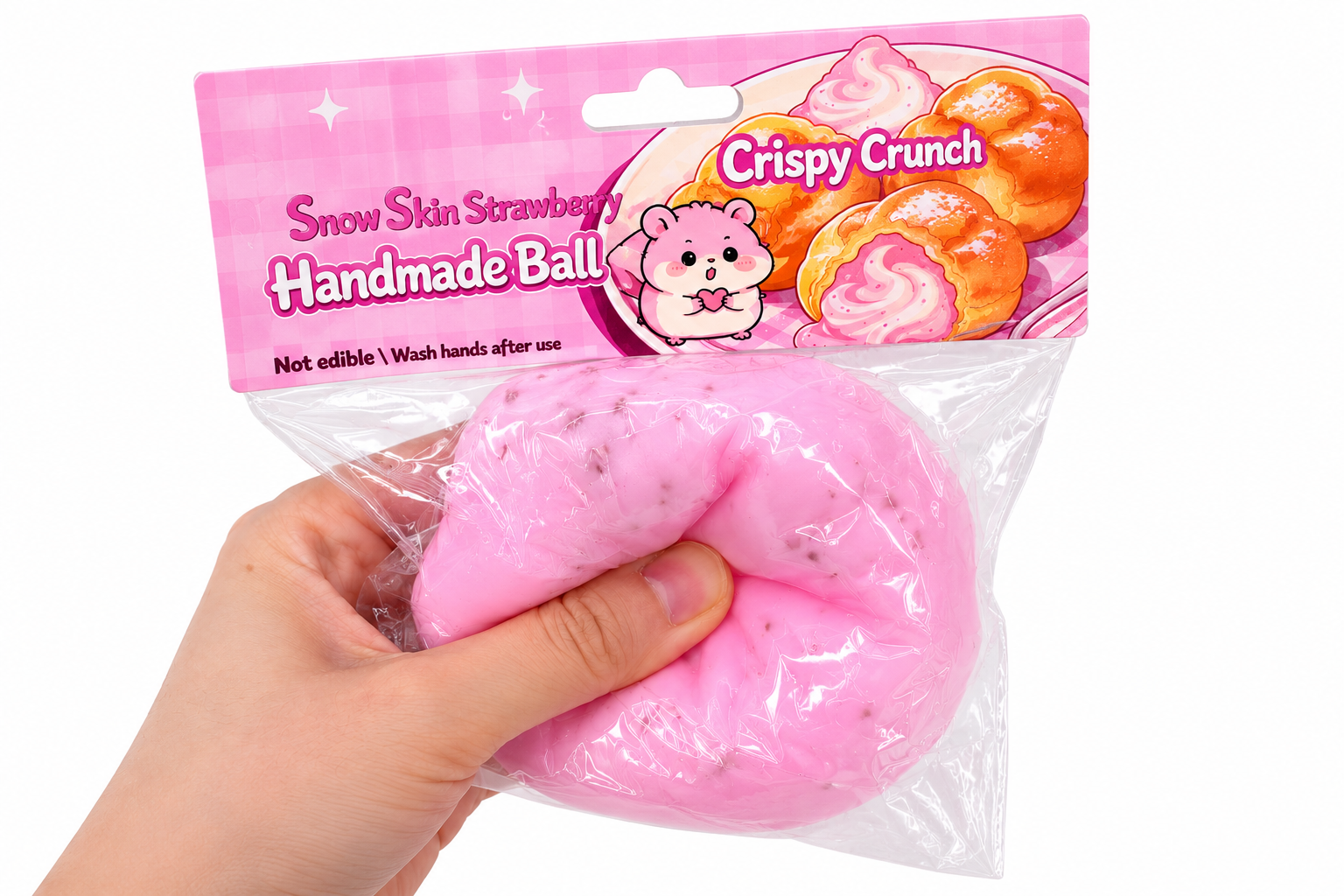
Indentation hardness does not independently establish compression force, recovery speed, surface tack, durability, or suitability for a particular user group. Each of those characteristics may require a separate assessment.
That distinction matters when specifying shore hardness for squeeze toys in an OEM or private-label project.
A material can meet its agreed hardness range while the finished toy still feels too firm, recovers differently than expected, or behaves differently because of its shape and construction.
Keep an identifiable finished sample alongside the material measurement record. Document how the sample compresses and recovers, and separate commercial performance expectations from applicable product safety requirements.
The related guide, PU Squishy Foam Density: What Does the Supplier’s Number Measure?, illustrates why a material measurement should not be mistaken for a complete description of product feel.
For a custom squeeze toy RFQ, identify the material, proposed Shore scale, specimen type, test method, and any agreed acceptance range. Ask the supplier to flag measurements that cannot be reliably performed on the finished toy.
This gives both teams a clearer basis for reviewing quotations, resolving sample differences, and approving production requirements.
Used correctly, shore hardness for squeeze toys becomes a documented purchasing criterion—not a substitute for evaluating the finished product.
Read More