

Put a squeeze toy beside an open tub of slime. Both invite hands-on play, but the interaction quickly goes in different directions. The central squishy vs slime distinction is whether you are manipulating a complete object or working directly with material that changes shape.
A squishy gives you an object to compress and release. Slime can be pulled into a strand, folded into itself, or spread and gathered again, depending on the particular product.
A useful squishy vs slime comparison follows what happens from opening the package to putting everything away. That reveals more than comparing colors or calling both products “sensory.”
Table of Contents
What Your Hands Do With the Product
A finished squishy remains one object throughout normal use. You press its body, feel its response, and release it. The broader range of squeeze-and-release designs is covered in our introduction to what squishy toys are.
With slime, the material itself becomes the activity. You might stretch a portion between two hands, fold it back into a lump, or explore how it moves across a suitable play surface. The exact possibilities depend on the formulation and instructions.
The practical squishy vs slime difference is continuity. A squeeze toy offers a movement you can repeat while keeping hold of the same object. Slime allows the form of the activity to keep changing as the material is rearranged.
Vilora’s Unicorn Squishy Toy provides a finished-toy example: a squeezable TPR character supplied in individual retail packaging. Its purpose is to be handled as a toy, rather than opened so its components can become play material.
For a customer demonstration, make the action visible. Show a normal squeeze and release for the toy. For slime, show how the particular material can be handled outside its container. Avoid suggesting that every product will stretch, recover, or respond identically.
Premade Slime and Mixing Kits Are Different Purchases
A squishy vs slime purchase becomes more complicated when a slime kit enters the comparison. “Buying slime” can mean opening a jar of prepared material or completing a mixing activity first.
Elmer’s premade slime range includes ready-to-play products and versions with add-ins. That gives shoppers a way to choose slime without necessarily buying ingredients for a recipe. Read the individual listing to see what is ready and what remains to be added.
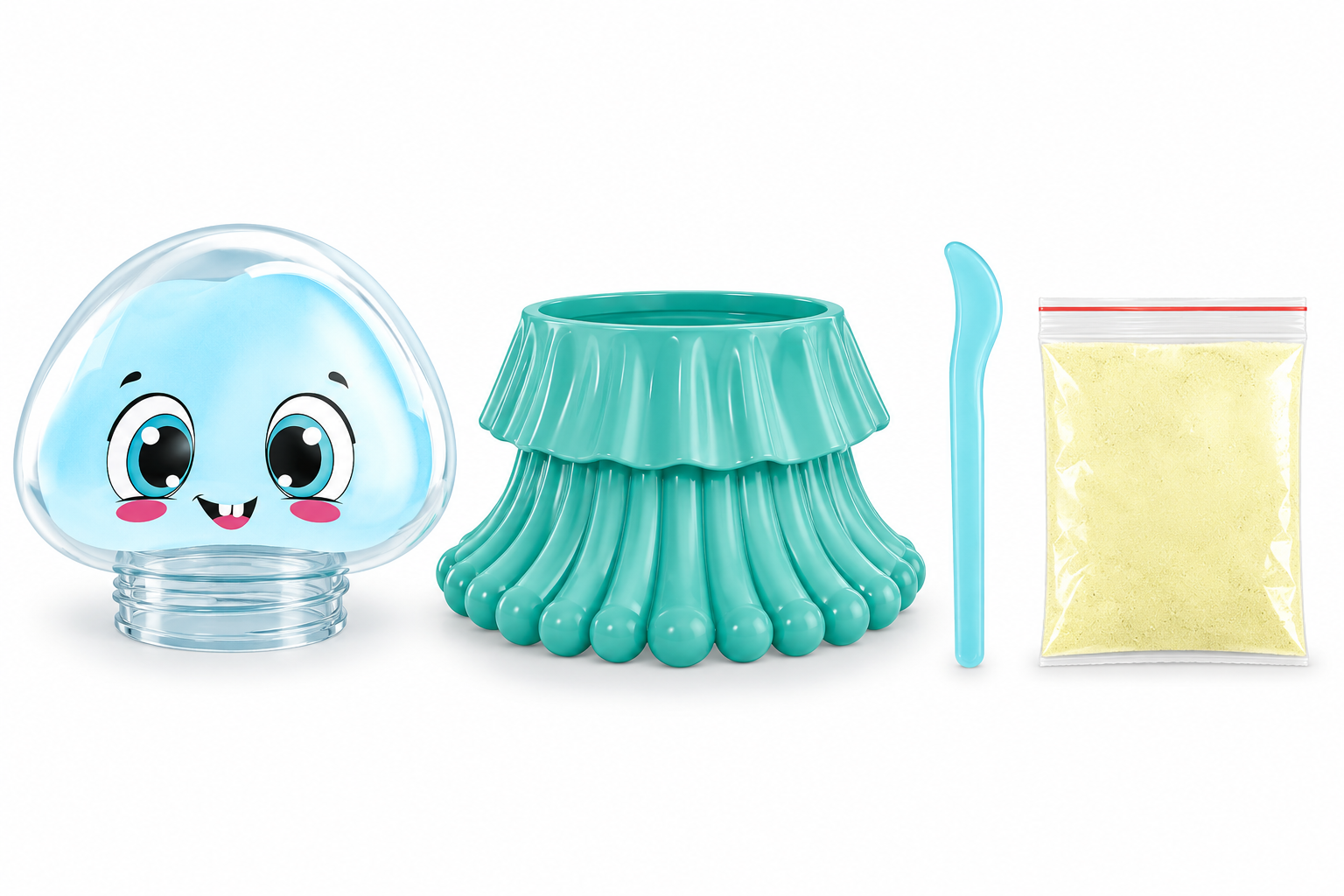
A preparation kit offers another experience. Crayola Goo, for example, includes products built around mixing and customization, with supplies such as a mixing cup, stick, and resealable container. Those components help explain why a kit needs different preparation from a finished squeeze toy.
When comparing squishy vs slime for an activity, distinguish the experience you intend to provide. Is the attraction a quick interaction with a finished object, time spent handling premade material, or the process of making and customizing something?
That choice affects the space you set aside. A mixing activity needs room for its listed supplies and instructions. A jar of premade slime needs room for handling the material and keeping the container nearby. Neither should be presented as the same purchase simply because both appear in a slime category.
Follow the Activity Through to Putting It Away
The end of play deserves a place in any squishy vs slime comparison. Imagine that someone needs the table for another activity in five minutes. Look at what must be collected and where it belongs.
For a finished squeeze toy, you put away one complete object according to its care instructions. For slime, you gather the material and return it to the storage arrangement specified by its maker. Any separate tools and unused additions also need somewhere to go.
That makes squishy vs slime a useful gift-shopping question, too. A recipient may enjoy a self-contained toy they can retrieve briefly, or they may welcome an activity with several components. Include the whole experience when deciding whether the gift suits their routine.
For events, inspect one complete retail pack before ordering multiples. Check whether each participant receives a finished toy, a personal slime container, or supplies intended for a shared activity. A product photograph showing several accessories does not necessarily establish how many individual sets are included.
For retailers explaining squishy vs slime, a short demonstration can finish with the product being put away. Close the slime container, gather the kit’s accessories, or return the squeeze toy to its designated place. Customers can then see what using the product involves beyond its most eye-catching moment.
Read More