
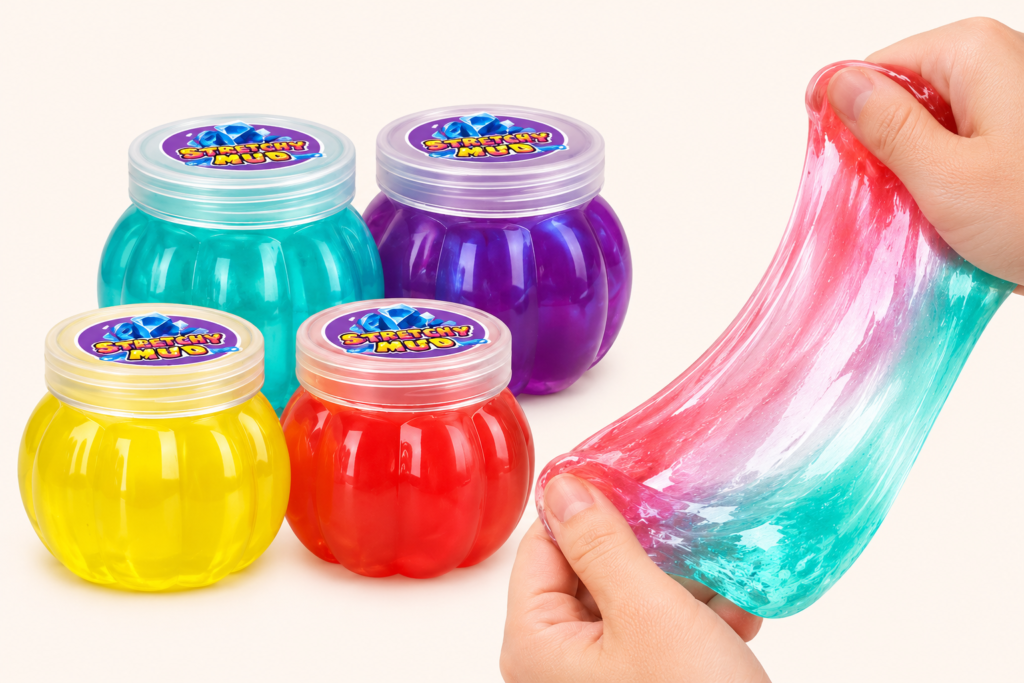
A jar of crystal slime can look almost like colored glass in a supplier photograph. Stretch it under bright lights, and the transparency becomes even more appealing. But a retail buyer needs to know what happens after the jar spends weeks in a warehouse, travels through distribution, and finally reaches a customer’s hands.
Sourcing wholesale crystal slime toys means evaluating more than appearance. The compound, container, decorations, and safety documentation must work together as a finished retail product.
Table of Contents
Compare Clarity With Real Handling Performance
Crystal slime is a retail description, not a standardized formulation. Two transparent products can differ significantly in stretch, tackiness, odor, bubble retention, and resistance to drying. A supplier may show a freshly prepared sample that looks clearer or handles differently from a jar that has been stored for several weeks.
When reviewing wholesale crystal slime toys, ask for samples in their proposed retail containers. Examine the compound before mixing or stretching it. Then handle it under agreed conditions and record how easily it stretches, whether it leaves residue, and how readily it returns to the jar.
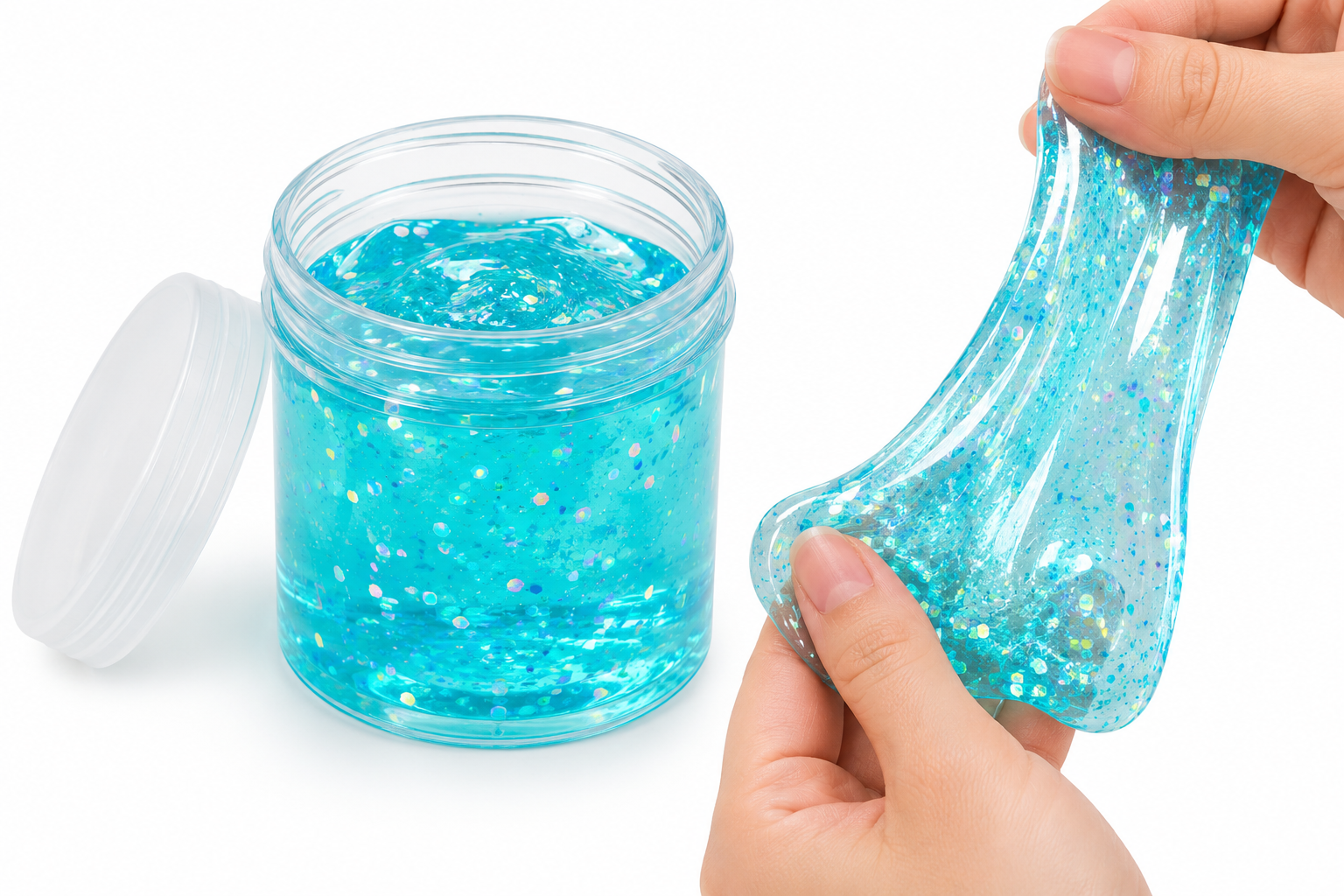
Pay particular attention to clarity after resting. Air bubbles introduced during mixing or handling can temporarily change the appearance of transparent slime. Buyers should establish whether they are comparing freshly handled samples or products that have been allowed to settle for the same period.
Storage observations are equally important. Check for liquid separation, discoloration, unexpected odor, and changes in consistency. Record the temperature, storage duration, and container condition rather than relying on a vague description such as “shelf-life tested.”
For larger retail programs, compare samples from different production points or lots where practical. The objective is not to demand identical photographs but to establish acceptable variation in appearance and handling.
Verify the Container, Seal and Reclosure
The jar is part of the product experience. A clear compound that arrives with residue around the lid or loses moisture during storage can create customer complaints even when its original formulation was acceptable.
For wholesale crystal slime toys, evaluate the proposed jar and lid together. Confirm the container material, nominal fill weight, closure mechanism, and any liner or tamper-evident feature. Different formulas and packaging materials may interact differently, so a familiar-looking jar is not automatically suitable.
Open and reclose several samples. Check whether the threads engage smoothly, whether the lid can be tightened consistently, and whether slime left on the rim interferes with closure. A jar that works perfectly when clean may behave differently after ordinary consumer handling.
Transport matters as well. Ask the supplier to assess filled jars in the intended shipping configuration, including orientation changes and conditions representative of the distribution route. The goal is to identify leakage, lid movement, or visible packaging damage before a large order is released.
If the product contains glitter, beads, or decorative charms, inspect how those inclusions behave near the container opening. They should not unexpectedly interfere with closure or introduce hazards inconsistent with the intended age grade.
Private-label buyers developing custom jars, artwork, or assortment configurations can discuss these decisions through Vilora Toys’ OEM & ODM development services. The actual retail package should be evaluated before final artwork and production quantities are approved.
Scope Chemical Requirements by Market
Clear appearance does not establish chemical safety. Slime may contain ingredients that require specific review, and the applicable requirements depend on the destination market, intended age group, formulation, and product construction.
For wholesale crystal slime toys entering the United States, buyers should identify the applicable children’s toy requirements and obtain supporting test reports for the actual product. The CPSC’s ASTM F963 requirements chart identifies Section 4.3.6 concerning cleanliness of liquids, pastes, putties, gels, and powders. A qualified laboratory should determine the relevant test scope rather than assuming that every provision applies identically.
European requirements require a separate assessment. For example, boron migration can be an important issue for certain slime formulations. The European Commission’s toy safety information provides regulatory context, while a laboratory can establish which chemical and material-category requirements apply to the proposed product.
A supplier statement that a slime is “non-toxic” is not a substitute for supporting evidence. Ask whether reports identify the formulation, color variants, tested materials, relevant standard editions, and the product configuration being purchased.
Importers should also confirm responsibility for the required certification and supporting records. Vilora Toys’ Children’s Product Certificate for Toys guide explains how buyers can review product identification and the relationship between certificates and test reports.
Approve the Assortment as a Finished Unit
A single attractive jar does not represent an entire wholesale assortment. Clear blue slime, pink glitter slime, and a version containing decorative charms may differ in appearance, handling, and the documentation needed for their particular materials.
When purchasing wholesale crystal slime toys, establish which characteristics can vary and which must remain consistent. Record the intended fill weight, jar dimensions, closure type, color range, inclusion specifications, and acceptable handling performance for each SKU.
Ask for a finished retail sample rather than approving the compound separately from its packaging. Check the label, age grading, barcode placement, artwork, and carton configuration against the intended sales channel.
Retail chains should also consider how the assortment will be displayed. A mixed-color countertop presentation may need different case quantities and replenishment planning from a single-SKU shelf program. These are commercial decisions, but they influence whether the final shipment matches the original buying plan.
Buyers can explore additional sourcing and merchandising considerations through the Vilora Toys resource library, while keeping the crystal slime approval focused on the actual finished product.
A successful wholesale crystal slime toys order should deliver the same essential experience customers expect from the approved sample: appealing transparency, predictable handling, a practical jar, and documentation appropriate to the market.
The strongest buying decision is based on that complete retail unit—not a freshly stretched sample photographed under perfect lighting.
Read More