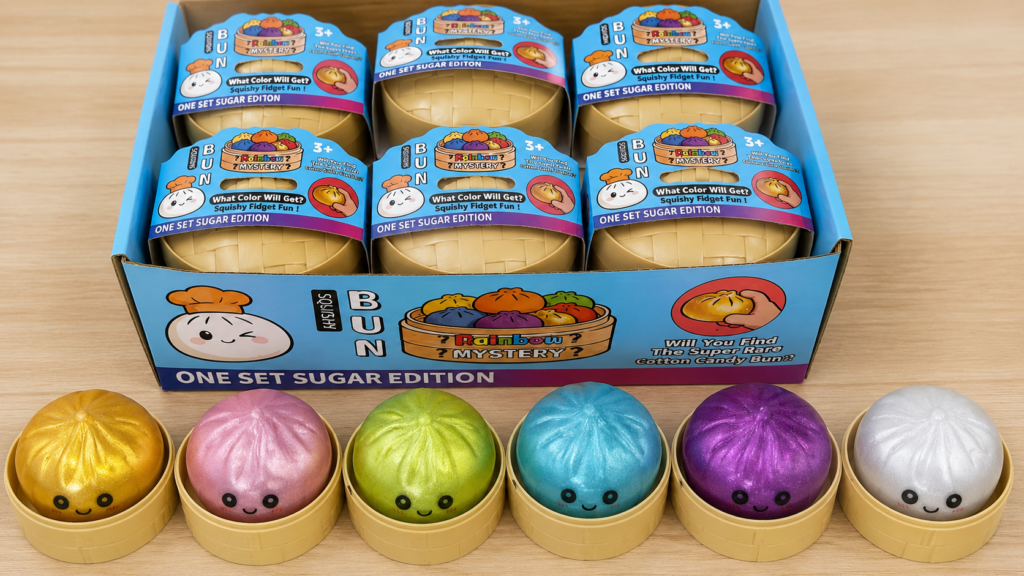
Dumpling squishies are easy products to understand visually. The food-inspired shape is familiar, bright colors work well in a mixed display, and shoppers do not need much explanation before picking one up.
For a wholesale buyer, though, the photo is only the beginning. When sourcing dumpling squishy wholesale, two products that look almost identical online can feel very different once they are handled. Size, weight, softness, rebound, color mix and packaging can all change the finished product—and sometimes the quote.
The safest way to compare suppliers is to define the version you actually want before focusing too heavily on price. That means getting a sample in hand, confirming dimensions, deciding how the colors will be divided and knowing how the product is supposed to reach the retail shelf.
Table of Contents
The Sample Tells You More Than the Product Photo
Squishy toys are tactile products. A catalog image can show the shape and color, but it cannot tell you how the toy feels after ten or twenty squeezes.
When reviewing a dumpling squishy wholesale sample, start with the basics. Is it soft enough for the experience you want? Does it recover evenly? Does the surface feel smooth? After being compressed for a while, does it return to its original shape without obvious distortion?
It is worth comparing several pieces when possible. One sample may look excellent while another from the same batch has a different feel or finish. For a buyer, consistency matters just as much as the first impression.
This is also why it helps to choose the right squishy toys based on more than appearance. A cute design may win the first click or the first pickup, but tactile performance is often what determines whether the product feels worth buying again.
Dumpling Squishy Wholesale Orders Need Exact Size Details
“Regular size” works in an early conversation. It should not be the final production specification.
If the approved toy is 8.5 cm, that measurement should be documented. If the product includes a basket, tray or other accessory, the dimensions of the full set should be confirmed as well.
Small size differences can affect more than appearance. A larger toy may use more material, require a different package and reduce the number of units that fit into a master carton. A smaller version may look similar in a supplier photo but feel noticeably different in the hand.
Weight can be useful for the same reason. If two samples have similar dimensions but a clear difference in weight, they may not be equivalent products even if the photos look nearly the same.
For dumpling squishy wholesale, the approved sample should become the practical reference point. Buyers and suppliers have fewer misunderstandings when they are working from an actual sample and a written specification rather than a general product name.
What Changes When You Order Multiple Colors
A six-color assortment sounds straightforward until the production quantity has to be divided.
Imagine an order for 1,200 pieces in six colors. A buyer may expect 200 pieces of each color, but that split is not always automatic. Some factories can mix colors freely within the total quantity. Others may have minimums by color, especially when separate material preparation or production runs are involved.
That is where dumpling squishy wholesale planning overlaps with novelty toy MOQ. Before confirming the order, ask whether the minimum applies to the complete assortment or to each individual color.
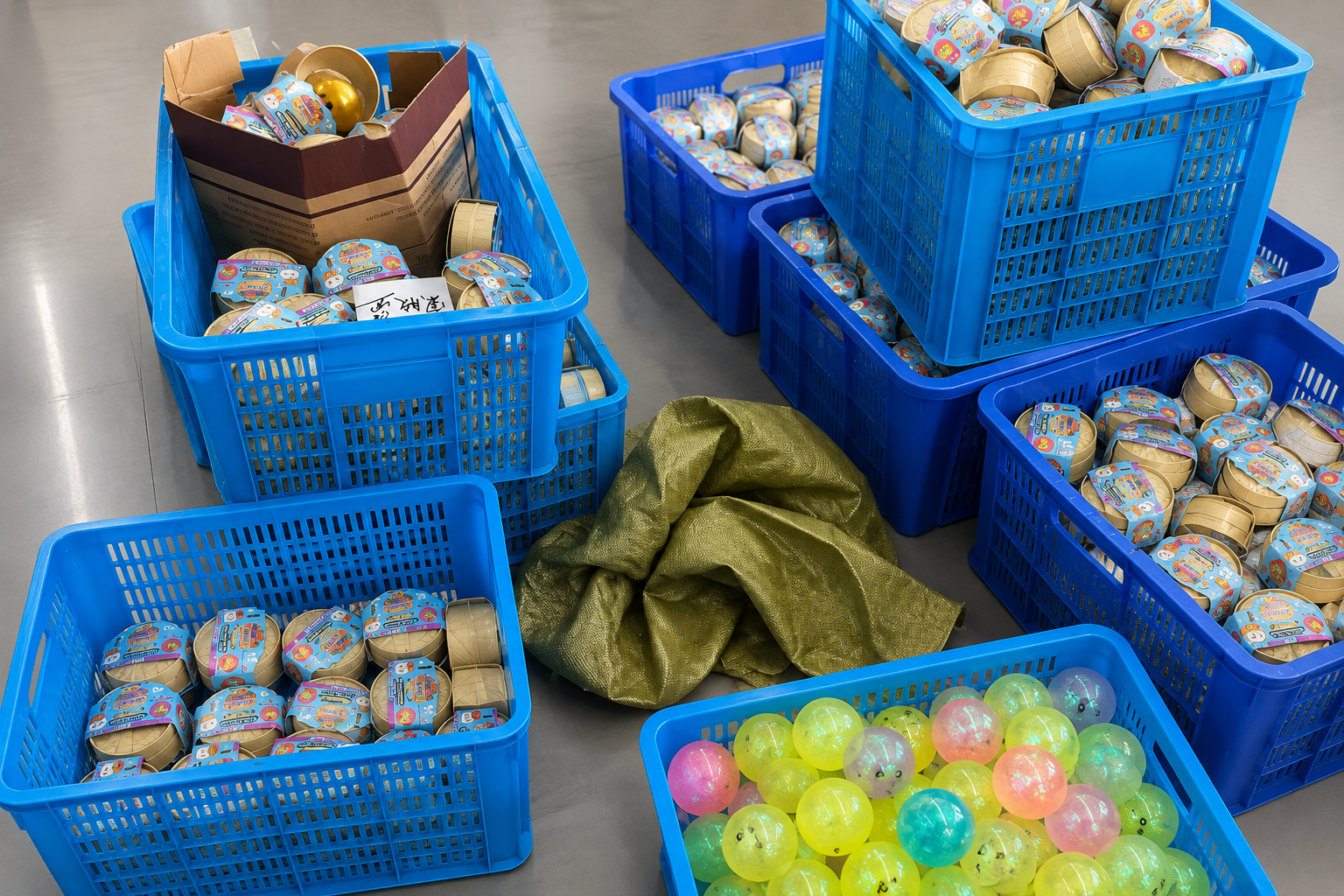
For a first order, an even mix is often reasonable because there is no sales history yet. Reorders can be handled differently. If blue and pink consistently sell faster than white or yellow, the next order can shift toward those colors instead of repeating the original assortment.
What matters most is that the color breakdown appears clearly on the purchase order. “Assorted colors” leaves too much room for interpretation when thousands of pieces are involved.
Packaging Can Change the Economics of the Order
The same dumpling squishy can be sold loose, individually packaged or placed in a countertop display. Those options may look like simple merchandising choices, but they can change both cost and MOQ.
For a retailer testing a product for the first time, existing packaging may be enough. It keeps the setup simple and avoids investing heavily in custom printing before the product has proven itself.
Private-label orders can become more involved. A custom display box, branded insert, barcode or printed retail package adds another supplier and another production minimum to the equation. In some cases, the packaging run becomes larger than the minimum required to produce the toy itself.
That is why dumpling squishy wholesale orders should settle novelty toy packaging before the final quantity is locked.
The fit of the package matters too. A soft toy packed too tightly can sit compressed for weeks during storage and transportation. Oversized packaging creates the opposite problem by adding empty space and carton volume without adding much value.
A package does not need to be complicated. It needs to protect the product, work for the retail channel and make sense at the order quantity being considered.
Why the Approved Sample Matters Before Production
Photos are useful for narrowing down products. They are not enough for approving a large tactile-toy order.
Before placing a larger dumpling squishy wholesale order, handle the sample repeatedly. Check the rebound, seams, printed features and surface finish. If several samples are available, compare them rather than judging the entire product from the best-looking piece.
The intended market also needs to be clear. For children’s toys sold in the United States, applicable federal toy requirements can include third-party testing and certification. CPSC toy safety guidance explains that toys intended primarily for children 12 and under generally require testing by a CPSC-accepted laboratory and a Children’s Product Certificate for applicable rules.
ASTM F963 requirements are not identical for every toy. The sections that apply depend on factors such as materials, construction, age grading and product features. A squishy toy should therefore be evaluated for the product it actually is rather than treated as if every soft toy follows the same testing checklist.
Safety and compliance questions are easier to resolve before production quantities, packaging artwork and shipping dates have already been finalized.
Order the Version You Actually Approved
Many sourcing problems begin with a very simple gap: the buyer approves a detailed sample, but the purchase order describes the product too loosely.
For dumpling squishy wholesale, the final order should identify the important details clearly—size, color assortment, packaging, quantity and any agreed customization. If the approved version includes a specific basket, face print or display format, that belongs in the production reference too.
There is no need to turn a straightforward toy into an overly complicated sourcing project. The point is simply to make sure the version being produced is the same version that was sampled, priced and approved.
For buyers considering dumpling squishy wholesale, a good sequence is simple: approve the feel first, confirm the size and color mix, settle the packaging, then finalize the quantity.
Read More: Buying Guide · Customization Guide · OEM Guide