By the time a buyer has two or three serious supplier options, the basic questions have usually been answered. The factories can make the product, the prices are within range, and samples have arrived.
The harder part is deciding which supplier is more likely to deliver the same result at production scale.
That decision is not always obvious from the lowest quote. When comparing squishy toy suppliers, buyers should look at how each supplier handles specifications, sample changes, packing data, production visibility and repeat orders. Those details often reveal more than a small difference in unit price.
Table of Contents
A Good Quote Should Be Easy to Compare
A useful quotation does more than state a price.
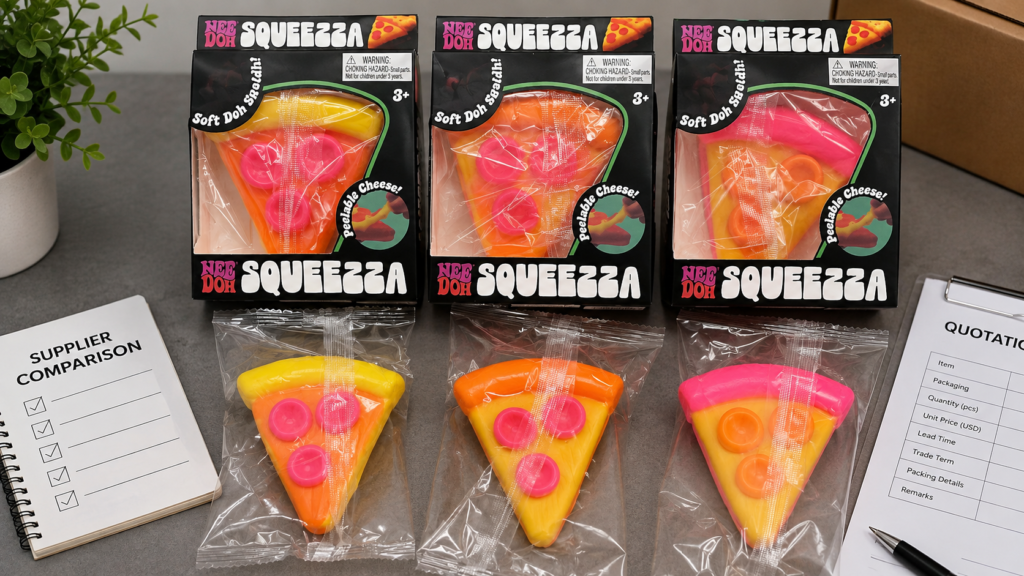
Suppose one supplier quotes $1.12 per piece and another quotes $1.18. The cheaper option may look obvious until the buyer notices that one price includes individual retail packaging while the other is based on simple bulk packing.
The same problem appears with printing, molds, testing and carton quantities. Two quotes can show the same product and still describe materially different orders.
When comparing squishy toy suppliers, normalize the quotation before comparing price. Confirm product size, packaging format, quantity per carton, customization included, tooling charges if applicable, lead time and trade term.
A clean quote makes it much easier to see whether two factories are actually pricing the same specification.
Watch What Happens After the First Sample
Sample quality matters, but the way a supplier handles revisions can tell you even more.
Imagine the first sample has the right shape and print, but the recovery is too fast. A strong supplier should be able to explain what can be adjusted, whether the change affects cost or timing, and which revised version will become the production reference.
“We can fix it” is not the same thing.
Custom squishies can accumulate several small revisions: body color, facial print position, softness, recovery, logo placement and packaging fit. The important question is whether those changes remain organized as the project moves forward.
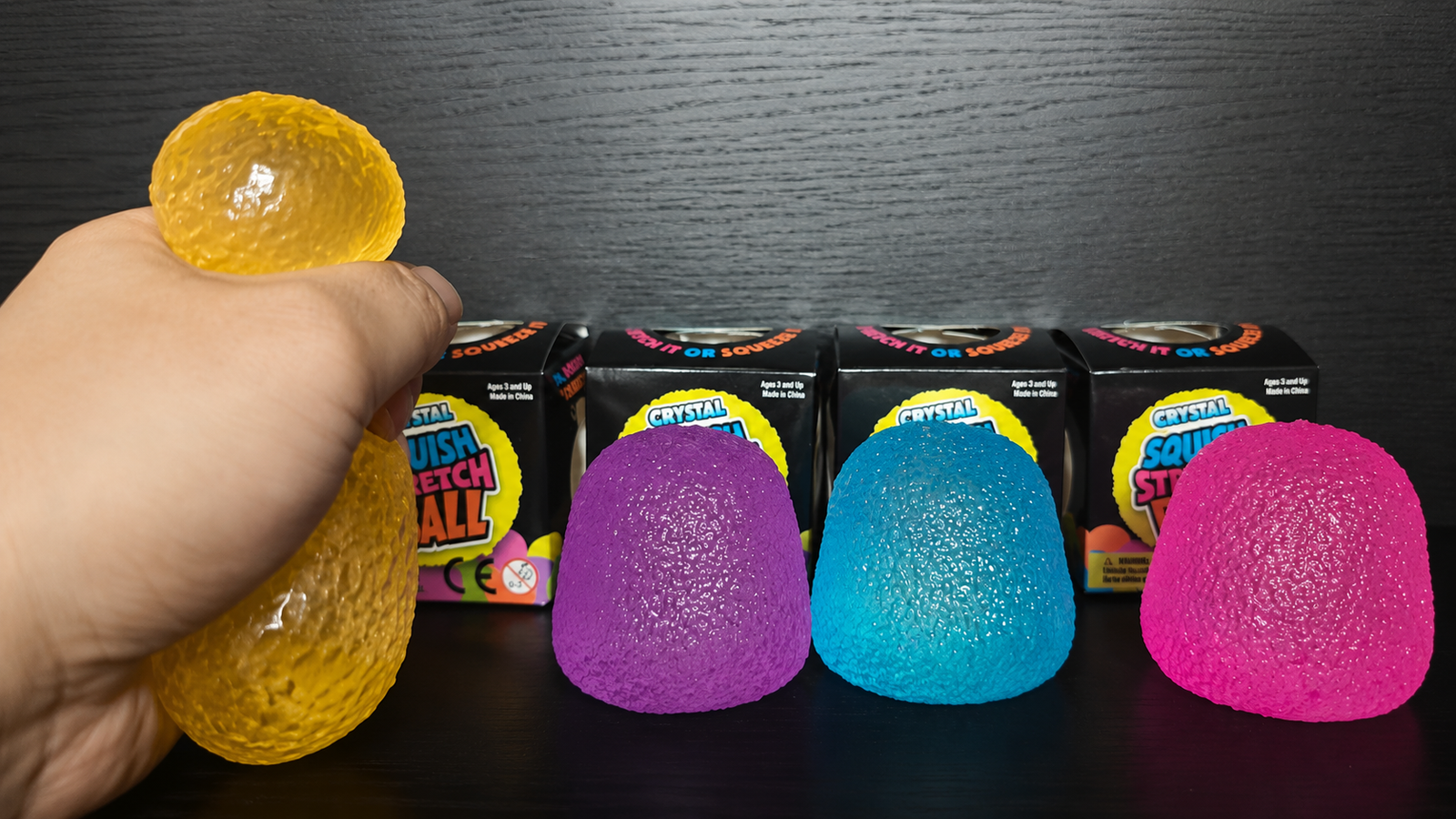
This is why squishy toy suppliers should not be judged only by which factory produces the prettiest first sample. The revision process shows how well the supplier can turn buyer feedback into something production can actually repeat.
Squishy Toy Suppliers Should Know Their Packing Data
Carton information is not an administrative detail left for the shipping department.
It affects freight, warehouse space and sometimes the real cost of the order.
Before approving a larger PO, buyers should be able to get realistic units per carton, carton dimensions, gross weight and, where applicable, display-pack quantities.
If those figures keep changing late in the process, it can be a sign that the final packing configuration was never fully worked out.
That matters with squishies because packing efficiency can vary considerably. An 8.5 cm product in a simple bag, a boxed slow-rise item and a larger squishy may take up very different amounts of carton space even when the unit quantities look similar.
Our novelty toy packaging guide looks at choosing the packaging itself. At this stage, the more useful question is whether the supplier already understands how the approved product will actually be packed.
Production Visibility Tells You More Than a Factory Profile
A factory presentation may list years in business, equipment count, workforce and monthly capacity. Those numbers are useful, but they do not answer every sourcing question.
For a specific squishy order, buyers may want to know where the product is made, how printing or decoration is checked, how finished units are compared with the approved sample, and who makes the call if something falls outside the agreed specification.
This is also how professional supplier assessment is generally approached. QIMA describes manufacturing audits as evaluations of factory facilities, production capacity, quality systems and workflows—not simply an inspection of one finished product.
For buyers comparing squishy toy suppliers, that distinction is useful. One good sample proves that the supplier can make one good sample. It does not, by itself, explain how hundreds or thousands of units will be controlled.
Good Communication Removes Unknowns
Fast replies are convenient. Clear replies are more valuable.
If a buyer asks for a revised sample, updated carton dimensions and a new production estimate, the response should make all three points clear.
Repeated ambiguity around specifications, dates or what is included in the price deserves attention. Small misunderstandings are much cheaper to solve before a deposit is paid than after production has started.
Thomasnet’s supplier-evaluation guidance recommends looking beyond cost to factors such as production capacity, quality, performance and risk. Its survey of more than 400 industrial buyers also found availability and lead times among the major factors considered when shortlisting suppliers.
For squishy toy suppliers, communication matters because it gives the buyer evidence about those operational details while there is still time to compare alternatives.
Compare the Second Order Before You Place the First
This is one of the easiest supplier differences to overlook.
A factory can look highly competitive on the first PO and become inconvenient when one SKU needs replenishment three months later.
Before placing the bulk order, ask a few questions about the next one.
Will the same mold be retained? Can the approved color and print files be reused? What happens if only two colors from a six-color assortment need to be reordered? Will the MOQ change? How quickly can the same packaging be produced again?
Two squishy toy suppliers with similar first-order prices can give very different answers.
The Toy Association’s guidance for companies working with overseas manufacturers also emphasizes clear communication, established quality-control procedures and ongoing production oversight rather than treating manufacturing as a one-time transaction.
That becomes more important once a product moves from a test order into a repeat program.
Choose the Supplier With Fewer Unanswered Questions
The lowest price is easy to compare. Reliability takes more evidence.
By the time quotations, samples, revisions and packing information have been exchanged, buyers usually have enough information to judge more than unit cost.
Strong squishy toy suppliers make the order easier to define. They provide comparable specifications, respond clearly to sample revisions, understand the final packing configuration and can explain how the approved product will move into production.
A few cents per unit can still matter on a large order.
But when two quotes are close, the supplier that leaves fewer important questions unanswered is often the safer choice.
Read More: Buying Guide · Customization Guide · OEM Guide