A useful quote for OEM toy manufacturing does not start with the factory guessing what the buyer means. It starts with a short product brief that removes the assumptions most likely to change price, tooling, packaging, compliance, or lead time.
Buyers do not need every engineering answer. They do need to separate what has already been decided from what is still open for factory recommendation. That makes an RFQ easier to quote, easier to compare, and less likely to change after sampling begins.
Table of Contents
OEM Toy Manufacturing Starts With a Product Brief, Not a Price Question
“Can you make this?” and “What is your best price?” are not enough for a useful OEM toy manufacturing quote.
A factory first needs to understand the product. For a new project, that may be a sketch, reference photo, existing sample, rough drawing, or link showing the general mechanism. The buyer should also state the target size, basic function, intended age group if known, and which features are non-negotiable.
This does not mean the buyer must specify the exact polymer grade, wall thickness, mold construction, or assembly method. Those decisions may depend on the factory’s engineering review.
The better rule is simple: tell the supplier what the finished product must do and what commercial result you need. Let the factory identify the manufacturing route where appropriate.
Show the Factory What Must Stay—and What Can Change
Reference products create a common problem in OEM toy manufacturing: the buyer and factory may be looking at the same picture but making different assumptions.
A buyer may care about the silhouette and squeeze feel but be flexible on surface texture. Another may need the mechanism unchanged but be open to a different size. If those priorities are not stated, the supplier may price the easiest version rather than the version the buyer actually wants.
Separate the project into two groups.
Must stay: core shape, mechanism, target dimensions, brand colors, character features, or another essential element.
Open to recommendation: material formulation, internal structure, printing method, packaging construction, color-matching route, or carton configuration.
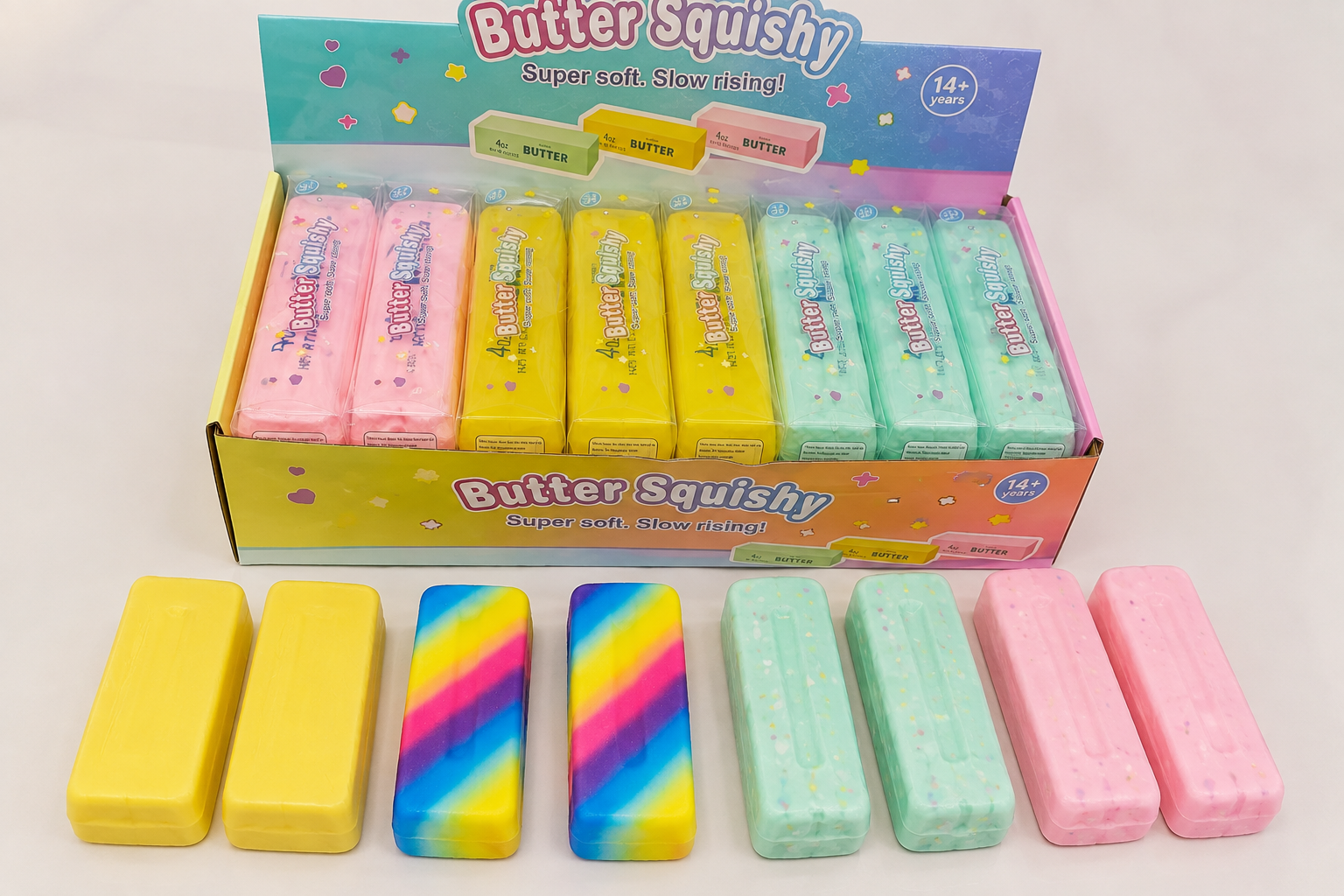
This is especially useful when a project sits between private label and full custom development. A factory can then determine whether an existing mold can be adapted or whether new tooling is required.
Quantity Changes More Than the Unit Price
Quantity is one of the first numbers a factory needs, but buyers often treat it only as a price-break question.
In practice, volume can influence decoration methods, mold economics, color splits, packaging setup, production scheduling, and whether a custom component is practical.
For a first RFQ, give one realistic quantity and, when useful, one larger comparison quantity. Asking for 2,000 and 5,000 pieces is usually more informative than asking for six price tiers that the buyer is unlikely to order.
Thomasnet likewise advises buyers to provide specific quantities rather than vague terms such as “a large amount,” because suppliers need defined volume to prepare a useful quote.
For multi-color assortments, also state how the total quantity will be divided. A 3,000-piece order in one color is not always commercially equivalent to six colors at 500 pieces each.
Tell the Factory Where the Toy Will Be Sold
The destination market should appear in an OEM toy manufacturing RFQ before the project reaches testing.
A toy intended for the United States may require a different compliance plan from one sold in the European Union or another market. Even within the U.S. toy standard, requirements are product-specific rather than one-size-fits-all. CPSC explains that different ASTM F963 sections apply depending on a toy’s characteristics, materials, and functions.
For U.S. children’s products, importer responsibilities also matter. CPSC states that covered children’s products require third-party testing and certification, and beginning July 8, 2026, importers of most regulated consumer products must electronically file certificate data with U.S. Customs and Border Protection.
That does not mean every buyer needs to write a testing protocol before requesting a quote. It does mean the factory should know the destination market, intended age range, and known compliance expectations early enough to avoid a construction or material choice that later has to change.
Packaging Belongs in the First Quote
Packaging is often treated as something to decide after the product price is agreed. That can make the original quote misleading.
A loose bulk-packed toy, an individual polybag, a printed retail box, and a countertop display are different commercial projects. They affect printing setup, packing labor, material cost, carton quantity, freight efficiency, and sometimes MOQ.
If the packaging is not final, say so.
“Retail display box, open to factory recommendation” is useful information. So is “individual packaging required, structure not yet decided.”
The factory does not need finished artwork to begin quoting, but it should know whether the project is expected to ship as a retail-ready SKU or as bulk product.
For buyers developing branded packaging, decisions such as structure, artwork, labeling, and the final approved sample can be refined later. The first quote simply needs enough information to price the intended commercial format.
A Deadline Is Not the Same as a Production Date
“Need this in November” can mean several different things.
Does the buyer need production completed in November? Goods loaded in November? Goods at a U.S. warehouse by November 1? Those are not interchangeable.
For OEM toy manufacturing, give the supplier the date that matters commercially. If the product is tied to Christmas, Halloween, a retailer reset, a trade show, or a promotion, say when the goods must actually be available.
The supplier can then work backward through engineering, mold work if required, samples, revisions, packaging approval, testing, mass production, inspection, and freight.
This is also where a buyer can identify whether the original concept is realistic for the available timeline—or whether an existing product platform would be the safer route.
What a Quote-Ready Toy RFQ Actually Looks Like
A good first inquiry can be short:
Product: rotating press fidget ball
Reference: attached photo
Target size: approximately 6 cm
Quantity: 2,000 / 5,000 pcs for comparison
Customization: custom colors + logo
Packaging: retail display box, open to factory recommendation
Market: United States
Target delivery: November 2026
Sample: required before production
This RFQ still leaves engineering decisions open. It does not specify the plastic grade, tooling structure, carton CBM, printing process, or exact test plan.
That is fine.
The buyer has already defined the decisions that materially shape the commercial scope. The factory can now identify what must be engineered, what can use an existing solution, what affects MOQ, and what needs to be confirmed during sampling.
The purpose of an RFQ is not to prove that the buyer knows how to manufacture the toy. It is to remove the assumptions that change the quote.
For buyers comparing suppliers, that makes the first round of pricing more useful—and gives the OEM toy manufacturing project a much cleaner starting point.
Read More: OEM Guide · Customization Guide · Buying Guide