A lower price can make a toy easier to pick up, but it does not automatically make it a better retail item.
That distinction matters in 2026. U.S. toy sales have been shifting toward higher price tiers, while major retailers are still making room for toys under $10 and even under $5. For buyers, the useful question is not whether low-cost toys are “good” or “bad.” It is what job a lower-priced SKU is supposed to do in the assortment.
A value item can work as an impulse purchase, an add-on, a stocking stuffer or an accessible first purchase. But once a product is reduced only to hit a price, it can lose the very thing that made it worth buying.
Table of Contents
Start With the Retail Role, Not the Cheapest Cost
A buyer working backward from a $4.99 or $9.99 shelf price has a different problem from a buyer choosing a $30 gift item.
At the lower price point, the product usually needs to make sense quickly. The shopper may not spend much time comparing features or reading a long package. The shape, color, tactile action or recognizable idea has to do more of the selling.
That makes low-cost toys especially useful when the role is clear: a checkout item, a small reward, a party or gift add-on, or an entry point into a broader assortment.
The price point is doing part of the merchandising work, but the product still needs enough personality to earn the purchase.
Under $10 Is Still a Real Retail Strategy
The broader market is not moving in only one direction.
The Toy Association, citing Circana’s 2025 U.S. data, reported that toys priced $30–$69.99 grew 18%, while segments under $5 were among those with the steepest declines. That suggests shoppers were willing to spend more when the product gave them a reason to.
At the same time, value price points remain visible in current retail programs. Dollar General’s 2026 holiday assortment includes more than 170 seasonal toys, with about half priced at $10 or less and a dedicated $5-and-under shelf. Kohl’s is also merchandising small collectibles and activities at $4.99, $7.99 and $9.99 in its Toy Value Towers.
Those examples do not mean every retailer needs a $5 toy section. They show that low-cost toys can still have a defined place even when higher-priced products are growing.
The more useful takeaway for a buyer is that a low price needs context. A $4.99 product at checkout is doing a different job from a $9.99 item in a small-gift display, even though both may fall into the same broad “value” category.
A Lower Price Should Not Erase the Product Idea
When buyers need to reach a lower retail price, there are several levers available: product size, material usage, number of components, decoration, packaging and pack configuration.
The useful question is which of those can be simplified without making the toy feel unfinished.
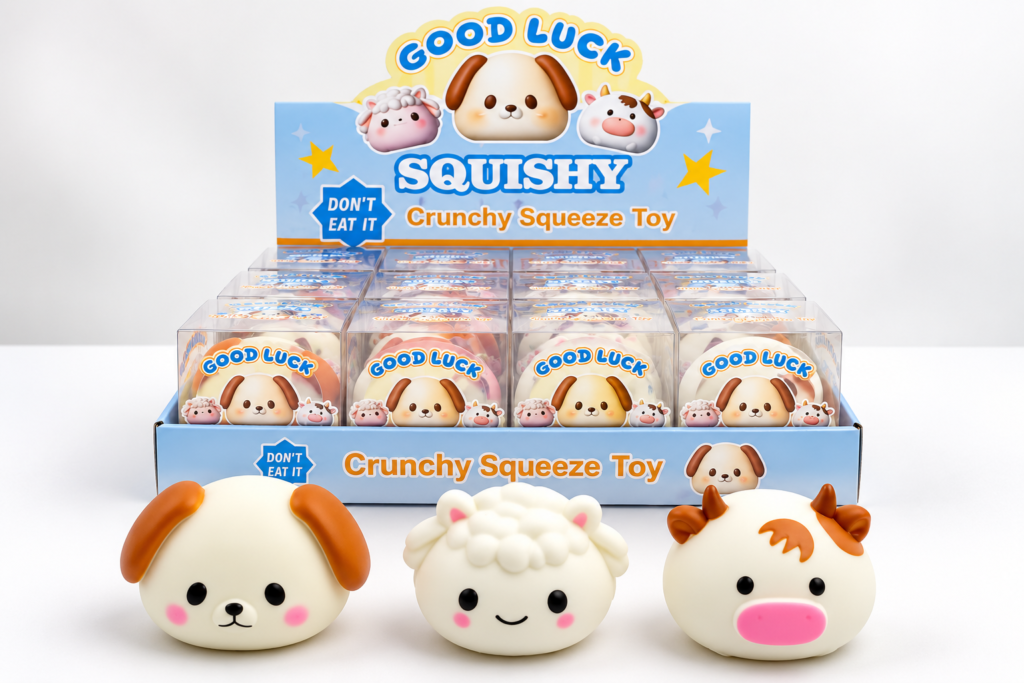
For a squishy, a smaller product size may still preserve the squeeze experience. A simple individual bag or compact display format may be enough for an impulse channel. A product with a strong shape or funny expression may not need elaborate decoration to be understandable.
But there is a limit.
If the tactile response becomes disappointing, the product becomes too small for the concept, or the packaging no longer protects or presents it properly, the lower cost has started to change the product rather than simply simplify it.
This is especially important when comparing supplier quotes. Removing a production step may lower the quoted unit price, but buyers still need to ask what changed in the finished product to create that saving.
Think About the Whole Price Ladder
Low-cost toys make more sense when they are viewed next to the rest of the assortment.
A $4.99 item can give a shopper an easy entry point. A standard version might sit in the middle. A larger, giftable or more feature-driven item can occupy the upper tier.
The lower-priced SKU does not need to imitate the premium item. It needs a clear reason to exist beside it.
This also helps prevent a common assortment problem: several products clustered around almost the same price with no obvious difference in role. If the value SKU and the core SKU look too similar, the cheaper one may simply make the other harder to sell.
A useful price ladder gives the shopper a reason to move up or down rather than presenting three nearly interchangeable choices.
Packaging Has to Fit the Economics
A small toy can stop being a low-cost retail item once too much packaging is built around it.
That does not mean packaging should look cheap. It means the format should fit the job.
For checkout, counter displays and small add-on items, compact packaging can make the product easier to merchandise while limiting unnecessary material and freight volume. A display box can also group individually packed products without turning every unit into a large retail package.
For a gift-oriented channel, the same toy may need stronger presentation and may belong at a different retail price.
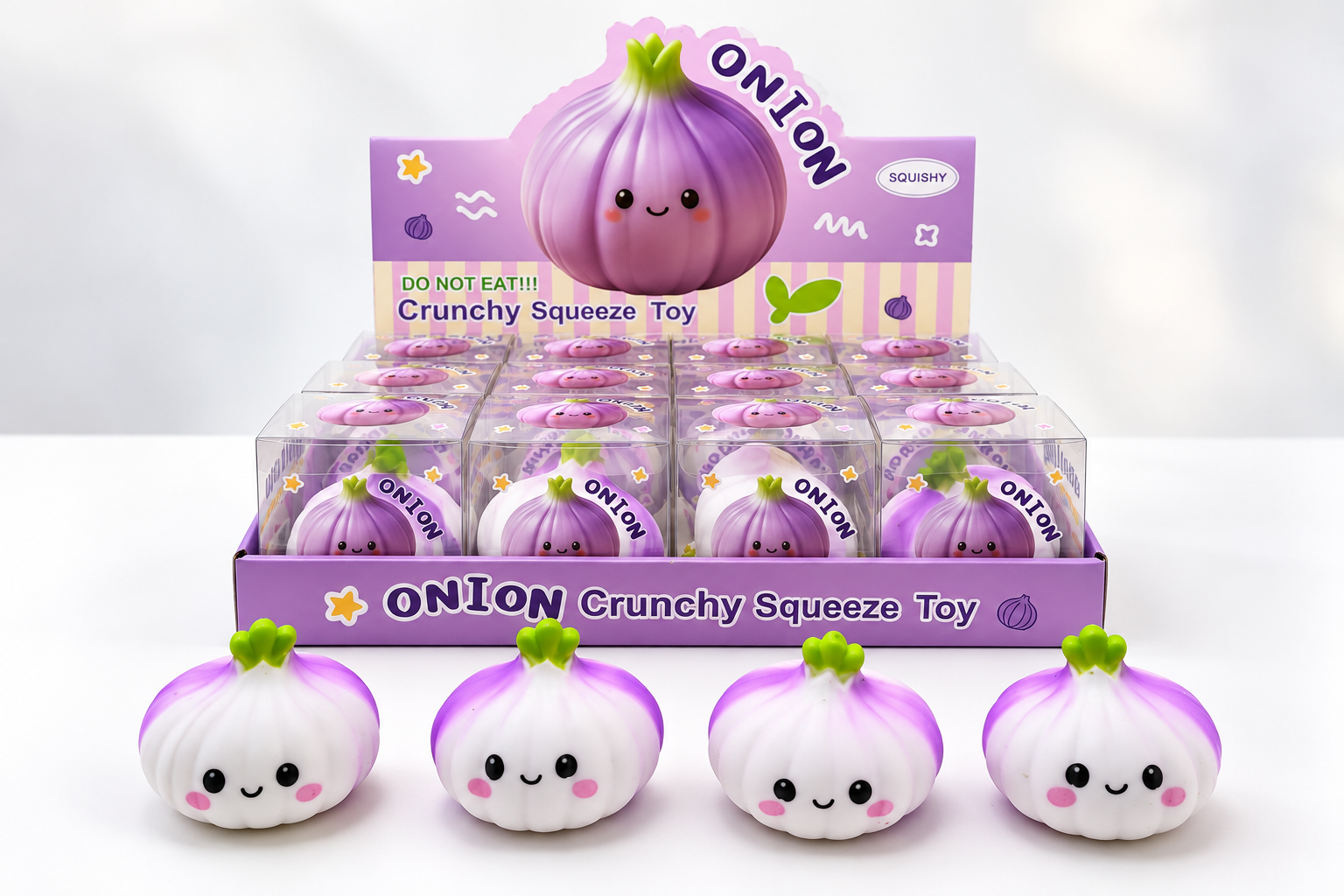
This is why custom toy packaging should be considered while the product and target price are being developed, not after the toy itself has already been finalized. The retail unit, display format and shipping carton all affect the economics of the finished SKU.
Test the Price Point Without Overcommitting
Lower-priced items can feel easy to buy in volume because the unit cost is small. That can hide the inventory risk.
A new $5 item still has to earn its space.
Buyers can learn from the first order: Does it sell as an add-on? Does one color dominate? Does it move mainly during gifting periods? Does the display need frequent replenishment? Does it bring incremental sales, or does it pull customers away from a nearby core SKU?
For low-cost toys, the first order should prove the retail role as much as the product itself.
That information can then shape the next buy. A strong performer may deserve more depth, while a weak variation can be removed instead of automatically reordered because it belongs to the original assortment.
Low-Cost Toys Need a Reason to Be Cheap
A strong value toy does not feel like a compromised version of something better. It feels complete at its own price.
That may mean a smaller format, simpler package, fewer decorative steps or a very direct play idea. What matters is that the shopper can still understand the product and enjoy what it was designed to do.
In a market where premium toys can grow alongside $5-and-under retail programs, buyers do not have to choose between “cheap” and “premium” as a philosophy. They can use price points for different jobs.
The best low-cost toys are not simply the least expensive products on the quotation. They are products designed or selected to make sense at a lower retail price.
Read More