
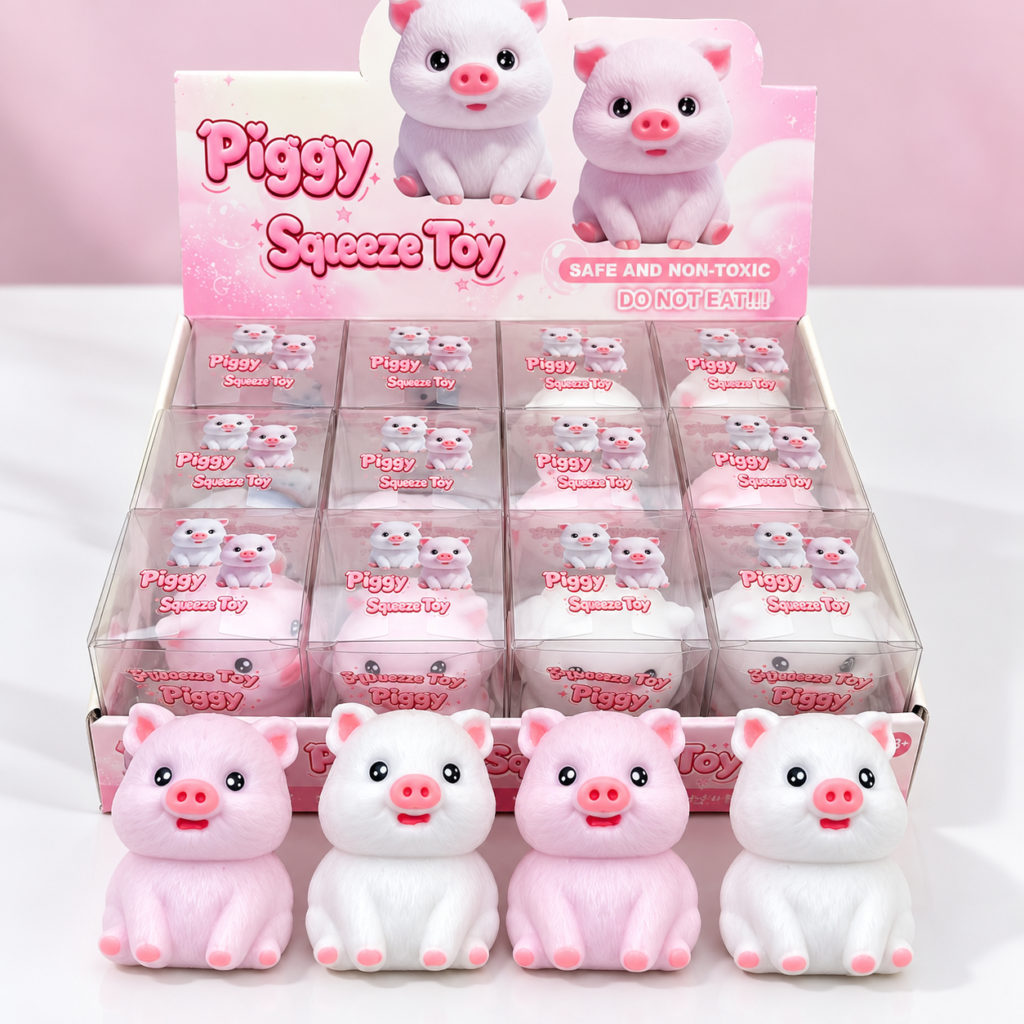
Mini animal squishies can put several designs into a relatively small merchandising area, but their compact format creates purchasing questions that are easy to overlook. Product dimensions, individual packaging, display capacity, assortment ratios, case quantities, and reorder rules can all affect whether a small-format item works for a particular retail program.
When sourcing mini animal squishies bulk, buyers should therefore look beyond the animal design or quoted unit price. The more useful comparison is how much retail and inventory space each product requires, how the assortment arrives, how the product is constructed, and whether individual designs or colors can be reordered.
Buyers planning a broader mix of animal shapes and sizes can also review Animal Squishy Toys Wholesale: Build a Smarter Retail Assortment for category-level assortment planning.
Table of Contents
Start With Actual Dimensions, Not the Word “Mini”
“Mini” is not a precise product specification. Two suppliers can use the term for products with different dimensions, weights, packaging, and display requirements.
When evaluating mini animal squishies bulk, request the actual product dimensions and weight together with the finished package dimensions. If the product comes in a countertop display, ask for the assembled display dimensions and the number of pieces it holds.
Those measurements answer practical questions before ordering. How many pieces fit in the available counter or bin space? How much does individual packaging increase the footprint? Does the display arrive ready to place, or will store staff need to merchandise the products separately?
A real product page can make these differences easier to compare. For example, Vilora Toys’ Panda Squishy Toy uses individual retail packaging and is also offered in a 12-piece display box. The important sourcing lesson is not that every mini animal product uses the same configuration, but that buyers should compare the loose product, individual package, and finished display as separate dimensions.
For additional space-planning considerations, see Small Toys in Bulk: Buy for the Space, Not Just the Piece Count.
Compare Construction Before Comparing Animal Shapes
A compact animal shape does not define how a squishy is made. Products in this category can use different materials, fillings, coatings, and constructions, which can change compression, rebound, stretch, surface feel, weight, and packaging requirements.
TPR, for example, is used in a range of soft and elastic molded or filled novelty products. But a material name alone does not tell a buyer how the finished toy will behave.
This is why physical samples matter when comparing mini animal squishies bulk. Record the stated material, dimensions, weight, filling where applicable, surface finish, and the relevant compression, stretch, or rebound characteristics.
Your own product catalog provides a useful reason to make this distinction. The Funny Face Flour Filled Monster Squishy represents a filled squishy format, while other animal-shaped products can use different constructions. Buyers should compare the actual SKU specification rather than assuming that similar-looking small squishies will have the same tactile behavior.
A simple specification record also makes later quotations and reorders easier to compare because both buyer and supplier are discussing the same construction rather than relying on broad descriptions such as “soft” or “squishy.”
Check What Actually Comes in the Assortment
Mini products can make it practical to present several colors or designs in one display. But a catalog photo showing variety does not tell the buyer what assortment will actually arrive.
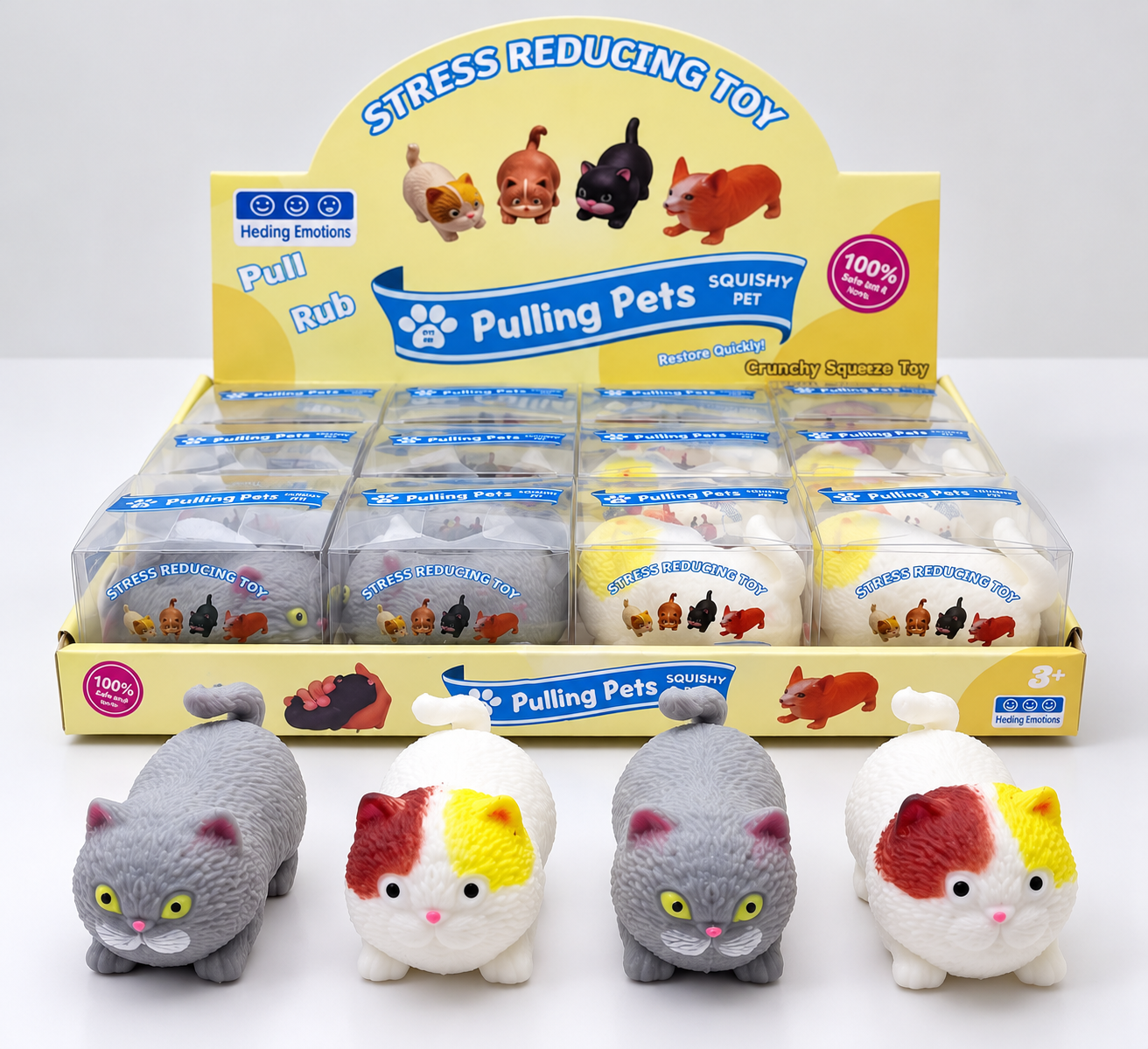
Before ordering mini animal squishies bulk, ask:
- How many designs or colors are included?
- How many pieces of each variation are packed per display or case?
- Is the assortment ratio fixed, random, or selectable?
- Can individual designs or colors be reordered separately?
- Does the MOQ apply to the total order or to each variation?
Products available in several colors make these questions particularly relevant. The Unicorn Squishy Toy is offered in multiple colors and individual clear retail packaging with a display-pack format. A buyer considering this type of product should still confirm the actual color ratio included in the quotation rather than assuming that the website image represents a guaranteed case assortment.
That distinction matters during replenishment. If one variation needs to be reordered sooner than another, the buyer needs to know whether it can be purchased separately or only as part of another mixed assortment.
Connect Display Quantity to Case and Reorder Quantity
A compact countertop display can occupy relatively little selling space while the corresponding master-carton quantity creates a much larger inventory commitment.
Before approving a quotation, compare the number of units per display, displays or inner packs per master carton, total units per carton, carton dimensions, gross weight, and assortment ratio where applicable.
Individual packaging should be included in that calculation. A small loose product may become considerably larger once a retail box, bag, header card, or other packaging is added.
The same review should extend to reorder terms. Buyers sourcing mini animal squishies bulk should ask whether an existing SKU can be reordered independently, whether another complete mixed assortment is required, and whether changing the package or display configuration changes the minimum quantity.
This connects merchandising decisions with inventory planning instead of treating the countertop display and warehouse carton as separate purchasing problems.
For a deeper look at minimum-order structures, see Novelty Toy MOQ: What Buyers Should Know Before Placing an Order.
Review Requirements for the Specific Mini Product
Compact products deserve careful age-grading and small-parts review when they are sold as children’s toys. The correct requirements depend on the actual product, intended age, materials, construction, dimensions, and other applicable characteristics.
In the United States, ASTM F963 is incorporated into the mandatory federal toy-safety framework. For toys designed or intended primarily for children 12 years of age or younger, applicable children’s product safety requirements generally require third-party testing by a CPSC-accepted laboratory and certification by the responsible domestic manufacturer or importer through a Children’s Product Certificate. U.S. Consumer Product Safety Commission
Small products also should not automatically be labeled a “choking hazard” simply because they are described as mini. CPSC small-parts requirements and warning-label rules depend on factors including the product and intended age. Buyers should evaluate the actual SKU against the applicable requirements rather than making the determination from a catalog name or photograph. U.S. Consumer Product Safety Commission
Children’s products are also subject to CPSC tracking-label requirements, including identifying information on the product and packaging as required by the rule. U.S. Consumer Product Safety Commission
When sourcing mini animal squishies bulk, request compliance documentation tied to the exact SKU being purchased rather than relying on a generic statement that a supplier is “CPSC certified” or on a report issued for a different product.
CPSC Toy Safety Business Guidance
Mini animal squishies can make efficient use of limited retail space, but “mini” should never be the entire purchasing specification. Actual dimensions, construction, packaging footprint, assortment ratios, case quantities, reorder rules, and product-specific documentation give buyers a much stronger basis for comparing quotations and building a workable small-format assortment.
Read More