Contacting an OEM toy manufacturer can feel like the beginning of a product-development project. In practice, some of the most useful decisions happen before the first quotation is requested.
A factory can help determine how a toy should be manufactured, whether a proposed feature is practical and what may need to change during development. But the manufacturer still needs enough information to understand what the buyer is actually trying to make.
“Can you make this?” is a starting point. A reference image, target market, estimated quantity, packaging direction and delivery goal turn that question into a project a manufacturer can actually evaluate.
The goal is not to have every detail finished before contacting a supplier. It is to separate the decisions the buyer should already understand from the decisions that require manufacturing input.
Table of Contents
Give the OEM Toy Manufacturer Something Concrete to Evaluate
A project does not need finished engineering drawings to begin. It does need a clear reference point.
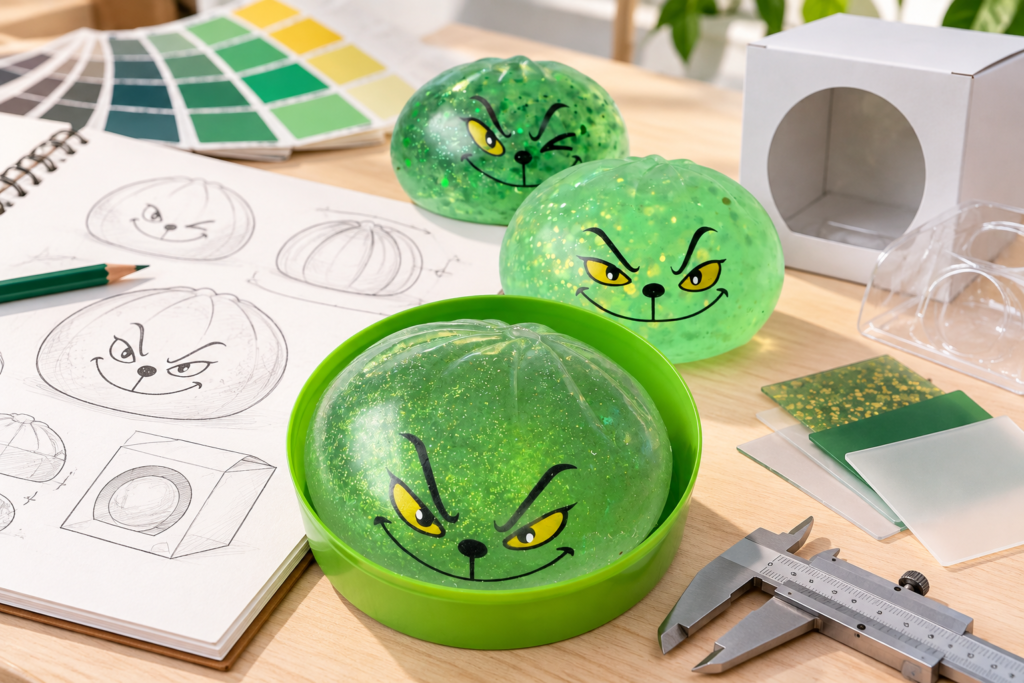
That could be an existing toy, a sketch, a rendering, a physical sample or a product already in the manufacturer’s range that you want to modify. The reference helps establish what should stay familiar and what needs to change.
Consider a retailer that likes an existing squishy design but wants different characters and retail packaging. That is a very different project from a brand bringing an original character drawing that has never been manufactured.
Both may eventually become custom products, but they do not start from the same place.
When contacting an OEM toy manufacturer, explain which situation applies. If you are referencing an existing product, identify the features you want to preserve. If the idea is new, show enough of the concept for the manufacturer to understand the intended shape, size and play pattern.
This first reference does not lock the project into a final specification. It gives everyone the same object to discuss. If the project requires original development, buyers can also review Vilora Toys’ OEM & ODM capabilities before preparing the first brief.
Decide Where the Toy Will Be Sold
The destination market should be clear before a manufacturer prepares a quote.
A toy intended for the United States may require different documentation, labeling and testing considerations from one being prepared for another market. Intended age also matters because applicable requirements can depend on the product, its features and the age group it is intended for.
For the U.S. market, the Consumer Product Safety Commission requires third-party testing and certification for applicable children’s product safety requirements. The buyer does not need to arrive with every applicable ASTM F963 section identified. That determination depends on the finished product. But the manufacturer should know where the product is going and who it is intended for.
That makes target market and age grade useful information at the quotation stage rather than details to introduce after the product has already been developed.
Quantity Changes the Conversation
“I need a price” is difficult to answer without quantity.
The same toy may make sense at one volume and make much less sense at another. Packaging quantities, printing methods, material purchasing and whether new tooling is involved can all affect the project.
An estimated quantity is enough to begin.
If you are testing the market, say that the first order is intended as a smaller trial. If the program is planned for a larger retail rollout, provide the expected order range rather than asking for a generic unit price.
This is particularly important when comparing an existing mold with an original design. A buyer asking an OEM toy manufacturer to change packaging or colors on an established product is giving the factory a different manufacturing problem from a buyer requesting a new molded shape.
Those projects should not be expected to produce the same MOQ, development cost or timeline.
What an OEM Toy Manufacturer Needs to Know About Packaging
Packaging is sometimes treated as something to decide after the toy is finished. For a retail product, that can create unnecessary revision.
You do not need final artwork before requesting a quotation, but you should know whether you are imagining an individual bag, printed box, countertop display or another retail format.
Imagine twelve small novelty toys intended for a checkout counter. Quoting twelve individually packed pieces is not the same as quoting a printed display containing twelve units.
The toy may be identical. The commercial product is not.
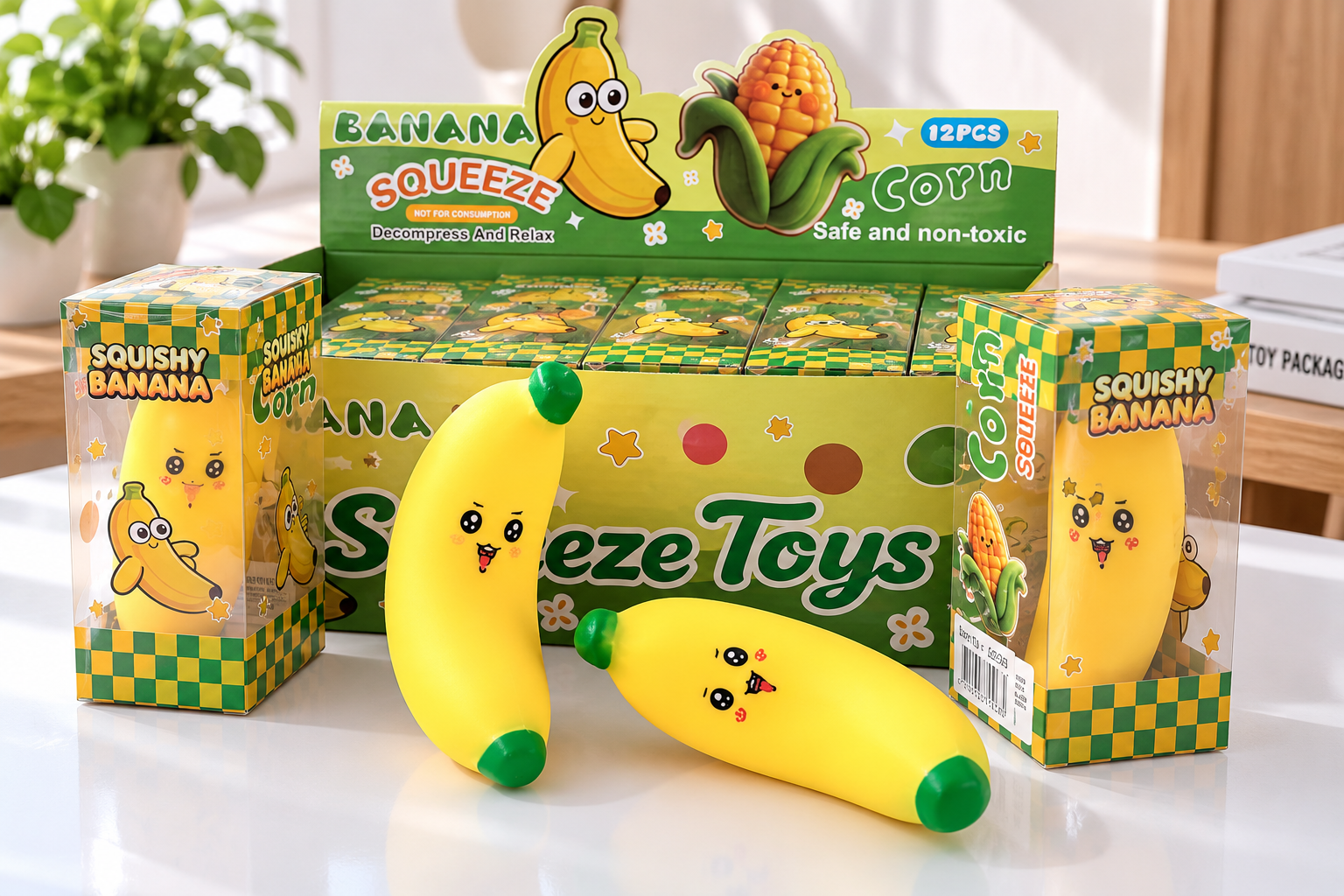
Packaging can affect printed components, carton configuration, labeling space and the way the finished product will be presented. Buyers who have not finalized this part can still provide a direction and refine it during development.
This is also where an existing toy packaging guide can become more useful than adding another specification to an email. The objective is simply to give the manufacturer enough context to quote the project you are actually considering.
A Delivery Date Is More Useful Than “ASAP”
There is a major difference between asking when production can finish and explaining when the goods need to arrive.
If a product is being developed for Christmas, Halloween, a trade show or a retailer launch, tell the manufacturer the required arrival window.
That allows the production schedule to be planned backward from the required delivery date.
Sampling, revisions, testing, packaging production, mass production and transportation all use part of that window. An OEM toy manufacturer cannot remove those steps simply because the initial inquiry arrived late.
This does not mean the buyer needs to build a complete production calendar. A useful first brief can be as simple as:
“We need the finished goods in California before October 1.”
That is far more actionable than “we need these quickly.”
Leave Manufacturing Decisions Open Where They Should Be Open
A detailed brief is useful. An unnecessarily rigid one can create a different problem.
A buyer may know the character should be approximately palm-sized, soft to squeeze and suitable for a particular retail price point without knowing the best internal construction or manufacturing method.
That is exactly where input from an OEM toy manufacturer becomes useful.
Tell the factory what the product needs to accomplish before prescribing every production detail.
The same principle applies to samples. A rendering can establish appearance, but physical samples reveal dimensions, hand feel, movement, printing and other details that are difficult to approve from a screen.
Those decisions belong to later development stages and should not all be forced into the first RFQ.
A Better RFQ Creates a Better Starting Point
Before contacting an OEM toy manufacturer, a buyer should ideally be able to explain the product reference or concept, intended market, age range, estimated quantity, packaging direction and required delivery window.
That is enough to make the first conversation substantially more useful. It is not the final specification.
Materials may change. Packaging may be refined. Samples may reveal something that needs adjustment. An original concept may require tooling that was not obvious from the first drawing. That is normal product development.
The purpose of a good RFQ is not to answer every question before the manufacturer becomes involved. It is to identify the questions that still need to be resolved.
When both sides understand what has already been decided and what still needs to be developed, the quotation becomes the beginning of a real project rather than just a price attached to an unclear idea.
Have a toy concept ready to discuss? Request a quote from Vilora Toys with your reference, target quantity, destination market and packaging requirements.
Read More