A special education teacher needs a few quiet handheld items for the classroom. The school-based occupational therapist wants to review how those items feel, how students handle them, and whether they are appropriate for individual use. The district purchasing coordinator needs product specifications, safety documentation, pricing, and a delivery plan.
All three are looking at the same products. They are not asking the same questions.
That is why buying special education sensory supplies should begin with how the products will be used, not with a catalog of popular fidget toys.
Table of Contents
Classroom Supplies and Individual Student Supports Are Different Purchases
A soft squeeze toy might be part of a teacher-managed activity bin. It might also be considered for an individual student’s daily routine.
For shared classroom supplies, staff need to think about storage, cleaning, supervision, and replacement. Individual-use items call for a closer look at the student’s abilities, preferences, and educational needs.
Under the Individuals with Disabilities Education Act (IDEA), IEP teams must consider whether students need assistive technology devices and services. That does not make every product marketed as a sensory toy an assistive technology device.
Whether a particular item belongs in a student’s support plan is a decision for the appropriate educational team, not the supplier.
Before requesting samples, schools should identify whether they need individual-use items, shared classroom materials, or supplies for a specific teacher-led activity.
Different Staff Members Need Different Product Information
A special education teacher may be concerned about whether an item makes noise, rolls off a desk, or requires constant supervision.
A school-based occupational therapist may look more closely at grip, resistance, movement, and the demands of using the product. Their role depends on the student’s needs and the services provided by the school.
The purchasing department has another job entirely. It needs identifiable SKUs, age-grading information, available documentation, packaging quantities, vendor details, and pricing.
Consider a request for sensory items across four classrooms. The teacher might approve three product styles, while the purchasing coordinator still needs to know whether the colors can be mixed, how many pieces come in a master carton, and whether the same SKU can be reordered next semester.
A retail product description rarely answers all those questions.
A useful purchasing list should.
Special Education Sensory Supplies: Compare How Products Work
Not all special education sensory supplies are interchangeable. Products that look similar may work differently in a classroom.
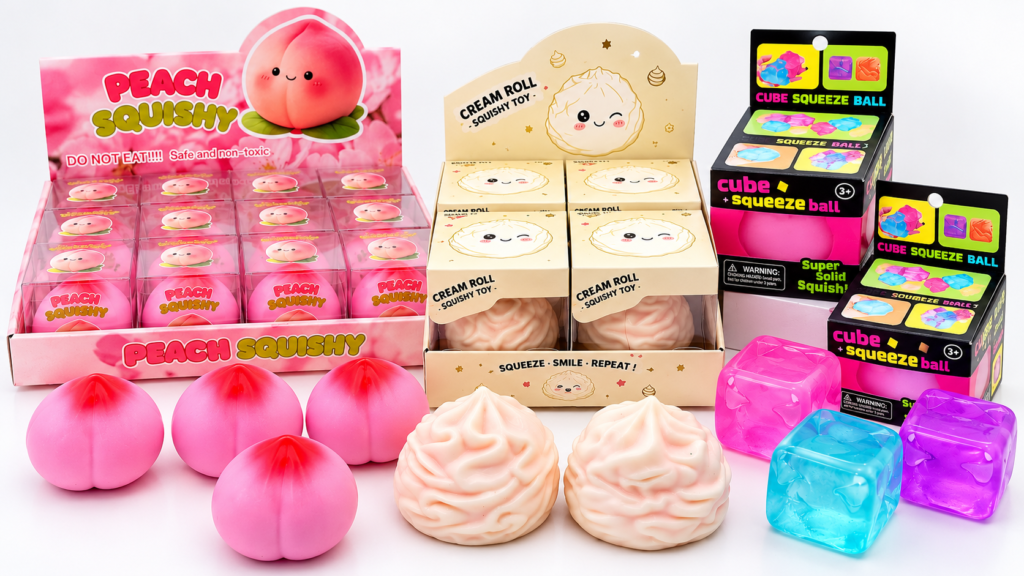
Some are designed to be squeezed in one hand. Others stretch between two hands, rotate, or have moving components. These differences matter when schools evaluate how an item will be handled in a particular setting.
Sound is another consideration. A clicking mechanism may be acceptable during a group activity but distracting during independent work. Size matters, too, especially when staff need to collect and count shared items.
Construction deserves its own review. A filled squishy, a slow-rising foam toy, and a mechanical fidget may have different failure points, cleaning instructions, and inspection needs.
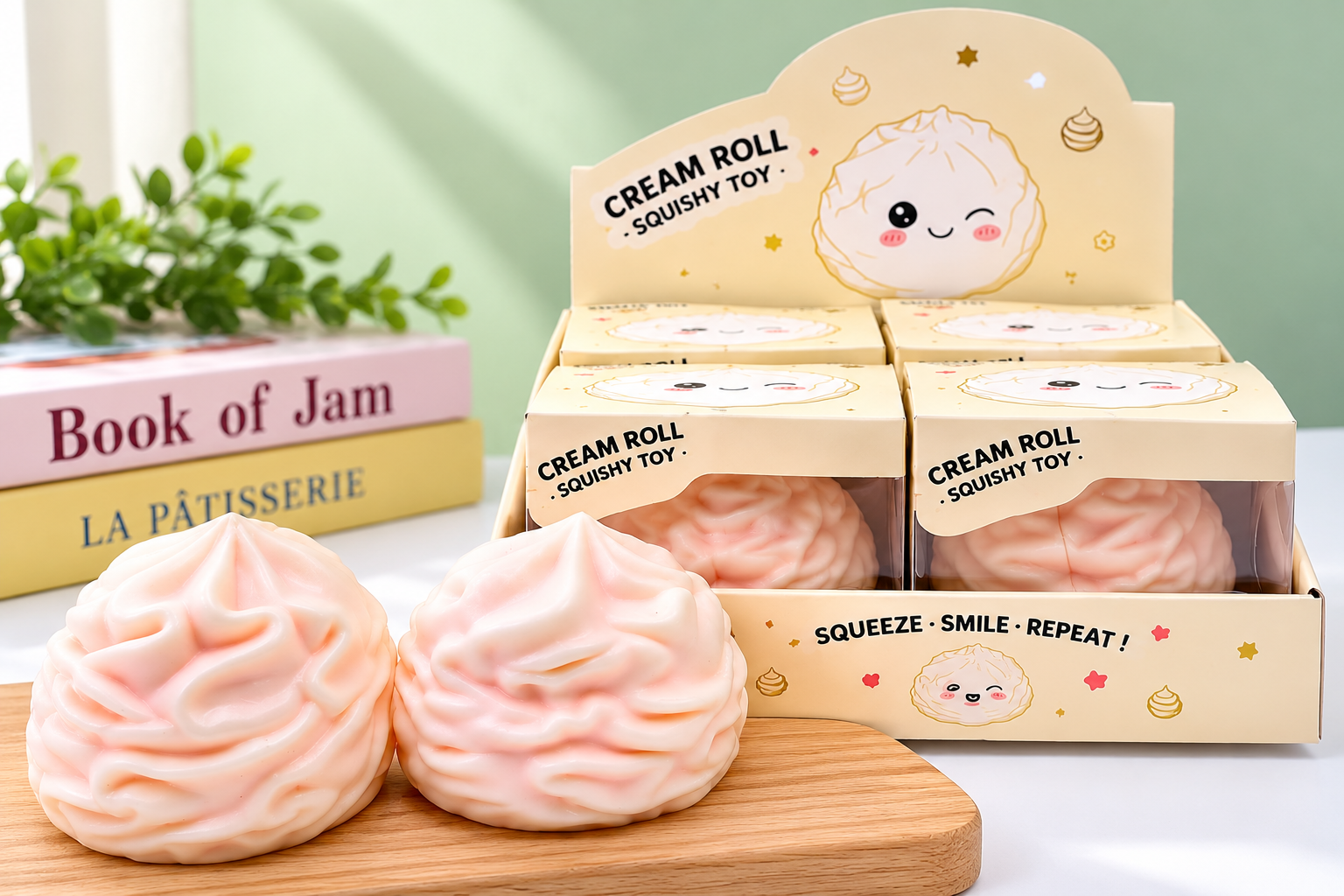
For special education sensory supplies, schools should compare actual samples rather than assume products with similar descriptions will perform alike.
Suppliers can explain product construction and intended use. They should not claim that a squeezable toy improves concentration, treats anxiety, or provides therapeutic benefits without appropriate evidence.
Safety Documentation Belongs on the Shortlist
A product described as soft, odorless, or made from safe materials has not necessarily met the requirements for its intended use.
For children’s toys sold in the United States, applicable requirements may include ASTM F963, CPSIA provisions, age grading, labeling, and third-party testing. Children’s products subject to applicable certification requirements must have a Children’s Product Certificate (CPC).
The exact requirements depend on the product, its intended users, materials, and construction.
Filled squishies deserve particular attention. Buyers should ask about both the outer shell and internal filling, along with closures and what could happen if the product breaks. Items with detachable components may raise different concerns.
Cleaning also needs a product-specific answer. A toy that can be wiped with a damp cloth is not necessarily suitable for soaking or repeated disinfection.
When evaluating special education sensory supplies, schools should request documentation for each proposed SKU, not rely on one general statement covering an entire assortment.
Turn the Catalog Into a Purchasing Shortlist
Imagine a district collecting product requests from several special education classrooms.
Instead of asking a supplier for its ten best-selling sensory toys, the district could begin with three questions:
- Who will use each item, and in what setting?
- Will the item be assigned to a student or shared?
- Who will evaluate samples and approve the final selection?
Those answers can shape a manageable shortlist.
Each proposed product should have a clear SKU, photo, dimensions, material and filling information, intended age range, operating method, packaging details, available compliance documents, and pricing based on the requested quantity.
For example, a quiet squeeze toy might be considered for a teacher-managed classroom bin. A larger handheld item might be easier for staff to collect after an activity. Neither should be approved solely on that description; school staff still need to review the actual product.
A shortlist of four well-documented items may be more useful than a catalog of forty unexplained options.
The goal is not to make the purchasing decision for educators. It is to give them enough information to make that decision efficiently.
Plan for Storage, Inspection, and Reorders
The purchase order is not the end of the process.
Once supplies reach a classroom, someone needs to store them, check their condition, remove damaged items, and keep track of what needs replacing.
For shared items, a simple inventory record can help: product name, SKU, quantity received, classroom location, and replacement quantity.
Schools ordering for multiple campuses may also want cartons labeled by destination or program. A district warehouse receiving one combined shipment has different needs from a teacher receiving a small classroom order.
Reordering becomes easier when the original product specifications are preserved. If a school requests the same squeeze toy six months later, the supplier should be able to identify the approved version rather than substitute a similar-looking product without review.
That consistency may matter more than adding new shapes to every shipment.
Build the Order Around the School’s Process
There is no single assortment of special education sensory supplies that will suit every classroom or student.
A better purchasing process starts with intended use, involves the appropriate school personnel, checks samples and documentation, and records the specifications needed for future orders.
For school districts and educational buyers, that creates a clearer path from classroom request to approved purchase.
For suppliers, it means offering more than product photos and a piece price. Clear specifications, accurate documentation, packaging options, and reliable SKU identification make it easier for schools to evaluate an order and manage what happens after delivery.
Before requesting a quote, prepare the intended use, student age range, approximate quantity, preferred product types, packaging needs, delivery destination, and any district-specific purchasing requirements.
A supplier can work from that information without guessing what the classroom needs.
Read More