

A Life Enrichment Director is planning next month’s activity calendar. Some residents enjoy group games, others prefer quiet table activities, and a few may be more comfortable participating one-on-one.
Buying another box of assorted toys isn’t necessarily the answer.
For senior living communities, senior living sensory activity supplies should be selected around the people using them, the activities staff want to offer, and the practical demands of a shared environment.
Soft squeeze items, textured objects and simple hand-held products may have a place in these programs. But suitability matters more than novelty, and not every product belongs in every care setting.
Table of Contents
Start With the Residents, Not the Catalog
A senior living community may include independent residents, people who need assistance with daily activities, and individuals with different physical or cognitive abilities.
That makes a single activity kit difficult to standardize across an entire building.
Before purchasing, Life Enrichment Directors can identify the purpose of each session. Is it a casual social gathering, an individual tabletop activity, a seasonal event or a quiet option residents can choose independently?
The Alzheimer’s Association’s activity guidance emphasizes adapting activities to individual interests and abilities rather than expecting everyone to participate in the same way.
Ask residents and staff what they actually enjoy. Some people may prefer familiar objects or conversation-based activities over brightly colored novelty products.
When evaluating senior living sensory activity supplies, a small selection matched to different preferences may be more useful than a large assortment purchased without a plan.
Choose Products That Are Comfortable to Handle
The way an item feels in the hand matters.
Consider size, weight, surface texture, flexibility and the amount of pressure needed to squeeze or manipulate it. A product that feels pleasantly soft to one person may be difficult for another resident to grip.
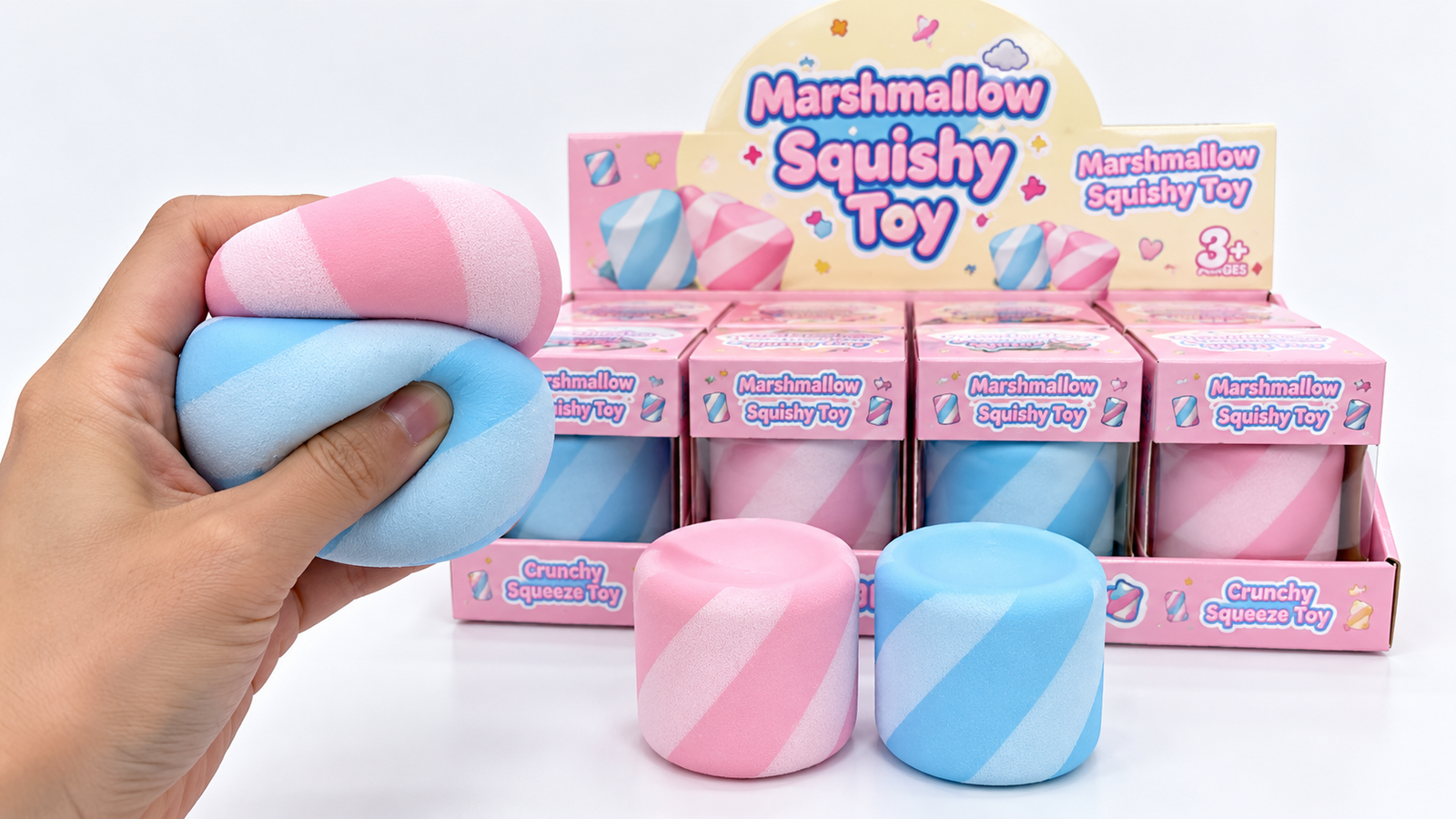
Simple shapes with no detachable accessories may be easier to evaluate than products with complex attachments, loose components or exposed filling.
For example, a smooth squishy toy could be considered for a supervised tactile activity if the resident can handle it safely. A heavily decorated product with small removable parts may be inappropriate for the same setting.
Our guide to choosing squishy toys explains why material, size and product construction deserve attention when comparing options.
Buyers should also review the manufacturer’s intended use, warnings and material information. A toy safety document does not establish that an item is suitable for every older adult or care environment.
For senior living sensory activity supplies, request samples before choosing products for a larger program.
Consider Cleaning, Supervision and Storage
A product may look attractive in a catalog but become inconvenient when staff need to clean it between activities.
Check whether the surface can be cleaned using a method compatible with the material. Some soft products may be damaged by particular cleaning agents, prolonged soaking or repeated handling.
The CDC’s environmental cleaning guidance highlights the importance of manufacturer instructions and material compatibility for equipment used in care environments.
Ordinary activity toys are not automatically classified as medical equipment, and each facility should follow its own infection prevention policies.
Staff should also decide whether items will be individually assigned, shared under supervision or reserved for particular activities.
Inspect products regularly for tears, leakage, loose parts or other signs of wear. Remove damaged items rather than continuing to circulate them.
Storage matters too. Clearly labeled bins can help staff separate product types, track quantities and identify items that need replacement.
These operational details belong in any plan for senior living sensory activity supplies, especially when multiple staff members run activities across different shifts.
Test Activities Before Ordering in Bulk
A small trial can reveal problems that product photographs never show.

Choose a few suitable items and invite staff to evaluate them during planned sessions, with resident participation and supervision appropriate to the setting.
Record practical observations: Were the items comfortable to hold? Did residents choose to use them? Were instructions needed? Could staff clean and store them easily afterward?
The goal isn’t to prove a medical benefit. It’s to understand whether the products are appropriate, enjoyable and manageable within the activity program.
Age UK’s STAR Clubs illustrate how activities for older adults can combine social interaction, games and sensory experiences rather than relying on one type of product.
When selecting senior living sensory activity supplies, use trial feedback to narrow the assortment before committing to larger quantities.
A trial can also help determine whether different resident groups need different products.
Build a Practical Purchasing Plan
Once the activity team has identified suitable items, procurement can focus on consistency, cost and replenishment.
Prepare a simple purchasing sheet listing the product, intended activity, material, dimensions, unit packaging, proposed quantity and any required safety documentation.
Ask suppliers about available colors, carton quantities, lead times and replacement availability. If the program will run regularly, confirm whether the same design can be reordered without unexpected changes.
Our squishy toy specification sheet guide explains how buyers can organize product information before requesting quotations.
For custom or private-label orders, review sample approval requirements before authorizing production.
Keep the first purchase manageable. A modest assortment that staff can use consistently is often a better starting point than a large shipment of untested products.
Good senior living sensory activity supplies purchasing begins with resident preferences, continues through hands-on evaluation and ends with a supply plan that the activity team can realistically maintain.
Read More